4,068 posters, 219 videos, 101 topics, 69 sessions, 14,365 authors, 6,128 institutions
ePostersLive by SciGen Technologies S.A. All rights reserved.
Alzheimer's Association International Conference 2026
July 12-15, 2026 | London, United Kingdom, and Online

4204
Increased Senescent CD4+ T Cell Subsets In Alzheimer’s Disease Patients Significantly Correlate With AD Biomarkers And Memory Dysfunction
Poster Presenter
Authors
Affiliations
Part of Topic
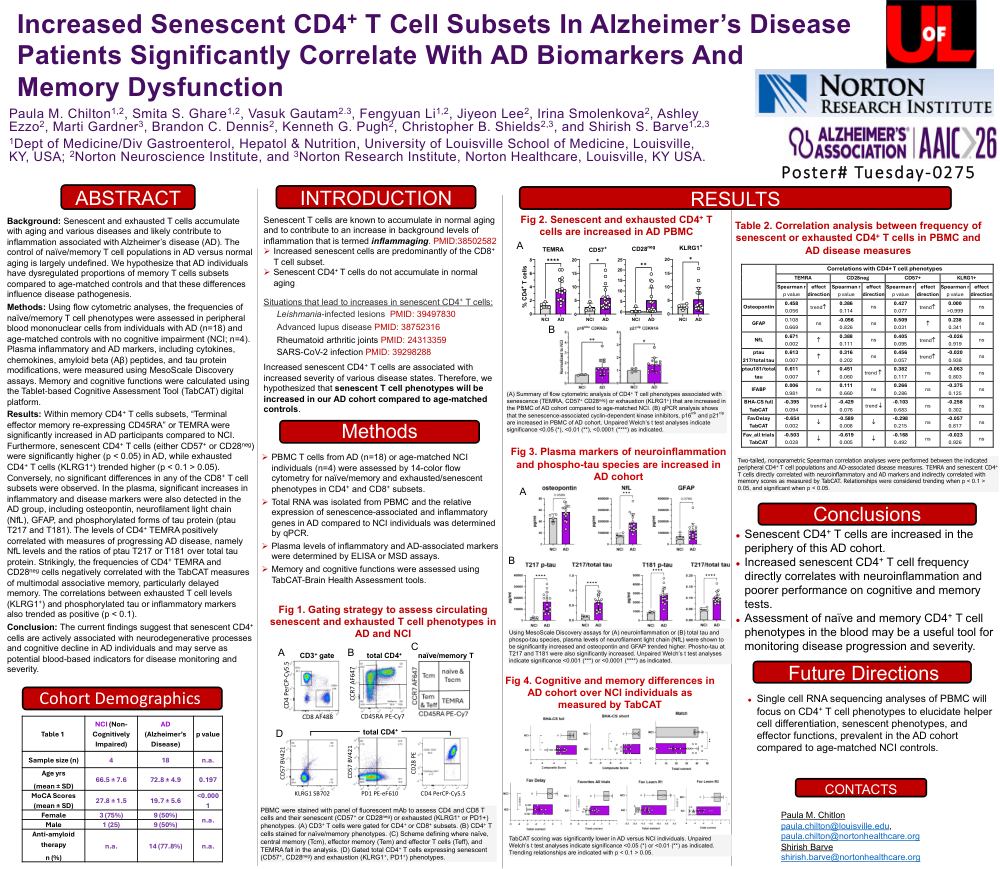
Background: Senescent and exhausted T cells accumulate with aging and various diseases and likely contribute to inflammation associated with Alzheimer’s disease (AD). The control of naïve/memory T cell populations in AD versus normal aging is largely undefined. We hypothesize that AD individuals have dysregulated proportions of memory T cells subsets compared to age-matched controls and that these differences influence disease pathogenesis.
Methods: Using flow cytometric analyses, the frequencies of naïve/memory T cell phenotypes were assessed in peripheral blood mononuclear cells from individuals with AD (n=18) and age-matched controls with no cognitive impairment (NCI; n=4). Plasma inflammatory and AD markers, including cytokines, chemokines, amyloid beta (Aβ) peptides, and tau protein modifications, were measured using MesoScale Discovery assays. Memory and cognitive functions were calculated using the Tablet‐based Cognitive Assessment Tool (TabCAT) digital platform.
Results: Within memory CD4+ T cells subsets, “Terminal effector memory re-expressing CD45RA” or TEMRA were significantly increased in AD participants compared to NCI. Furthermore, senescent CD4+ T cells (either CD57+ or CD28neg) were significantly higher (p < 0.05) in AD, while exhausted CD4+ T cells (KLRG1+) trended higher (p < 0.1 > 0.05). Conversely, no significant differences in any of the CD8+ T cell subsets were observed. In the plasma, significant increases in inflammatory and disease markers were also detected in the AD group, including osteopontin, neurofilament light chain (NfL), GFAP, and phosphorylated forms of tau protein (ptau T217 and T181). The levels of CD4+ TEMRA positively correlated with measures of progressing AD disease, namely NfL levels and the ratios of ptau T217 or T181 over total tau protein. Strikingly, the frequencies of CD4+ TEMRA and CD28neg cells negatively correlated with the TabCAT measures of multimodal associative memory, particularly delayed memory. The correlations between exhausted T cell levels (KLRG1+) and phosphorylated tau or inflammatory markers also trended as positive (p < 0.1).
Conclusion: The current findings suggest that senescent CD4+ cells are actively associated with neurodegenerative processes and cognitive decline in AD individuals and may serve as potential blood-based indicators for disease monitoring and severity.
Comments
Email is required but is not shown publicly.
Loading comments...