4,068 posters, 219 videos, 101 topics, 69 sessions, 14,365 authors, 6,128 institutions
ePostersLive by SciGen Technologies S.A. All rights reserved.
Alzheimer's Association International Conference 2026
July 12-15, 2026 | London, United Kingdom, and Online

828
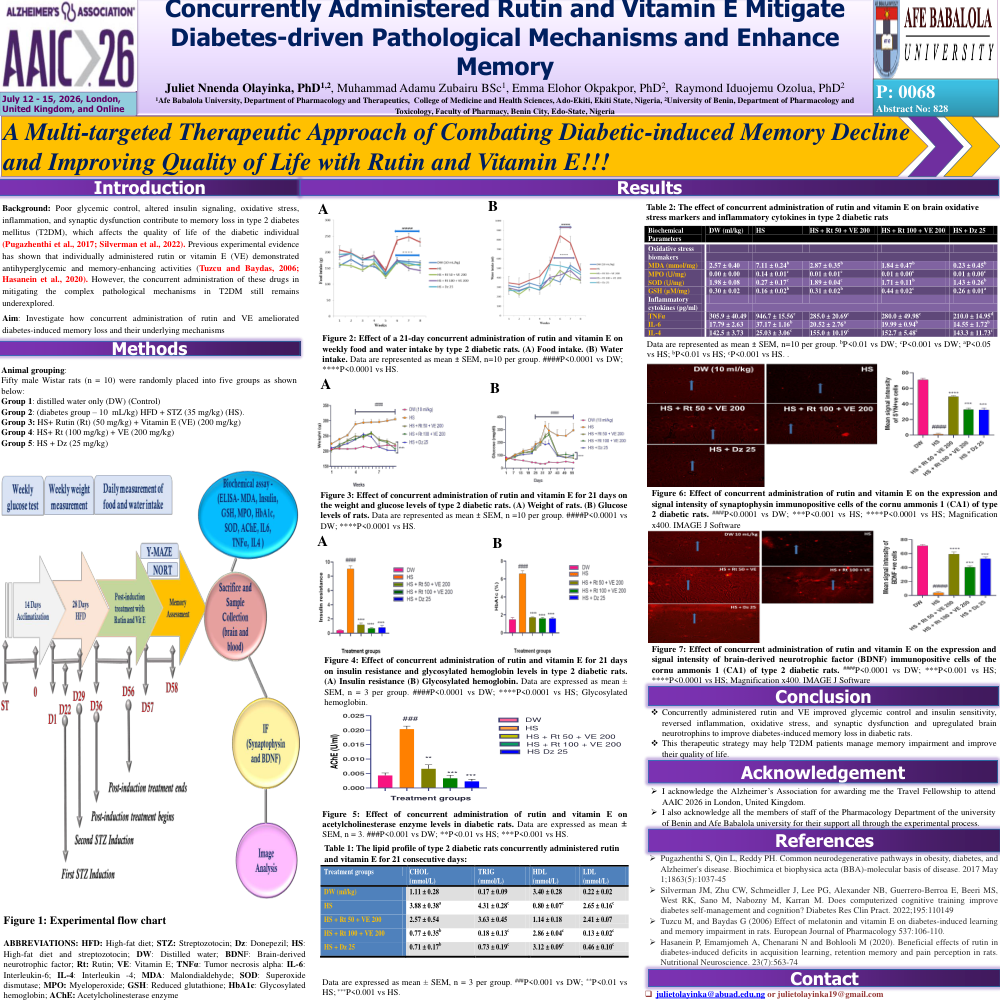
Concurrently Administered Rutin And Vitamin E Mitigate Diabetes-Driven Pathological Mechanisms And Enhance Memory
Poster Presenter
Authors
Juliet Nnenda Olayinka, Muhammad Adamu Zubairu, Emma Elohor Okpakpor, Raymond Iduojemu Ozolua
Affiliations
1Afe Babalola University, Department of Pharmacology and Therapeutics, College of Medicine and Health Sciences, Ado-Ekiti, Ekiti State, Nigeria; 2University of Benin, Department of Pharmacology and Toxicology, Faculty of Pharmacy, 2Benin City, Edo-State, Nigeria, 1Afe Babalola University, Department of Pharmacology and Therapeutics, College of Medicine and Health Sciences, Ado-Ekiti, Ekiti State, Nigeria, 2University of Benin, Department of Pharmacology and Toxicology, Faculty of Pharmacy, Benin City, Edo-State, Nigeria
Part of Topic
Abstract
Background:
Oxidative stress, inflammation, and synaptic dysfunction contribute to memory loss in type 2 diabetes mellitus (T2DM), which affects the quality of life of the diabetic individual. Previous experimental evidence has shown that individually administered rutin or vitamin E (VE) demonstrated antihyperglycemic and memory-enhancing activities. However, the concurrent administration of these drugs in mitigating the complex pathological mechanisms in T2DM still remains underexplored. This study investigated how concurrent administration of rutin and VE ameliorated diabetes-induced memory loss and their underlying mechanisms.
Methods:
Fifty male Wistar rats (n = 10) were fed a high-fat diet (H) for 28 days and administered streptozotocin (S) (35 mg/kg, intraperitoneally) twice to induce T2DM. After inducing diabetes, rats were randomly allotted to the control, diabetic (HS) (10 ml/kg), HS + rutin (50 mg/kg) + VE (200 mg/kg), HS + rutin (100 mg/kg) + VE (200 mg/kg), and HS + donepezil (25 mg/kg) groups. Oral administration lasted 21 days. Body weight, food and water intake, blood glucose, and memory performance (novel object recognition test (NORT)) were assessed. Blood glycosylated hemoglobin (HbA1c), serum insulin, brain malondialdehyde, myeloperoxidase, superoxide dismutase (SOD), glutathione, interleukin-4, interleukin-6, tumor necrosis factor alpha (TNF-α), and anticholinesterase enzymes were assessed using enzyme-linked immunosorbent assay. Synaptophysin and brain-derived neurotrophic factor (BDNF) immunofluorescence assays were performed on hippocampus cornu ammonis 1.
Results:
Rutin (100 mg/kg) with VE improved memory performance in the NORT. However, no improvement in memory performance was observed with rutin (50 mg/kg) and VE. Both rutin doses (50 and 100 mg/kg) with VE lowered mice's body weight, glucose levels, food and water intake, insulin resistance, acetylcholinesterase activity, HbA1c, malondialdehyde, and myeloperoxidase levels, whereas SOD and glutathione were significantly elevated compared to the diabetic group. In diabetic rats, both rutin doses with VE significantly lowered interleukin-6 and TNF-α while increasing interleukin-4 levels and enhancing hippocampal synaptophysin and BDNF signal intensity and expression
Conclusion:
Concurrently administered rutin and VE improved glycemic control and insulin sensitivity and reversed inflammation, oxidative stress, and synaptic dysfunction to improve diabetes-induced memory loss in diabetic rats. This therapeutic strategy may help T2DM patients manage memory impairment and improve their quality of life.
Comments
Email is required but is not shown publicly.
Loading comments...