4,068 posters, 219 videos, 101 topics, 69 sessions, 14,365 authors, 6,128 institutions
ePostersLive by SciGen Technologies S.A. All rights reserved.
Alzheimer's Association International Conference 2026
July 12-15, 2026 | London, United Kingdom, and Online

1749
Neurolinguistic Heterogeneity Of Primary Progressive Aphasia In Arabic
Part of Topic
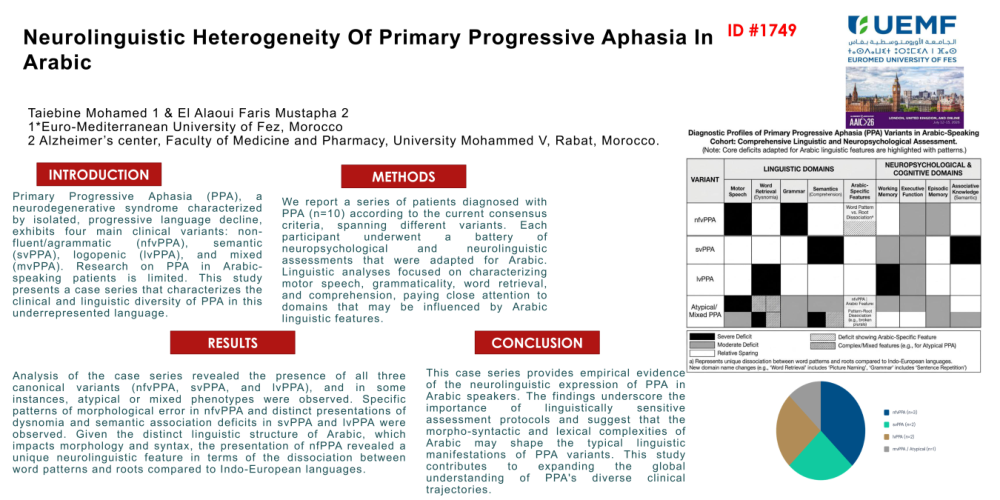
Background: Primary Progressive Aphasia (PPA), a neurodegenerative syndrome characterized by isolated, progressive language decline, exhibits four main clinical variants: non-fluent/agrammatic (nfvPPA), semantic (svPPA), logopenic (lvPPA), and mixed (mvPPA). Research on PPA in Arabic-speaking patients is limited. This study presents a case series that characterizes the clinical and linguistic diversity of PPA in this underrepresented language.
Methods: We report a series of patients diagnosed with PPA (n=10) according to the current consensus criteria, spanning different variants. Each participant underwent a battery of neuropsychological and neurolinguistic assessments that were adapted for Arabic. Linguistic analyses focused on characterizing motor speech, grammaticality, word retrieval, and comprehension, paying close attention to domains that may be influenced by Arabic linguistic features.
Results: Analysis of the case series revealed the presence of all three canonical variants (nfvPPA, svPPA, and lvPPA), and in some instances, atypical or mixed phenotypes were observed. Specific patterns of morphological error in nfvPPA and distinct presentations of dysnomia and semantic association deficits in svPPA and lvPPA were observed. Given the distinct linguistic structure of Arabic, which impacts morphology and syntax, the presentation of nfPPA revealed a unique neurolinguistic feature in terms of the dissociation between word patterns and roots compared to Indo-European languages.
Conclusion: This case series provides empirical evidence of the neurolinguistic expression of PPA in Arabic speakers. The findings underscore the importance of linguistically sensitive assessment protocols and suggest that the morpho-syntactic and lexical complexities of Arabic may shape the typical linguistic manifestations of PPA variants. This study contributes to expanding the global understanding of PPA's diverse clinical trajectories.
Comments
Email is required but is not shown publicly.
Loading comments...