4,068 posters, 219 videos, 101 topics, 69 sessions, 14,365 authors, 6,128 institutions
ePostersLive by SciGen Technologies S.A. All rights reserved.
Alzheimer's Association International Conference 2026
July 12-15, 2026 | London, United Kingdom, and Online

10596
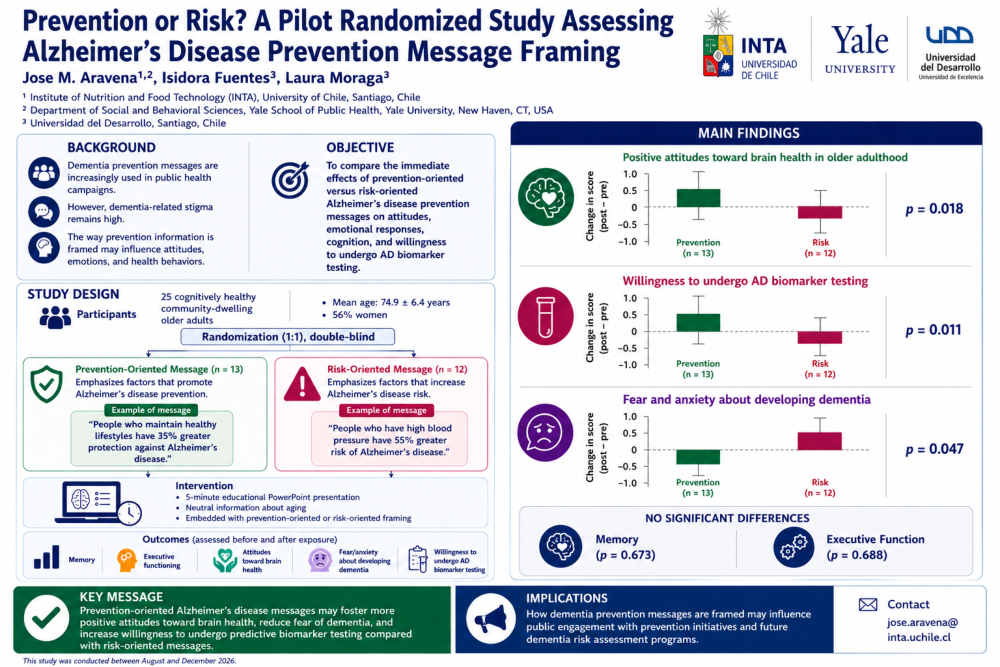
Prevention Or Risk? A Pilot Randomized Study Assessing Alzheimer’s Disease Prevention Message Framing
Poster Presenter
Part of Topic
Abstract:
Background: Although dementia prevention holds substantial promise, stigma surrounding dementia remains high in the community. Public messaging about dementia and its preventability may influence attitudes and behaviors, yet these effects have rarely been examined using causal designs. This study aimed to assess the immediate effects of Alzheimer’s disease (AD) risk-reduction message framing (prevention-oriented versus risk-oriented) on dementia prevention-related outcomes among older adults.
Methods: We conducted a double-blinded pilot randomized experiment between August and December 2026 involving 25 cognitively healthy community-dwelling older adults without a diagnosis of dementia. Participants were randomized to receive either a prevention-oriented AD message (n = 13) or a risk-oriented AD message (n = 12). Following baseline assessment, participants were exposed to a brief educational PowerPoint presentation (5 minutes) presenting neutral facts about aging, embedded with messages emphasizing either factors that promote AD prevention or factors that increase AD risk. Cognitive performance (memory and executive functioning), attitudes toward brain health, and willingness to undergo AD predictive biomarker testing were assessed before and after exposure. Between-group differences were analyzed using linear mixed-effects models and non-parametric tests.
Results: The mean participant age was 74.9 ± 6.38 years, and 56% were women. No baseline differences were observed between groups. In intention-to-treat analyses, there were no significant between-group differences in memory (p = 0.673) or executive functioning (p = 0.688) following message exposure. However, participants exposed to risk-oriented messages were more likely to show reductions in positive attitudes toward brain health in older adulthood (p = 0.018) and decreased willingness to undergo AD predictive biomarker testing (p = 0.011). In contrast, participants exposed to prevention-oriented messages reported reduced fear and anxiety about developing dementia (p = 0.047).
Conclusion: Framing AD risk-reduction messages to emphasize prevention versus risk factors may have immediate effects on attitudes, emotional responses, and willingness to engage in AD biomarker uptake. Larger studies with longer follow-up are needed to better understand the sustained impact of social messaging on dementia prevention outcomes.
Comments
Email is required but is not shown publicly.
Loading comments...