4,068 posters, 219 videos, 101 topics, 69 sessions, 14,365 authors, 6,128 institutions
ePostersLive by SciGen Technologies S.A. All rights reserved.
Alzheimer's Association International Conference 2026
July 12-15, 2026 | London, United Kingdom, and Online

4272
Depressive Symptom Networks In Older Adults From Chiclayo, Peru: A Phq-9 Network Analysis With Sex-specific Patterns
Poster Presenter
Authors
Affiliations
null,
Part of Topic
Video
Title: Depression in Older Adults in Chiclayo: A Network Analysis, 2025
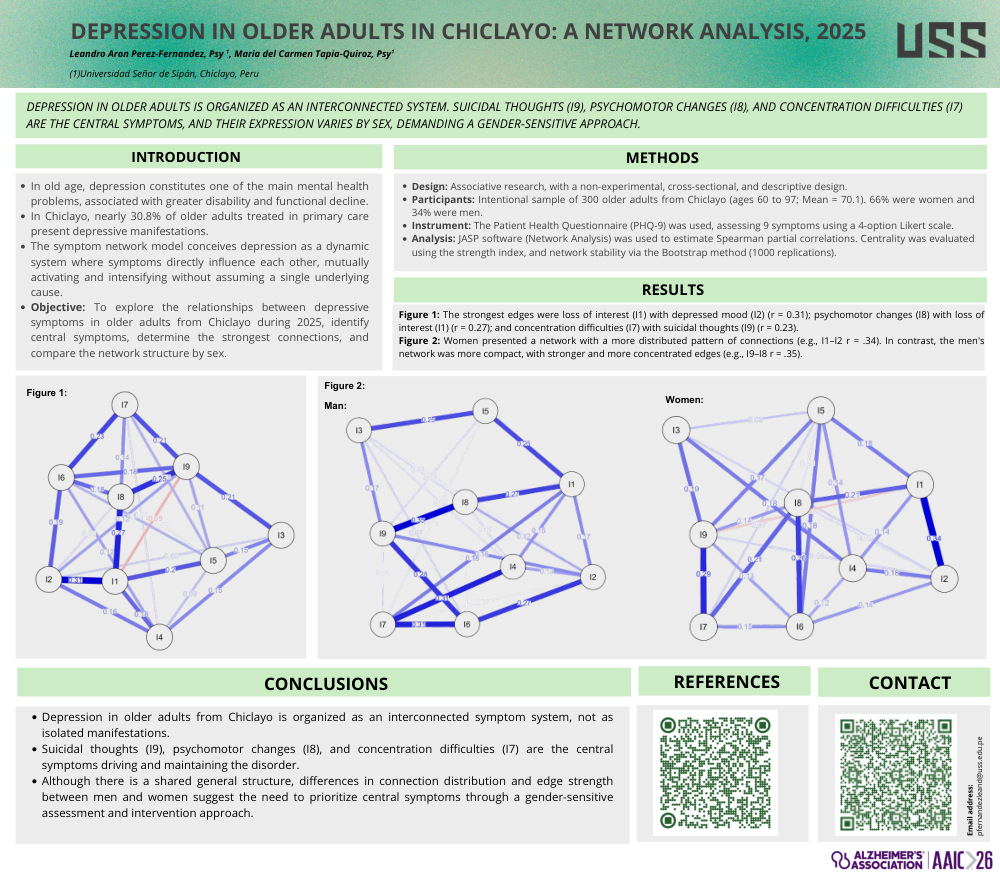
Background: In old age, depression is a major mental health issue often intertwined with cognitive and functional decline. The symptom network model conceives depression as a dynamic system where symptoms directly influence each other. This study aimed to explore the network structure of depressive symptoms in older adults from Chiclayo, identifying central symptoms, the strongest symptom connections, and sex-based differences.
Methods: An associative, cross-sectional, and descriptive study was conducted with an intentional sample of 300 older adults (ages 60–97; Mean = 70.1; 66% women). Depressive symptoms were assessed using the Patient Health Questionnaire (PHQ-9). Network estimation, strength centrality, and bootstrap stability (1,000 replications) were analyzed using JASP software, including the estimation of separate networks by sex.
Results: The overall network showed a sparsity of 27.8%, indicating an interconnected symptom system. The most central symptoms (highest strength) were suicidal thoughts (I9), psychomotor changes (I8), and concentration difficulties (I7). The strongest network edges were between loss of interest and depressed mood (r = .31), and psychomotor changes and loss of interest (r = .27). Regarding sex differences, women exhibited a more distributed pattern of connections (e.g., I1–I2, r = .34), whereas men displayed a more compact network with highly concentrated edges, particularly a strong link between suicidal thoughts and psychomotor changes (r = .35).
Conclusions: Depression in this geriatric sample operates as an interconnected dynamic system rather than isolated symptoms. The centrality of suicidal ideation, psychomotor changes, and concentration difficulties highlights critical neurocognitive and behavioral targets for intervention. Furthermore, the structural differences between men and women emphasize the necessity of gender-sensitive clinical approaches.
Comments
Email is required but is not shown publicly.
Loading comments...