4,068 posters, 219 videos, 101 topics, 69 sessions, 14,365 authors, 6,128 institutions
ePostersLive by SciGen Technologies S.A. All rights reserved.
Alzheimer's Association International Conference 2026
July 12-15, 2026 | London, United Kingdom, and Online

12018
NeuroArts Drama And Storytelling For People With Dementia And Their Caregivers In Cameroon
Poster Presenter
Authors
Part of Topic
Drug Development -> Nonhuman -> Nonpharmacological interventions
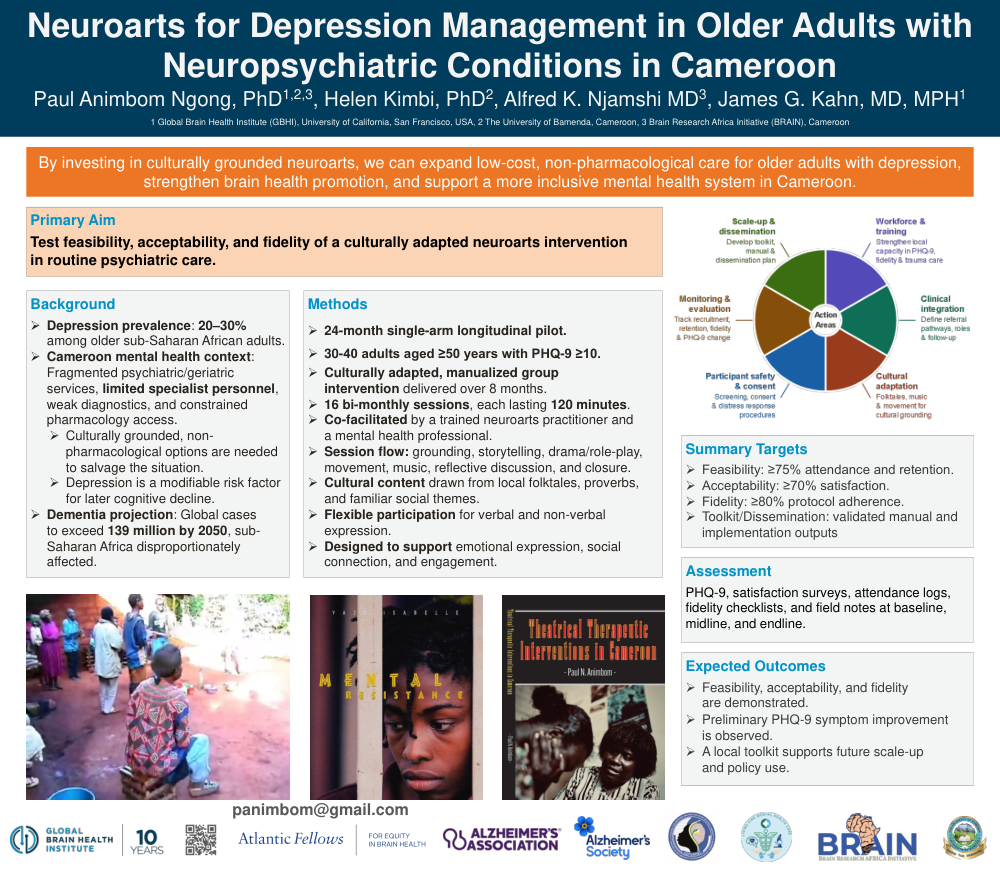
Project Title: Neuroarts for Depression Management in Older Adults with Neuropsychiatric Conditions in a Cameroonian Psychiatric Clinic
This pilot study evaluates the feasibility of a culturally grounded neuroarts intervention for older adults with depression and other neuropsychiatric conditions in a Cameroonian psychiatric clinic. It responds to the high burden of late-life depression, limited access to psychosocial care, and the need for scalable, low-cost, non-pharmacological approaches that can be integrated into routine mental health services. Neuroarts in this study combines storytelling, drama, role-play, movement, music, and other participatory arts practices drawn from local cultural traditions to support emotional regulation, social connection, and wellbeing.
The study will use a single-arm, mixed-methods, longitudinal pilot design and enroll older adults with PHQ-9 scores ≥10. Participants will attend 16 120-minute bi-monthly group sessions over 8 months. The intervention will be co-created through participatory workshops involving stakeholders, clinicians, and selected artists. This co-design process will identify the most relevant depression-related concerns, shape session themes, and ensure that the intervention is culturally acceptable, trauma-informed, and feasible within the clinic context.
Feasibility will be assessed through recruitment, retention, and attendance rates. Acceptability will be measured using satisfaction surveys and open-ended feedback on what was most helpful and what could be improved. Fidelity will be monitored using session checklists, supervision logs, and periodic review of delivery quality. Clinical outcomes will be tracked using the PHQ-9 at baseline, Month 4, and Month 8, with follow-up assessment planned after the intervention period. The study will also document adaptations, resource use, and implementation challenges to inform scale-up.
The project is expected to generate preliminary evidence on whether a culturally adapted neuroarts model can be delivered safely and effectively in a low-resource psychiatric setting. It will also produce a facilitator manual, a local implementation toolkit, and dissemination materials to support future replication and broader integration into mental health and brain health services. By centering cultural relevance, stakeholder co-creation, and implementation feasibility, the pilot aims to lay the groundwork for a future larger trial and a sustainable model of arts-based mental health care in Cameroon.
Comments
Email is required but is not shown publicly.
Loading comments...