4,068 posters, 219 videos, 101 topics, 69 sessions, 14,365 authors, 6,128 institutions
ePostersLive by SciGen Technologies S.A. All rights reserved.
Alzheimer's Association International Conference 2026
July 12-15, 2026 | London, United Kingdom, and Online

1896
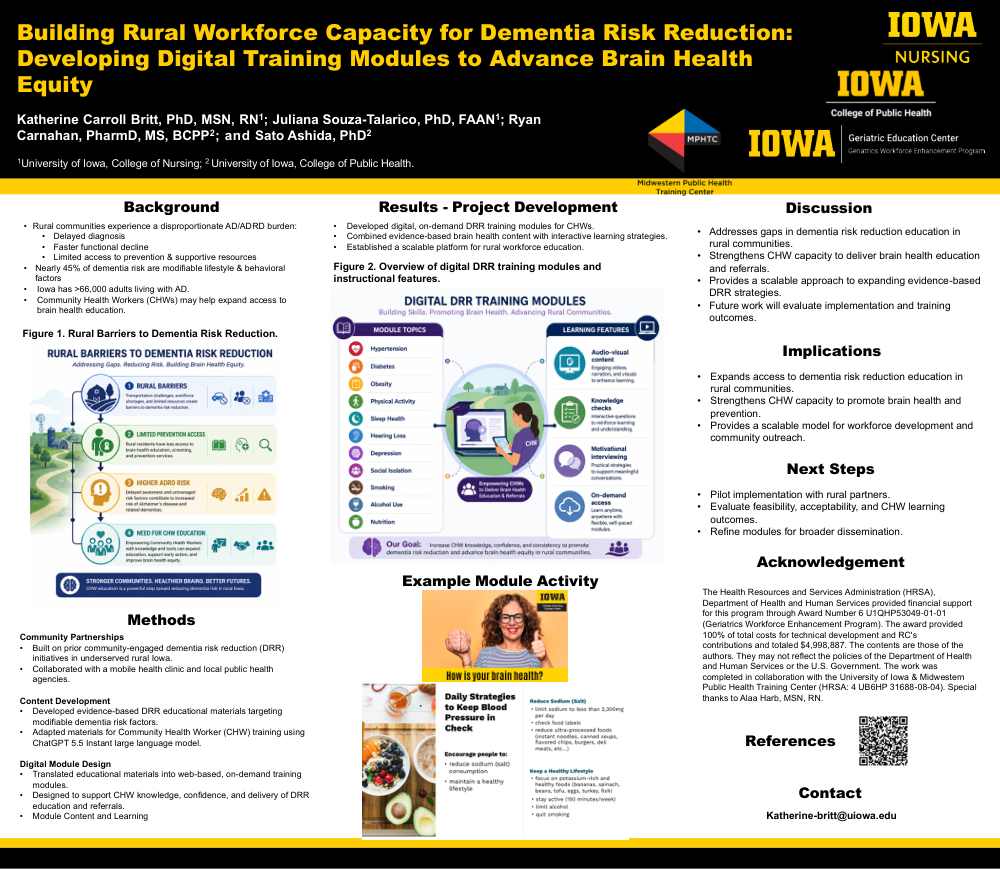
Building Rural Workforce Capacity for Dementia Risk Reduction: Developing Digital Training Modules to Advance Brain Health Equity
Poster Presenter
Authors
Katherine Britt, Juliana Souza-Talarico, Ryan Carnahan, Sato Ashida
Affiliations
Part of Topic
Rural communities face disproportionate burdens of Alzheimer’s disease and related dementias (AD/ADRD), including delayed diagnosis, faster functional decline, and limited access to prevention and support resources. Nearly 45% of dementia risk is attributable to modifiable lifestyle and behavioral factors; however, rural residents experience structural barriers such as transportation constraints, workforce shortages, and reduced access to health education and community services. In Iowa, more than 66,000 adults aged 65+ currently live with Alzheimer’s disease, a number projected to exceed 73,000 by 2025, underscoring the urgent need for scalable dementia risk reduction (DRR) strategies in rural settings. Recent community surveys in a targeted Iowa rural county found that 32–40% of older adults reported memory concerns and up to one-third endorsed loneliness or depression, highlighting elevated risk and unmet need.
Building on prior community-engaged DRR work in underserved populations, we partnered with a mobile health clinic and local public health agencies to develop DRR education materials focused on modifiable lifestyle factors associated with dementia risk. To strengthen workforce capacity and expand the reach of brain health promotion in rural communities, we are translating these materials into digital DRR education modules for Community Health Workers (CHWs) sponsored by the Geriatric Workforce Enhancement Programs (GWEP). In collaboration with the University of Iowa and the Midwest Public Health Training Center, we developed web-based, on-demand instructional modules to increase CHW knowledge, confidence, and consistency in delivering DRR education and referral. Module content addresses risk factors including hypertension, depression, diabetes, obesity, physical inactivity, sleep health, smoking, hearing loss, social isolation, excessive alcohol use, and nutrition. It incorporates case scenarios and motivational interviewing strategies.
This initiative aims to build a sustainable DRR-ready workforce, strengthen integration of brain health education within rural outreach and primary care programs, and promote earlier awareness and adoption of risk reduction strategies among middle-aged and older adults in Iowa. The next phase will be pilot implementation in partnership with rural clinic partners and geriatrics workforce development programs. By leveraging digital training infrastructure and community-driven design, this project offers a scalable and adaptable model to advance dementia risk reduction and health equity in rural populations.
Comments
Email is required but is not shown publicly.
Loading comments...