4,068 posters, 219 videos, 101 topics, 69 sessions, 14,365 authors, 6,128 institutions
ePostersLive by SciGen Technologies S.A. All rights reserved.
Alzheimer's Association International Conference 2026
July 12-15, 2026 | London, United Kingdom, and Online

2613
From Presentation To Diagnosis: Real World Outcomes Of Patients Presenting With Cognitive Symptoms In Primary Care
Poster Presenter
Authors
Affiliations
Part of Topic
Background
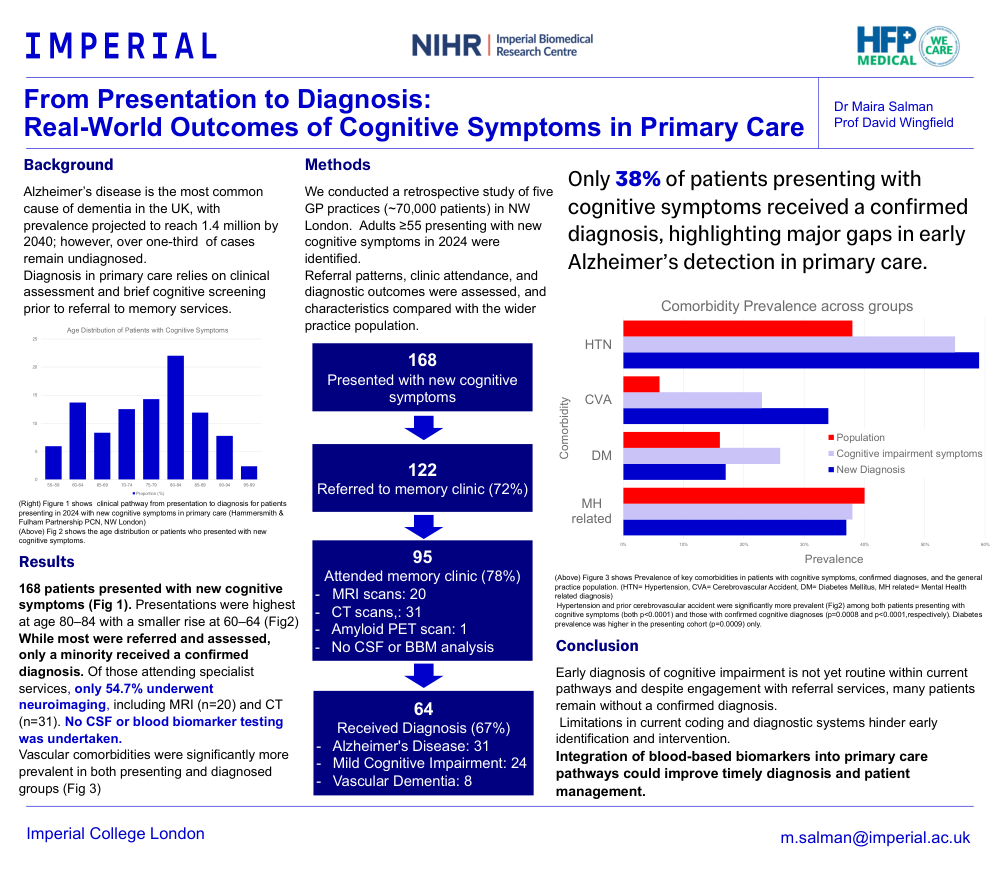
Alzheimer’s disease is the most common cause of dementia in the UK, with prevalence projected to reach 1.4 million by 2040; however, over one-third of cases remain undiagnosed.
Diagnosis in primary care relies on clinical assessment and brief cognitive screening prior to referral to memory services
Methods
We conducted a retrospective study of five
GP practices (~70,000 patients) in NW London. Adults ≥55 presenting with new cognitive symptoms in 2024 were identified.
Referral patterns, clinic attendance, and diagnostic outcomes were assessed, and characteristics compared with the wider practice population
Methods
We conducted a retrospective study of five
GP practices (~70,000 patients) in NW London. Adults ≥55 presenting with new cognitive symptoms in 2024 were identified.
Referral patterns, clinic attendance, and diagnostic outcomes were assessed, and characteristics compared with the wider practice population
Results
168 patients presented with new cognitive symptoms (Fig 1). Presentations were highest at age 80–84 with a smaller rise at 60–64 (Fig2)
While most were referred and assessed, only a minority received a confirmed diagnosis. Of those attending specialist services, only 54.7% underwent neuroimaging,including MRI (n=20) and CT (n=31). No CSF or blood biomarker testing was undertaken.
Vascular comorbidities were significantly more prevalent in both presenting and diagnosed groups (Fig 3)
Only 38% of patients presenting with cognitive symptoms received a confirmed diagnosis, highlighting major gaps in early Alzheimer’s detection in primary care.
Conclusion
Early diagnosis of cognitive impairment is not yet routine within current pathways and despite engagement with referral services, many patients remain without a confirmed diagnosis.
Limitations in current coding and diagnostic systems hinder early identification and intervention.
Integration of blood-based biomarkers into primary care pathways could improve timely diagnosis and patient management.
Comments
Email is required but is not shown publicly.
Loading comments...