4,068 posters, 219 videos, 101 topics, 69 sessions, 14,365 authors, 6,128 institutions
ePostersLive by SciGen Technologies S.A. All rights reserved.
Alzheimer's Association International Conference 2026
July 12-15, 2026 | London, United Kingdom, and Online

10307
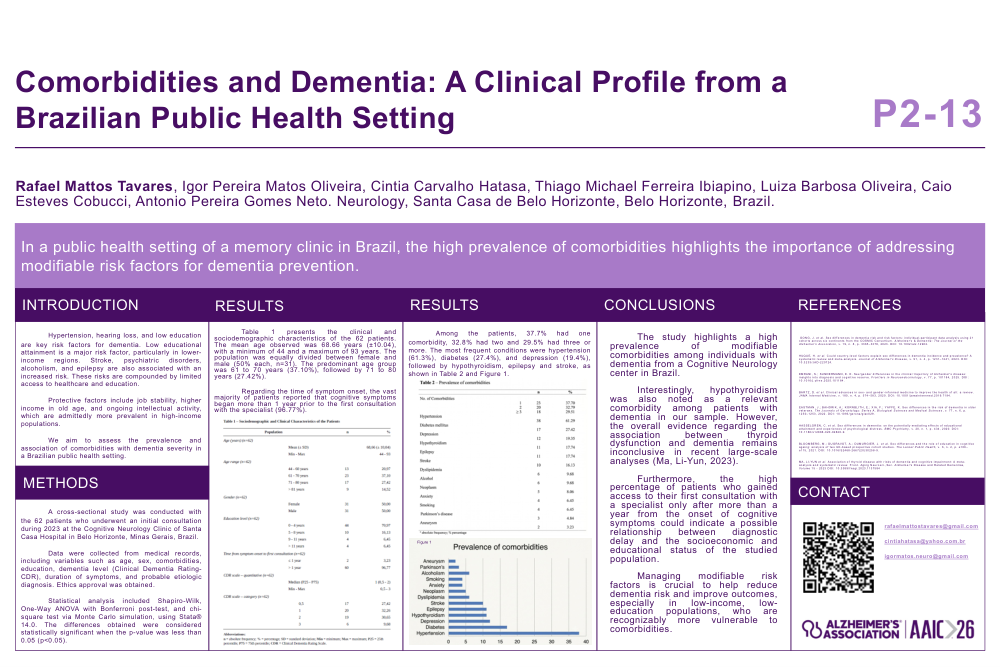
Comorbidities And Dementia: A Clinical Profile From A Brazilian Public Health Setting
Poster Presenter
Authors
Rafael Tavares, Igor Oliveira, Luiza Oliveira, Thiago Ibiapino, Caio Cobucci, Cintia Hatasa, Antonio Neto
Affiliations
null,
Part of Topic
Background:
Hypertension, hearing loss, and low education are key risk factors for dementia, especially in low-income populations. Protective factors include job stability, higher income in old age,and ongoing intellectual activity. Stroke, psychiatric disorders, alcoholism, and epilepsy are alsoassociated with an increased risk. These risks are compounded by limited access to healthcare andeducation. We aim to assess the prevalence and association of comorbidities with dementia severity.
Methods:
A cross-sectional study was conducted with 62 patients from a cognitive neurology center in Brazil. Data were collected from medical records from 2023. Variables included age, sex, comorbidities,education, dementia level (CDR), symptom duration, syndromic and etiologic diagnosis. Statistical analysis included Shapiro-Wilk, One-Way ANOVA with Bonferroni post-test, and chi-square test viaMonte Carlo simulation, using Stata® 14.0. Significance level was p<0.05. Ethics approval was obtained.
Results:
Among the patients, 37.7% had one comorbidity and 32.8% had two. The most frequent conditions were hypertension (61.3%), diabetes (27.4%), and depression (19.4%).
Conclusions:
The study highlights a high prevalence of modifiable comorbidities among individuals with dementia. Additionally, hypothyroidism was also noted as a relevant comorbidity among patients with dementia in our sample. However, the overall evidence regarding the association between thyroid dysfunction and dementia remains inconclusive in recent large-scale analyses. Managing modifiable risk factors is crucial, especially in low-income, low-education populations, to help reduce dementia risk and improve outcomes.
Comments
Email is required but is not shown publicly.
Loading comments...