4,068 posters, 219 videos, 101 topics, 69 sessions, 14,365 authors, 6,128 institutions
ePostersLive by SciGen Technologies S.A. All rights reserved.
Alzheimer's Association International Conference 2026
July 12-15, 2026 | London, United Kingdom, and Online

3042
Grief And Loss In People Living With Dementia: Development Of The “Navigating Loss In Dementia” Online Group Intervention
Poster Presenter
Authors
Affiliations
Part of Topic
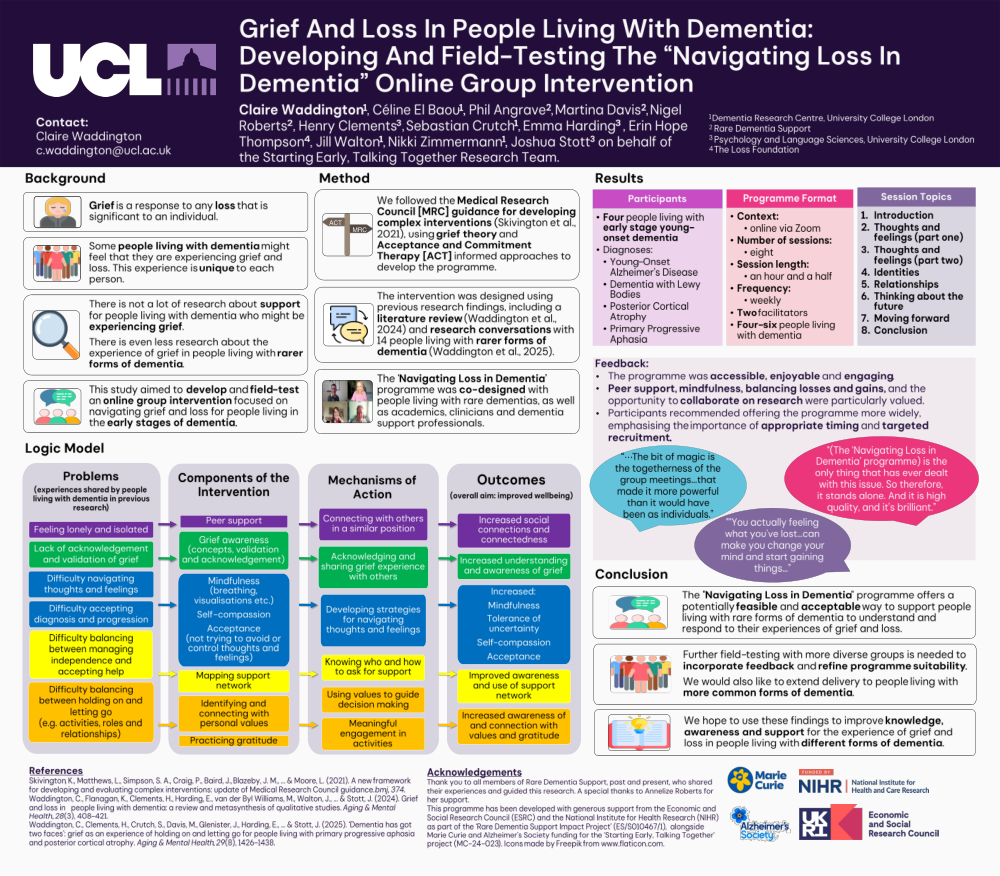
Background: Research findings show that people living with dementia experience grief related to past, present, and anticipated losses associated with their diagnosis, yet tailored psychosocial support remains limited. People living with non-memory led and younger-onset dementias are particularly underrepresented in research, with scant evidence for appropriate interventions. This study aimed to develop and field-test an online intervention focused on navigating loss for people living in the early stages of dementia.
Methods: The "Navigating Loss in Dementia" programme was co-designed with people living with rarer forms of dementia alongside relevant professionals. Guided by the Medical Research Council guidance for complex interventions, published qualitative metasynthesis findings, outcomes from research conversations with fourteen people living with dementia, grief theory and Acceptance and Commitment Therapy (ACT)-informed approaches were used to inform programme development.
Results: The programme comprises eight, 1.5 hour sessions delivered via videoconference by two facilitators. Session topics include: introduction; thoughts and feelings (Parts 1 and 2); identity; relationships; thinking about the future; moving forward; and a check-in session. Four people living with early-stage dementia participated in an initial feasibility study. Diagnoses included: young-onset Alzheimer’s disease, dementia with Lewy bodies, posterior cortical atrophy, and primary progressive aphasia. Post-session feedback indicated that the programme was accessible, enjoyable and engaging. Peer support, mindfulness, balancing losses and gains, and the opportunity to collaborate on research were particularly valued. Participants recommended offering the programme more widely, emphasising the importance of appropriate timing and targeted recruitment.
Conclusion: The "Navigating Loss in Dementia" programme offers a potentially feasible and acceptable way to support people living with underserved forms of dementia in navigating experiences of grief and loss. Building on these insights, further field-testing will refine the programme based on participant feedback and assess suitability for a broader population of individuals living with dementia.
Comments
Email is required but is not shown publicly.
Loading comments...