4,068 posters, 219 videos, 101 topics, 69 sessions, 14,365 authors, 6,128 institutions
ePostersLive by SciGen Technologies S.A. All rights reserved.
Alzheimer's Association International Conference 2026
July 12-15, 2026 | London, United Kingdom, and Online

2045
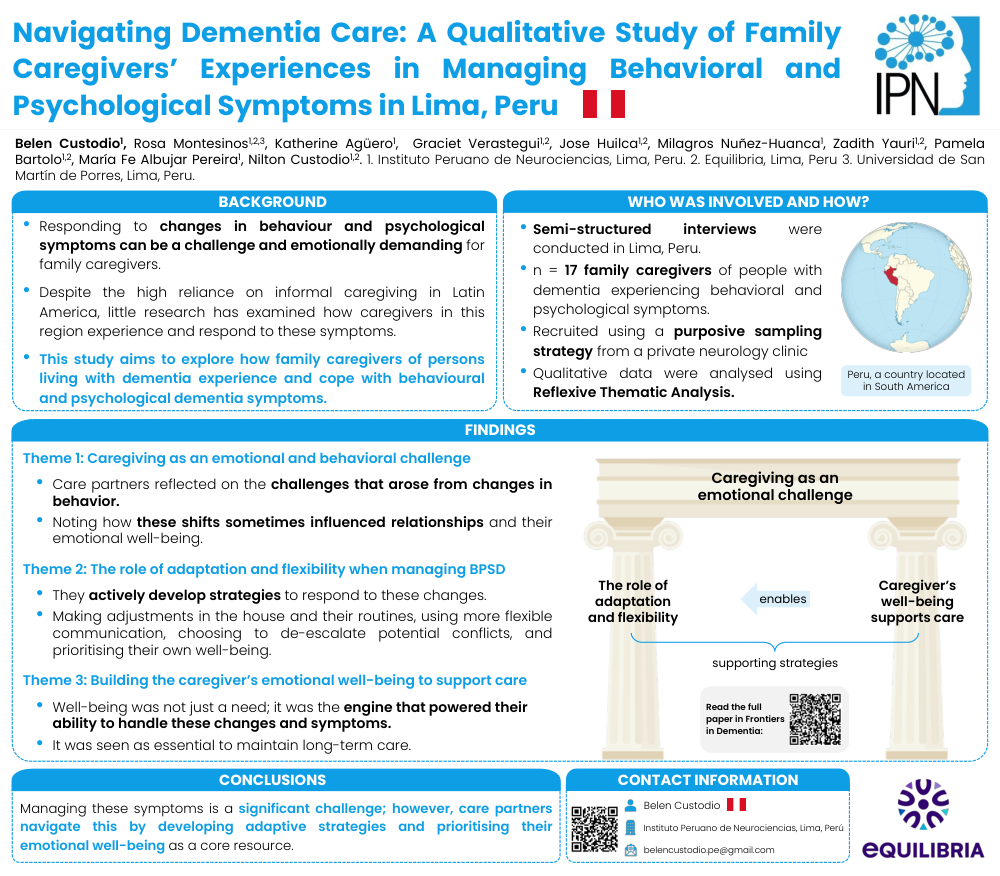
Navigating Dementia Care: A Qualitative Study of Family Caregivers’ Experiences in Managing Behavioural and Psychological Symptoms in Lima, Peru
Poster Presenter
Part of Topic
BACKGROUND
• Responding to changes in behaviour and psychological symptoms can be a challenge and emotionally demanding for family caregivers.
• Despite the high reliance on informal caregiving in Latin America, little research has examined how caregivers in this region experience and respond to these symptoms.
• This study aims to explore how family caregivers of persons living with dementia experience and cope with behavioural and psychological dementia symptoms.
WHO WAS INVOLVED AND HOW?
• Semi-structured interviews were conducted in Lima, Peru.
• n = 17 family caregivers of people with dementia experiencing behavioral and psychological symptoms.
• Recruited using a purposive sampling strategy from a private neurology clinic
• Qualitative data were analysed using Reflexive Thematic Analysis.
FINDINGS
Theme 1: Caregiving as an emotional and behavioral challenge
• Care partners reflected on the challenges that arose from changes in behavior.
• Noting how these shifts sometimes influenced relationships and their emotional well-being.
Theme 2: The role of adaptation and flexibility when managing BPSD
• They actively develop strategies to respond to these changes.
• Making adjustments in the house and their routines, using more flexible communication, choosing to de-escalate potential conflicts, and prioritising their own well-being.
Theme 3: Building the caregiver’s emotional well-being to support care
• Well-being was not just a need; it was the engine that powered their ability to handle these changes and symptoms.
• It was seen as essential to maintain long-term care.
CONCLUSIONS
Managing these symptoms is a significant challenge; however, care partners navigate this by developing adaptive strategies and prioritising their emotional well-being as a core resource.
Comments
Email is required but is not shown publicly.
Loading comments...