4,068 posters, 219 videos, 101 topics, 69 sessions, 14,365 authors, 6,128 institutions
ePostersLive by SciGen Technologies S.A. All rights reserved.
Alzheimer's Association International Conference 2026
July 12-15, 2026 | London, United Kingdom, and Online

10183
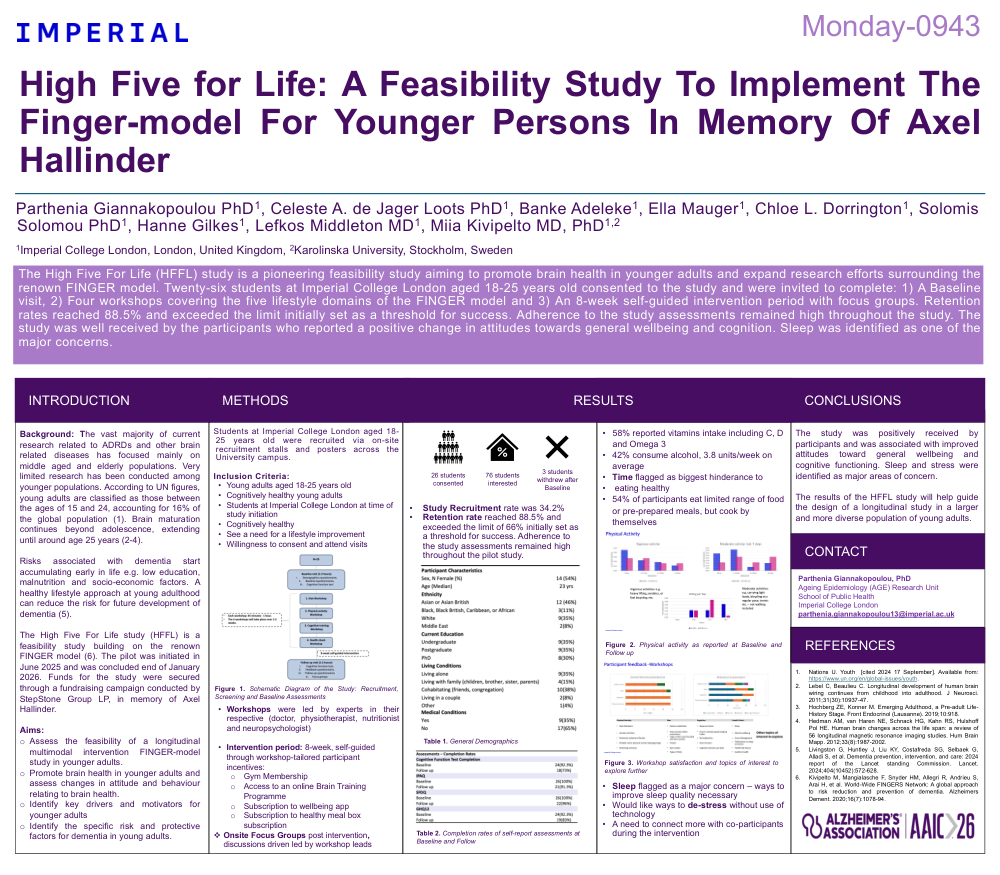
High Five For Life: A Feasibility Study To Implement The Finger-model For Younger Persons In Memory Of Axel Hallinder
Part of Topic
Background: The vast majority of current research related to ADRDs and other brain related diseases has focused mainly on middle aged and elderly populations. Very limited research has been conducted among younger populations. According to UN figures, young adults are classified as those between the ages of 15 and 24, accounting for 16% of the global population (1). Brain maturation continues beyond adolescence, extending until around age 25 years (2-4).
Risks associated with dementia start accumulating early in life e.g. low education, malnutrition and socio-economic factors. A healthy lifestyle approach at young adulthood can reduce the risk for future development of dementia (5).
The High Five For Life study (HFFL) is a feasibility study building on the renown FINGER model (6). The pilot was initiated in June 2025 and was concluded end of January 2026. Funds for the study were secured through a fundraising campaign conducted by StepStone Group LP, in memory of Axel Hallinder.
Aims:
Students at Imperial College London aged 18-25 years old were recruited via on-site recruitment stalls and posters across the University campus.
Inclusion Criteria:
The study was positively received by participants and was associated with improved attitudes toward general wellbeing and cognitive functioning. Sleep and stress were identified as major areas of concern.
The results of the HFFL study will help guide the design of a longitudinal study in a larger and more diverse population of young adults.
Comments
Email is required but is not shown publicly.
Loading comments...