4,068 posters, 219 videos, 101 topics, 69 sessions, 14,365 authors, 6,128 institutions
ePostersLive by SciGen Technologies S.A. All rights reserved.
Alzheimer's Association International Conference 2026
July 12-15, 2026 | London, United Kingdom, and Online

10029
Repetitive Mild Traumatic Brain Injury Exacerbates Cognitive-Behavioral Deficits In A Mouse Model Of Cerebral Amyloid Angiopathy
Poster Presenter
Part of Topic
Background:
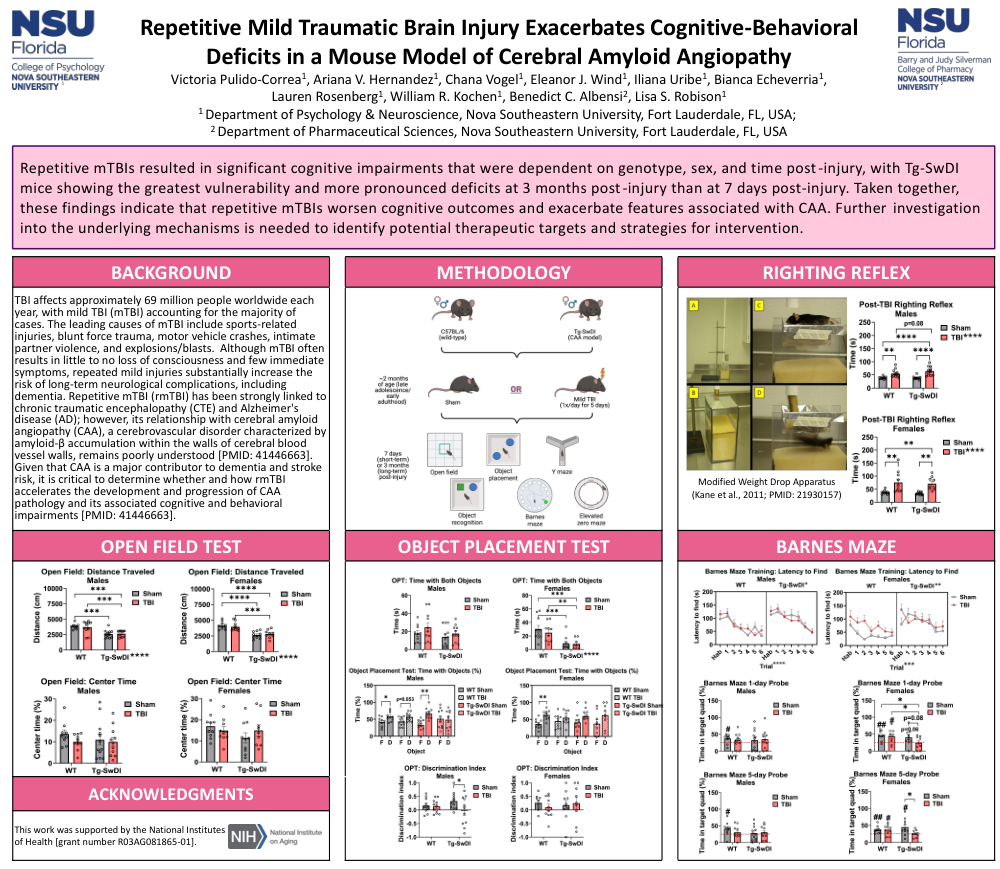
TBI affects approximately 69 million people worldwide each year, with mild TBI (mTBI) accounting for the majority of cases. The leading causes of mTBI include sports-related injuries, blunt force trauma, motor vehicle crashes, intimate partner violence, and explosions/blasts. Although mTBI often results in little to no loss of consciousness and few immediate symptoms, repeated mild injuries substantially increase the risk of long-term neurological complications, including dementia. Repetitive mTBI (rmTBI) has been strongly linked to chronic traumatic encephalopathy (CTE) and Alzheimer's disease (AD); however, its relationship with cerebral amyloid angiopathy (CAA), a cerebrovascular disorder characterized by amyloid-βaccumulation within the walls of cerebral blood vessel walls, remains poorly understood [PMID: 41446663]. Given that CAA is a major contributor to dementia and stroke risk, it is critical to determine whether and how rmTBIaccelerates the development and progression of CAA pathology and its associated cognitive and behavioral impairments [PMID: 41446663].
Conclusion:
Repetitive mTBIs resulted in significant cognitive impairments that were dependent on genotype, sex, and time post-injury, with Tg-SwDI mice showing the greatest vulnerability and more pronounced deficits at 3 months post-injury than at 7 days post-injury. Taken together, these findings indicate that repetitive mTBIs worsen cognitive outcomes and exacerbate features associated with CAA. Further investigation into the underlying mechanisms is needed to identify potential therapeutic targets and strategies for intervention.
Comments
Email is required but is not shown publicly.
Loading comments...