4,068 posters, 219 videos, 101 topics, 69 sessions, 14,365 authors, 6,128 institutions
ePostersLive by SciGen Technologies S.A. All rights reserved.
Alzheimer's Association International Conference 2026
July 12-15, 2026 | London, United Kingdom, and Online

10420
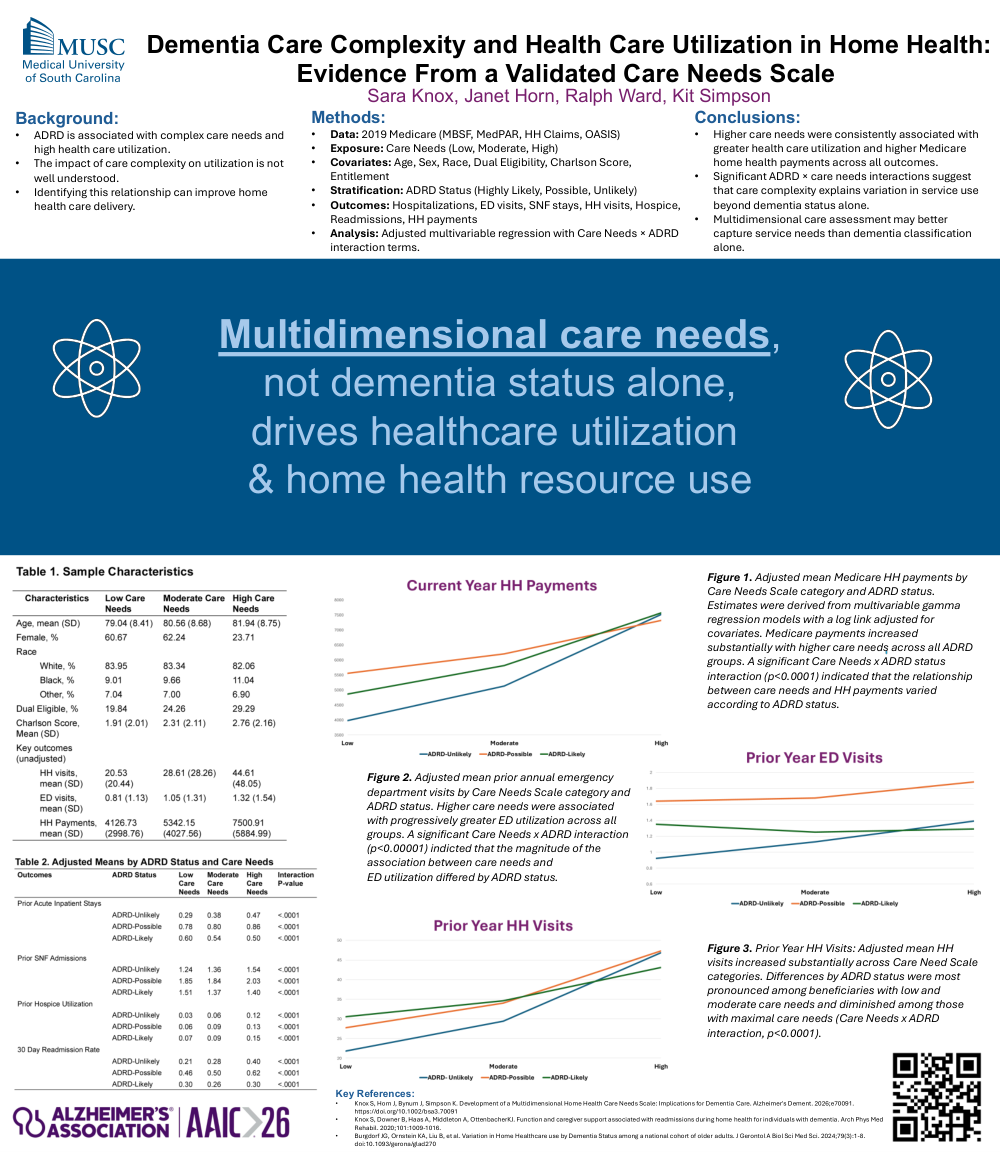
Dementia Care Complexity And Health Care Utilization In Home Health: Evidence From A Validated Care Needs Scale
Part of Topic
Dementia Care Complexity and Health Care Utilization in Home Health: Evidence From a Validated Care Needs Scale
Background:
Methods:
Conclusions:
Multidimensional care needs, not dementia status alone, drives healthcare utilization & home health resource use
Figure 1. Adjusted mean Medicare HH payments by Care Needs Scale category and ADRD status. Estimates were derived from multivariable gamma regression models with a log link adjusted for covariates. Medicare payments increased substantially with higher care needs across all ADRD groups. A significant Care Needs x ADRD status interaction (p<0.0001) indicated that the relationship between care needs and HH payments varied according to ADRD status.
Figure 2. Adjusted mean prior annual emergency department visits by Care Needs Scale category and ADRD status. Higher care needs were associated with progressively greater ED utilization across all groups. A significant Care Needs x ADRD interaction (p<0.00001) indicted that the magnitude of the association between care needs and ED utilization differed by ADRD status.
Figure 3. Prior Year HH Visits: Adjusted mean HH visits increased substantially across Care Need Scale categories. Differences by ADRD status were most pronounced among beneficiaries with low and moderate care needs and diminished among those with maximal care needs (Care Needs x ADRD interaction, p<0.0001).
Comments
Email is required but is not shown publicly.
Loading comments...