4,068 posters, 219 videos, 101 topics, 69 sessions, 14,365 authors, 6,128 institutions
ePostersLive by SciGen Technologies S.A. All rights reserved.
Alzheimer's Association International Conference 2026
July 12-15, 2026 | London, United Kingdom, and Online

1218
Comparative Diagnostic Performance Of Paper-based, Tablet-based, And Virtual Reality Cognitive Assessments For Dementia: A Pilot Study
Poster Presenter
Authors
Affiliations
Part of Topic
INTRODUCTION
Early detection of cognitive impairment is crucial in dementia. This study compared the ability of paper-, VR-, and tablet-based cognitive assessments to differentiate Alzheimer’s disease (AD) from cognitively normal controls, with digital platforms incorporating reaction time (RT) as an additional behavioral metric.
METHODS
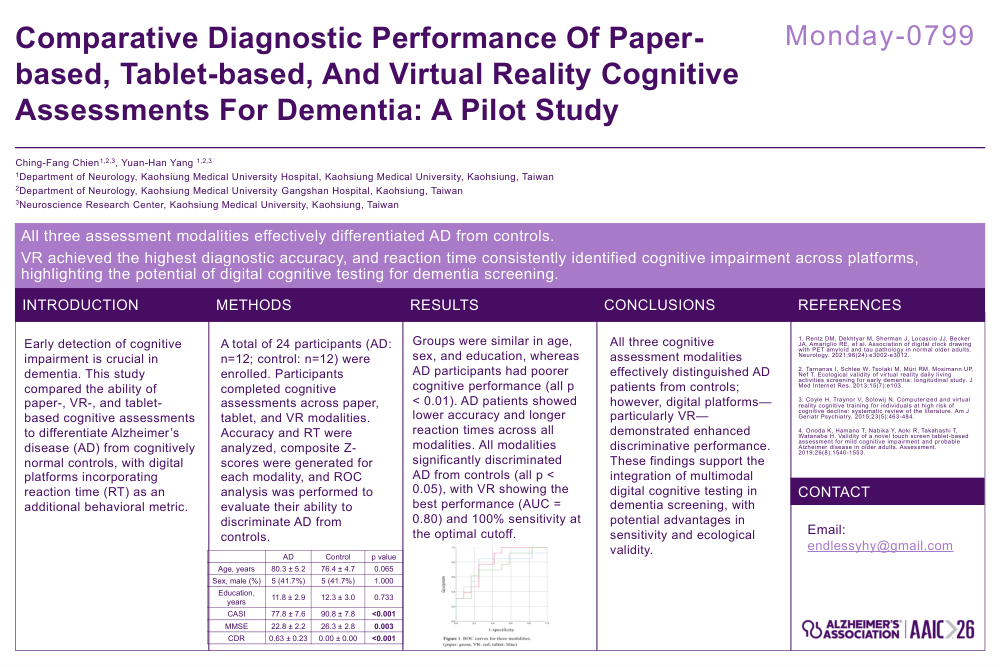
A total of 24 participants (AD: n=12; control: n=12) were enrolled. Participants completed cognitive assessments across paper, tablet, and VR modalities. Accuracy and RT were analyzed, composite Z-scores were generated for each modality, and ROC analysis was performed to evaluate their ability to discriminate AD from controls.
RESULTS
Groups were similar in age, sex, and education, whereas AD participants had poorer cognitive performance (all p < 0.01). AD patients showed lower accuracy and longer reaction times across all modalities. All modalities significantly discriminated AD from controls (all p < 0.05), with VR showing the best performance (AUC = 0.80) and 100% sensitivity at the optimal cutoff.
CONCLUSIONS
All three cognitive assessment modalities effectively distinguished AD patients from controls; however, digital platforms—particularly VR—demonstrated enhanced discriminative performance. These findings support the integration of multimodal digital cognitive testing in dementia screening, with potential advantages in sensitivity and ecological validity.
Comments
Email is required but is not shown publicly.
Loading comments...