4,068 posters, 219 videos, 101 topics, 69 sessions, 14,365 authors, 6,128 institutions
ePostersLive by SciGen Technologies S.A. All rights reserved.
Alzheimer's Association International Conference 2026
July 12-15, 2026 | London, United Kingdom, and Online

3705
Pharmacological Management In Frontotemporal Dementia And Patient Outcomes: A Retrospective Cohort Study Utilizing The Trinetx Platform
Poster Presenter
Authors
Part of Topic
Frontotemporal dementia (FTD) is characterized by a progressive decline in behavior, executive functions, and/or language.
In the absence of standardized treatment protocols, prescribing practices are largely empirical and often include potentially harmful medications (PHM) - such as antipsychotics, benzodiazepines, and Alzheimer’s disease medications (anticholinesterases, memantine).
This study examined prescribing patterns after FTD diagnosis and compared hospital-based acute care (HBAC) outcomes between patients exposed and not exposed to PHM.
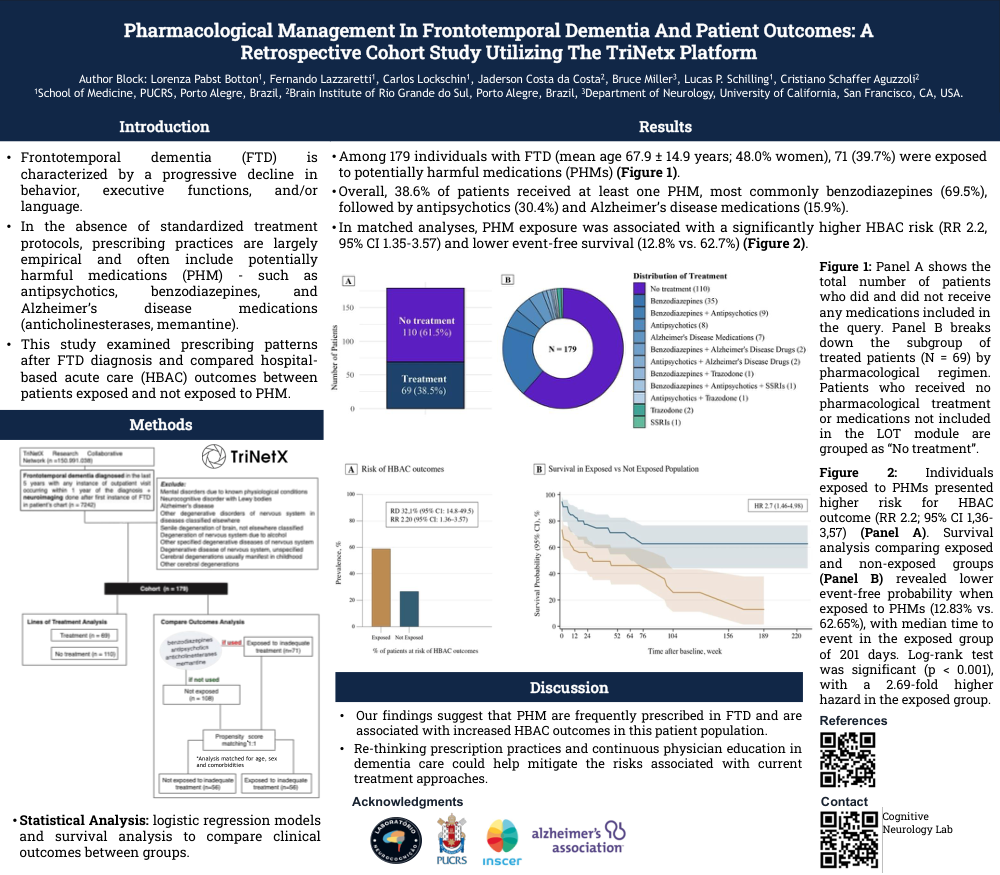
Among 179 individuals with FTD (mean age 67.9 ± 14.9 years; 48.0% women), 71 (39.7%) were exposed to potentially harmful medications (PHMs) (Figure 1).
Overall, 38.6% of patients received at least one PHM, most commonly benzodiazepines (69.5%), followed by antipsychotics (30.4%) and Alzheimer’s disease medications (15.9%).
In matched analyses, PHM exposure was associated with a significantly higher HBAC risk (RR 2.2, 95% CI 1.35-3.57) and lower event-free survival (12.8% vs. 62.7%) (Figure 2).
Our findings suggest that PHM are frequently prescribed in FTD and are associated with increased HBAC outcomes in this patient population.
Re-thinking prescription practices and continuous physician education in dementia care could help mitigate the risks associated with current treatment approaches.Comments
Email is required but is not shown publicly.
Loading comments...