4,068 posters, 219 videos, 101 topics, 69 sessions, 14,365 authors, 6,128 institutions
ePostersLive by SciGen Technologies S.A. All rights reserved.
Alzheimer's Association International Conference 2026
July 12-15, 2026 | London, United Kingdom, and Online

7179
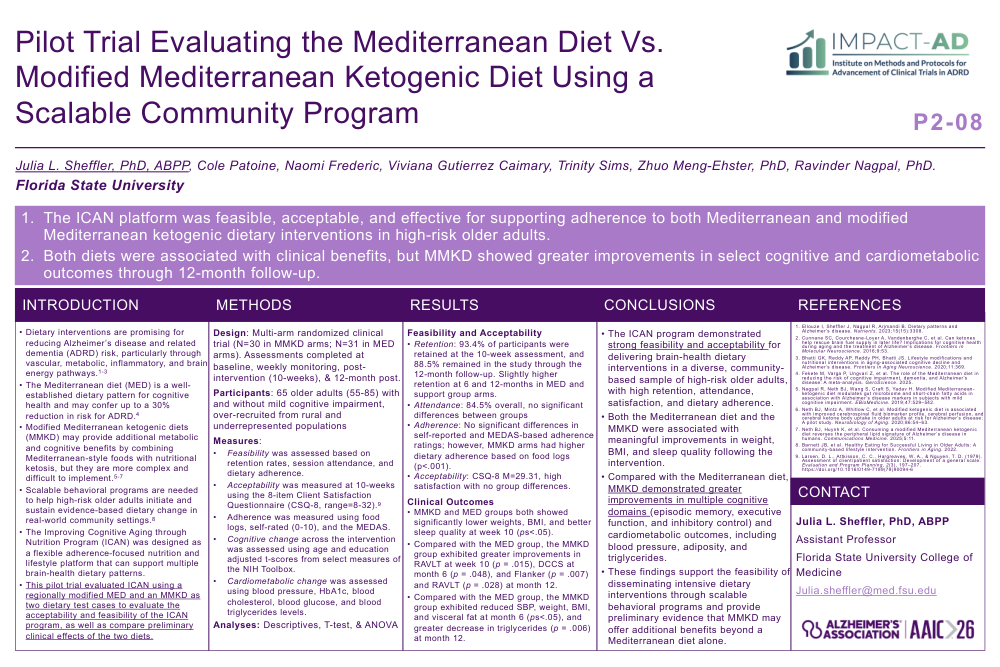
Pilot Trial Evaluating The Mediterranean Diet Vs. Modified Mediterranean Ketogenic Diet Using A Scalable Community Program
Poster Presenter
Part of Topic
Introduction:
•Dietary interventions are promising for reducing Alzheimer’s disease and related dementia (ADRD) risk, particularly through vascular, metabolic, inflammatory, and brain energy pathways.1-3
•The Mediterranean diet (MED) is a well-established dietary pattern for cognitive health and may confer up to a 30% reduction in risk for ADRD.4
•Modified Mediterranean ketogenic diets (MMKD) may provide additional metabolic and cognitive benefits by combining Mediterranean-style foods with nutritional ketosis, but they are more complex and difficult to implement.5-7
•Scalable behavioral programs are needed to help high-risk older adults initiate and sustain evidence-based dietary change in real-world community settings.8
•The Improving Cognitive Aging through Nutrition Program (ICAN) was designed as a flexible adherence-focused nutrition and lifestyle platform that can support multiple brain-health dietary patterns.
•This pilot trial evaluated ICAN using a regionally modified MED and an MMKD as two dietary test cases to evaluate the acceptability and feasibility of the ICAN program, as well as compare preliminary clinical effects of the two diets.
Conclusions:
• The ICAN program demonstrated strong feasibility and acceptability for delivering brain-health dietary interventions in a diverse, community-based sample of high-risk older adults, with high retention, attendance, participant satisfaction, and dietary adherence.
•Both the Mediterranean diet and modified Mediterranean ketogenic diet were associated with meaningful improvements in weight, BMI, and sleep quality following the intervention.
•Compared with the Mediterranean diet, MMKD demonstrated greater improvements in multiple cognitive domains (episodic memory, executive function, and inhibitory control) and cardiometabolic outcomes, including blood pressure, adiposity, and triglycerides.
These findings support the feasibility of disseminating intensive dietary interventions through scalable behavioral programs and provide preliminary evidence that MMKD may offer additional benefits Comments
Email is required but is not shown publicly.
Loading comments...