4,068 posters, 219 videos, 101 topics, 69 sessions, 14,365 authors, 6,128 institutions
ePostersLive by SciGen Technologies S.A. All rights reserved.
Alzheimer's Association International Conference 2026
July 12-15, 2026 | London, United Kingdom, and Online

10309
Vestibular Dysfunction As A Key Contributor To Balance Impairment In Dementia
Poster Presenter
Part of Topic
Title: Vestibular dysfunction as a key contributor to balance impairment in dementia
Background: Falls represent a major public health concern among older adults and are particularly prevalent in individuals with cognitive impairment and dementia, being one of the main causes of morbidity, loss of independence and functional decline. Although balance impairment is already recognized in dementia cases, the specific contributions of sensory integration systems involved in postural control are affected across different stages of cognitive decline.
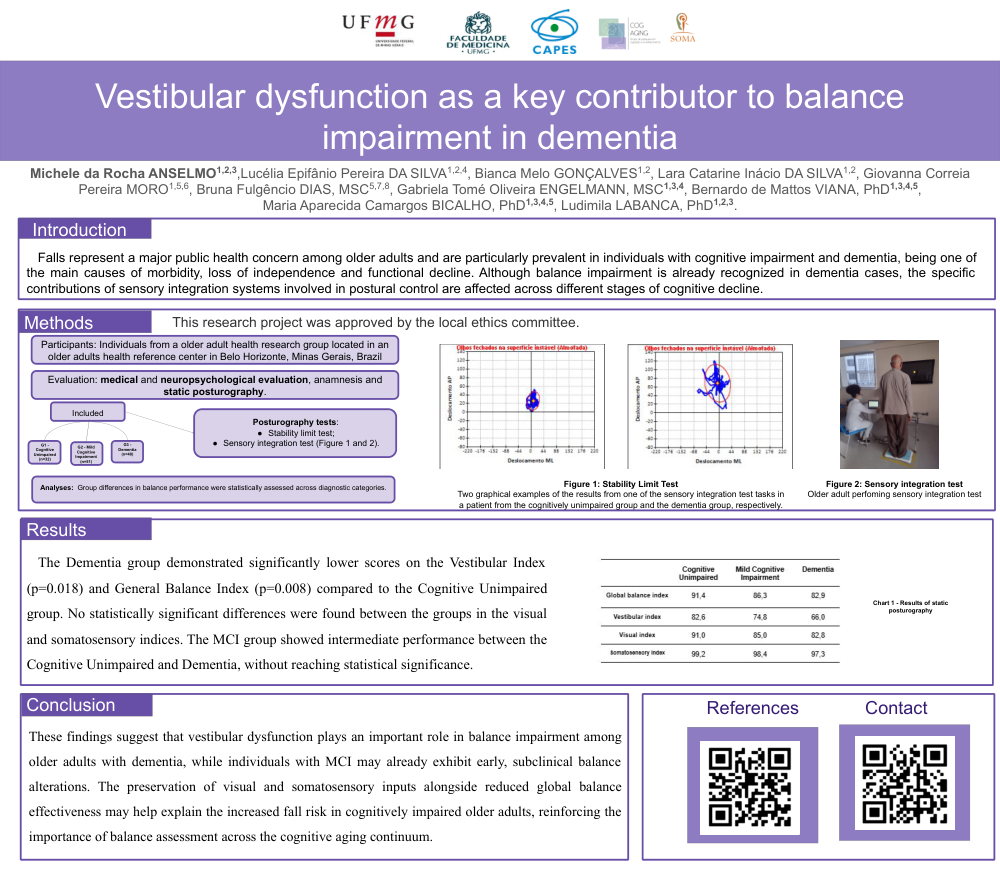
Methods: One hundred and twenty-three older adults were evaluated and categorized into three diagnostic groups: Cognitively Unimpaired (n=32), Mild Cognitive Impairment (MCI) (n=51) and Dementia (n=40). Groups were comparable regarding age and sex distribution. Balance performance was objectively assessed using static posturography with dynamic tests, allowing quantification of vestibular, visual, somatosensory and global balance indices. Group differences in balance performance were statistically assessed across diagnostic categories.
Results: The Dementia group demonstrated significantly lower scores on the Vestibular Index (p=0.018) and General Balance Index (p=0.008) compared to the Cognitive Unimpaired group. No statistically significant differences were found between the groups in the visual and somatosensory indices. The MCI group showed intermediate performance between the Cognitive Unimpaired and Dementia, without reaching statistical significance.
Conclusion: These findings suggest that vestibular dysfunction plays an important role in balance impairment among older adults with dementia, while individuals with MCI may already exhibit early, subclinical balance alterations. The preservation of visual and somatosensory inputs alongside reduced global balance effectiveness may help explain the increased fall risk in cognitively impaired older adults, reinforcing the importance of balance assessment across the cognitive aging continuum.
Comments
Email is required but is not shown publicly.
Loading comments...