4,068 posters, 219 videos, 101 topics, 69 sessions, 14,365 authors, 6,128 institutions
ePostersLive by SciGen Technologies S.A. All rights reserved.
Alzheimer's Association International Conference 2026
July 12-15, 2026 | London, United Kingdom, and Online

6632
Prevalence Of Sleep Disorders In Neurocognitive Disorders
Part of Topic
Background: Sleep disorders are a prevalent neuropsychiatric symptom exhibited by patients diagnosed with neurocognitive disorders (NCDs). Nevertheless, clinical evaluation is impeded by patient anosognosia. The caregiver-report is a valuable source for conducting a comprehensive evaluation of the impact and frequency of symptoms. The objective of this study is to estimate the prevalence of sleep disorders in Mexican patients with NCDs, utilizing an extended assessment tool.
Methods: We analyzed data from 357 patients from the National Institute of Neurology and Neurosurgery (INNN), in Mexico City. These patients attended the outpatient clinic for cognitive aging and dementia from March 2025 to December 2025. The study population comprised adults with confirmed diagnoses of NCDs. A comparison was made between sociodemographic variables and dependency levels (number of caregivers). Sleep disorders were assessed using the Sleep Disorders Inventory (SDI), which was administered to the caregiver. This version of the SDI included additional items to assess snoring, apnea, and restorative sleep.
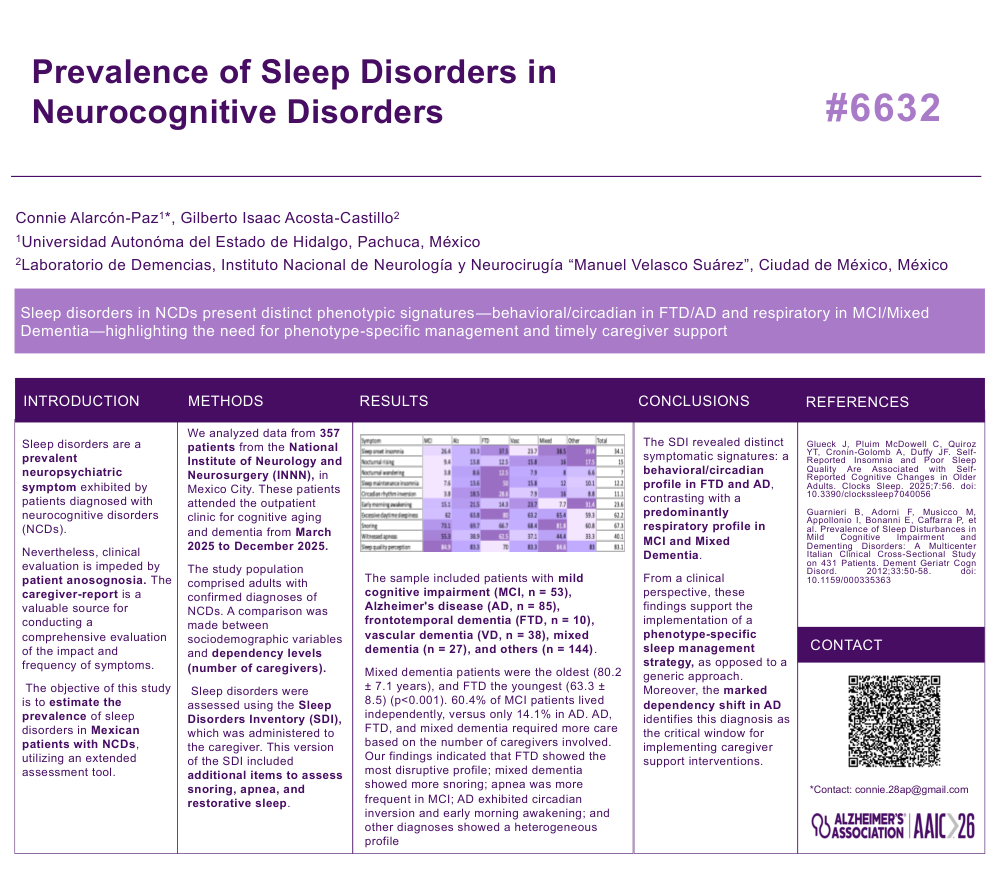
Results: The sample included patients with mild cognitive impairment (MCI, n = 53), Alzheimer's disease (AD, n = 85), frontotemporal dementia (FTD, n = 10), vascular dementia (VD, n = 38), mixed dementia (n = 27), and others (n = 144). Mixed dementia patients were the oldest (80.2 ± 7.1 years), and FTD the youngest (63.3 ± 8.5) (p<0.001). 60.4% of MCI patients lived independently, versus only 14.1% in AD. AD, FTD, and mixed dementia required more care based on the number of caregivers involved. Our findings indicated that FTD showed the most disruptive profile; mixed dementia showed more snoring; apnea was more frequent in MCI; AD exhibited circadian inversion and early morning awakening; and other diagnoses showed a heterogeneous profile.
Conclusion: The SDI revealed distinct symptomatic signatures: a behavioral/circadian profile in FTD and AD, contrasting with a predominantly respiratory profile in MCI and Mixed Dementia. From a clinical perspective, these findings support the implementation of a phenotype-specific sleep management strategy, as opposed to a generic approach. Moreover, the marked dependency shift in AD identifies this diagnosis as the critical window for implementing caregiver support interventions.
Comments
Email is required but is not shown publicly.
Loading comments...