4,068 posters, 219 videos, 101 topics, 69 sessions, 14,365 authors, 6,128 institutions
ePostersLive by SciGen Technologies S.A. All rights reserved.
Alzheimer's Association International Conference 2026
July 12-15, 2026 | London, United Kingdom, and Online

2445
From Activity to Function: Combining Wearable and Environmental Sensors Provides New Insights into Peoples Lived Experience of Dementia
Poster Presenter
Part of Topic
INTRODUCTION
Home-based digital sensing can detect changes in activity but often lacks contextual meaning for research or care
Current systems may not capture variability in the physical and social home environment
We need scalable, low-burden technologies that reflect the real-world lived experience of people with dementia
Combining wearable and environmental sensing may provide richer, context-aware insights
We combine wearable
CLINICAL STUDY
EFFECT-AD “Digital Health Pilot” in 30 homes/60 study participants
Three cohorts
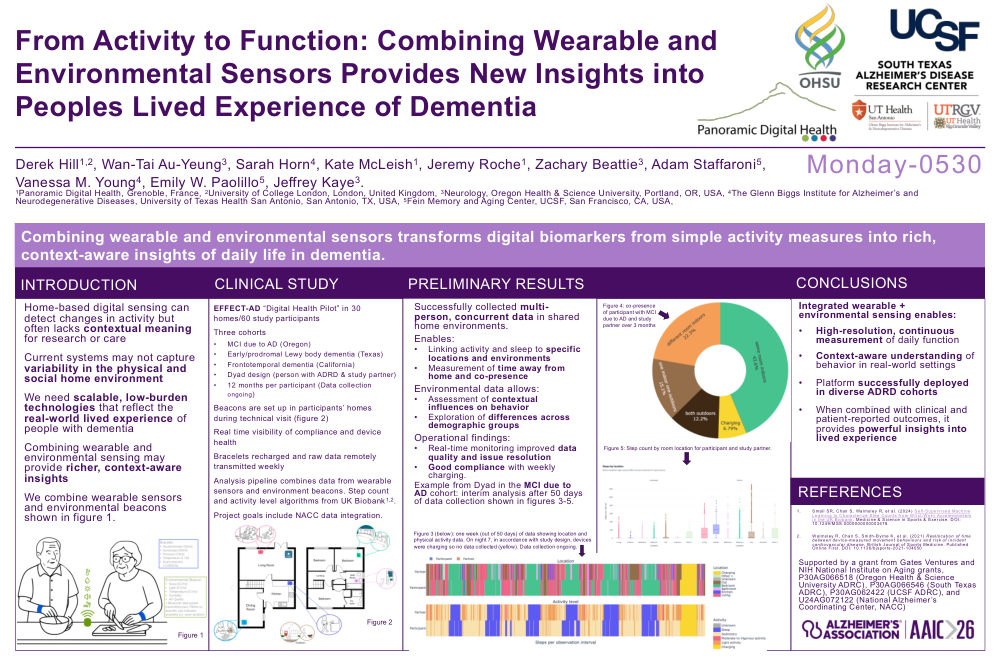
Beacons are set up in participants’ homes during technical visit (figure 2)
Real time visibility of compliance and device health
Bracelets recharged and raw data remotely transmitted weekly
Analysis pipeline combines data from wearable sensors and environment beacons. Step count and activity level algorithms from UK Biobank1,2.
Project goals include NACC data integration.
PRELIMINARY RESULTS
Successfully collected multi-person, concurrent data in shared home environments.
Enables:
Environmental data allows:
Operational findings:
Example from Dyad in the MCI due to AD cohort: interim analysis after 50 days of data collection shown in figures 3-5.
CONCLUSIONS
Integrated wearable + environmental sensing enables:
Comments
Email is required but is not shown publicly.
Loading comments...