4,068 posters, 219 videos, 101 topics, 69 sessions, 14,365 authors, 6,128 institutions
ePostersLive by SciGen Technologies S.A. All rights reserved.
Alzheimer's Association International Conference 2026
July 12-15, 2026 | London, United Kingdom, and Online

987
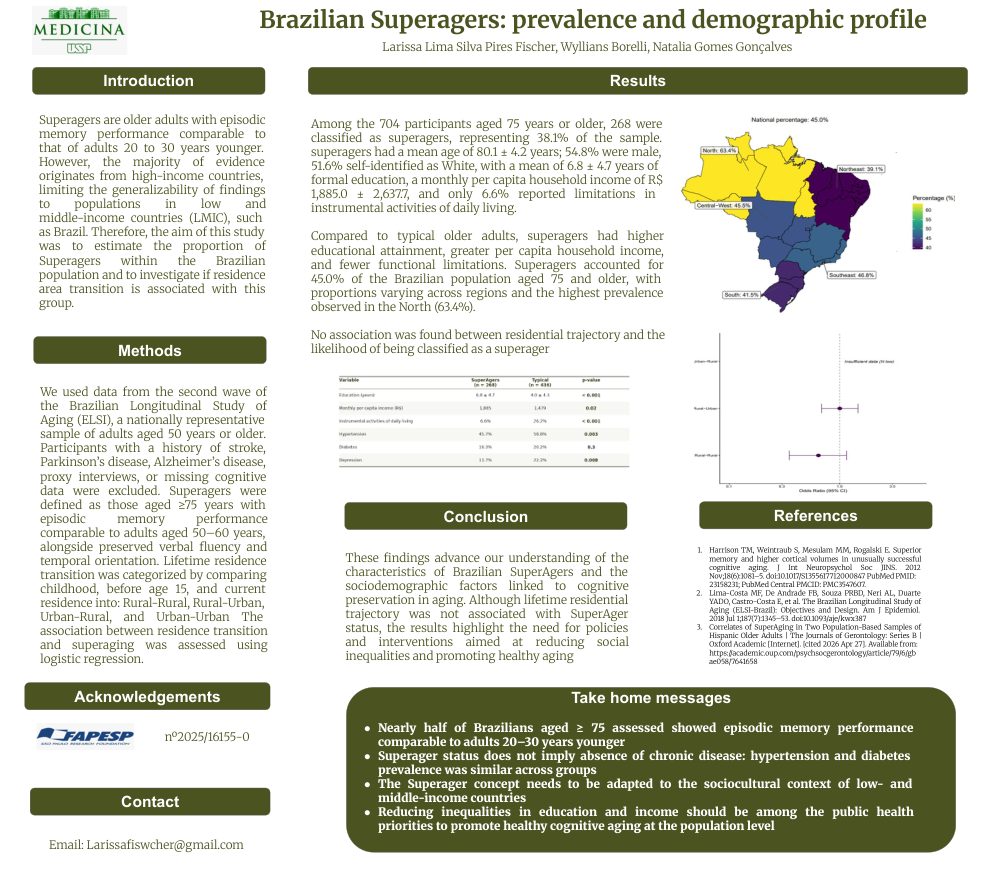
Brazilian Superagers: Prevalence And Demographic Profile
Part of Topic
Video
Introduction:Superagers are older adults with episodic memory performance comparable to that of adults 20 to 30 years younger. However, the majority of evidence originates from high-income countries, limiting the generalizability of findings to populations in low and middle-income countries (LMIC), such as Brazil. Therefore, the aim of this study was to estimate the proportion of Superagers within the Brazilian population and to investigate if residence area transition is associated with this group.
Methods: We used data from the second wave of the Brazilian Longitudinal Study of Aging (ELSI), a nationally representative sample of adults aged 50 years or older. Participants with a history of stroke, Parkinson’s disease, Alzheimer’s disease, proxy interviews, or missing cognitive data were excluded. Superagers were defined as those aged ≥75 years with episodic memory performance comparable to adults aged 50–60 years, alongside preserved verbal fluency and temporal orientation. Lifetime residence transition was categorized by comparing childhood, before age 15, and current residence into: Rural-Rural, Rural-Urban, Urban-Rural, and Urban-Urban The association between residence transition and superaging was assessed using logistic regression.
Comments
Email is required but is not shown publicly.
Loading comments...