4,068 posters, 219 videos, 101 topics, 69 sessions, 14,365 authors, 6,128 institutions
ePostersLive by SciGen Technologies S.A. All rights reserved.
Alzheimer's Association International Conference 2026
July 12-15, 2026 | London, United Kingdom, and Online

1801
Regional Vulnerability Of The Frontal Cortex In Vascular Cognitive Impairment And Dementia
Poster Presenter
Authors
Part of Topic
INTRODUCTION
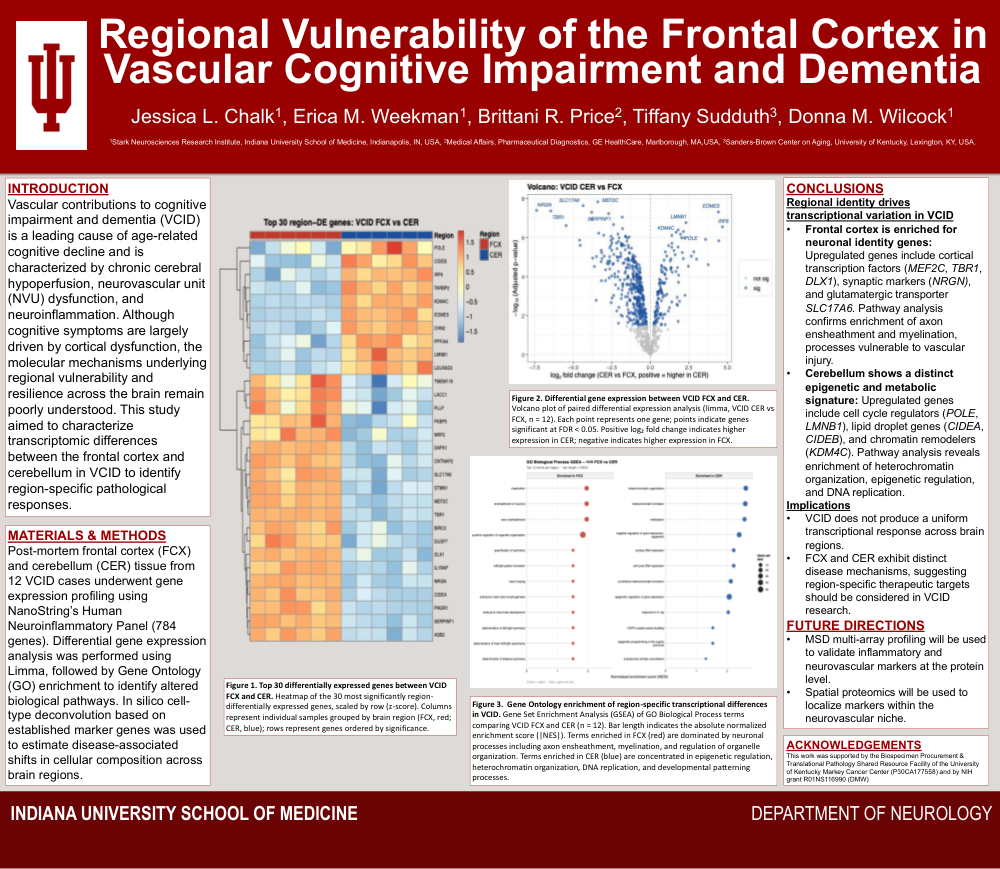
Vascular contributions to cognitive impairment and dementia (VCID) is a leading cause of age-related cognitive decline and is characterized by chronic cerebral hypoperfusion, neurovascular unit (NVU) dysfunction, and neuroinflammation. Although cognitive symptoms are largely driven by cortical dysfunction, the molecular mechanisms underlying regional vulnerability and resilience across the brain remain poorly understood. This study aimed to characterize transcriptomic differences between the frontal cortex and cerebellum in VCID to identify region-specific pathological responses.
MATERIALS & METHODS
Post-mortem frontal cortex (FCX) and cerebellum (CER) tissue from 12 VCID cases underwent gene expression profiling using NanoString’s Human Neuroinflammatory Panel (784 genes). Differential gene expression analysis was performed using Limma, followed by Gene Ontology (GO) enrichment to identify altered biological pathways. In silico cell-type deconvolution based on established marker genes was used to estimate disease-associated shifts in cellular composition across brain regions.
CONCLUSIONS
Regional identity drives transcriptional variation in VCID
Implications
FUTURE DIRECTIONS
Comments
Email is required but is not shown publicly.
Loading comments...