4,068 posters, 219 videos, 101 topics, 69 sessions, 14,365 authors, 6,128 institutions
ePostersLive by SciGen Technologies S.A. All rights reserved.
Alzheimer's Association International Conference 2026
July 12-15, 2026 | London, United Kingdom, and Online

5165
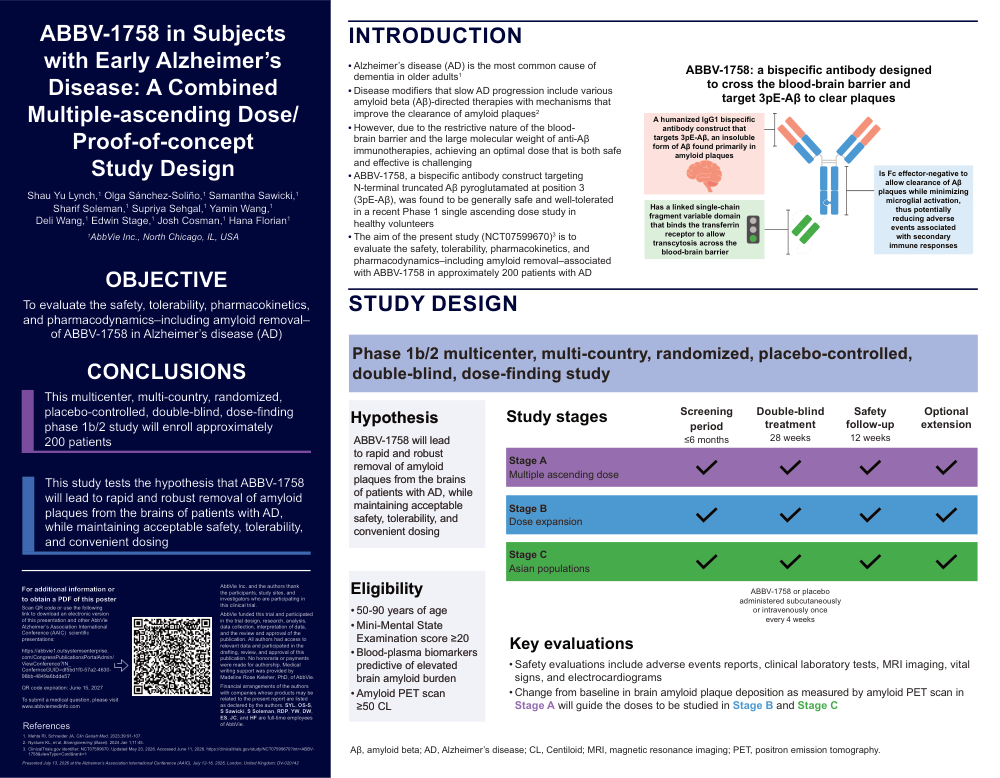
Abbv-1758 In Subjects With Early Alzheimer’S Disease: A Combined Multiple-ascending Dose/proof-of-concept Study Design
Poster Presenter
Authors
Shau Yu Lynch, Olga Sánchez-Soliño, Samantha Sawicki, Sharif Soleman, Supriya Sehgal, Yamin Wang, Deli Wang, Edwin Stage, Josh Cosman, Hana Florian
Affiliations
Part of Topic
OBJECTIVE
To evaluate the safety, tolerability, pharmacokinetics,
and pharmacodynamics–including amyloid removal–
of ABBV-1758 in Alzheimer’s disease (AD)
INTRODUCTION
• Alzheimer’s disease (AD) is the most common cause of
dementia in older adults1
• Disease modifiers that slow AD progression include various
amyloid beta (Aβ)-directed therapies with mechanisms that
improve the clearance of amyloid plaques2
• However, due to the restrictive nature of the bloodbrain
barrier and the large molecular weight of anti-Aβ
immunotherapies, achieving an optimal dose that is both safe
and effective is challenging
• ABBV-1758, a bispecific antibody construct targeting
N-terminal truncated Aβ pyroglutamated at position 3
(3pE-Aβ), was found to be generally safe and well-tolerated
in a recent Phase 1 single ascending dose study in
healthy volunteers
• The aim of the present study (NCT07599670)3 is to
evaluate the safety, tolerability, pharmacokinetics, and
pharmacodynamics–including amyloid removal–associated
with ABBV-1758 in approximately 200 patients with AD
STUDY DESIGN
Phase 1b/2 multicenter, multi-country, randomized, placebo-controlled,
double-blind, dose-finding study
Hypothesis
ABBV-1758 will lead
to rapid and robust
removal of amyloid
plaques from the brains
of patients with AD, while
maintaining acceptable
safety, tolerability, and
convenient dosing
Eligibility
• 50-90 years of age
• Mini-Mental State
Examination score ≥20
• Blood-plasma biomarkers
predictive of elevated
brain amyloid burden
• Amyloid PET scan
≥50 CL
Key Evaluations
• Safety evaluations include adverse events reports, clinical laboratory tests, MRI imaging, vital
signs, and electrocardiograms
• Change from baseline in brain amyloid plaque deposition as measured by amyloid PET scan in
Stage A will guide the doses to be studied in Stage B and Stage C
CONCLUSIONS
This multicenter, multi-country, randomized,
placebo-controlled, double-blind, dose-finding
phase 1b/2 study will enroll approximately
200 patients
This study tests the hypothesis that ABBV-1758
will lead to rapid and robust removal of amyloid
plaques from the brains of patients with AD,
while maintaining acceptable safety, tolerability,
and convenient dosing
References
1. Mehta RI, Schneider JA. Clin Geriatr Med. 2023;39:91-107.
2. Nystuen KL, et al. Bioengineering (Basel). 2024 Jan 1;11:45.
3. ClinicalTrials.gov identifier: NCT07599670. Updated May 20, 2026. Accessed June 11, 2026. https://clinicaltrials.gov/study/NCT07599670?intr=ABBV-
1758&viewType=Card&rank=1
Comments
Email is required but is not shown publicly.
Loading comments...