4,068 posters, 219 videos, 101 topics, 69 sessions, 14,365 authors, 6,128 institutions
ePostersLive by SciGen Technologies S.A. All rights reserved.
Alzheimer's Association International Conference 2026
July 12-15, 2026 | London, United Kingdom, and Online

12002
Bile Acid Disturbance Impairs Choroid Plexus Function And Exacerbates WMHs-related Cognitive Decline Via The GDCA-VDR-TTR Axis
Poster Presenter
Authors
Part of Topic
Biomarkers -> Biomarkers (non-neuroimaging) -> Novel biomarkers
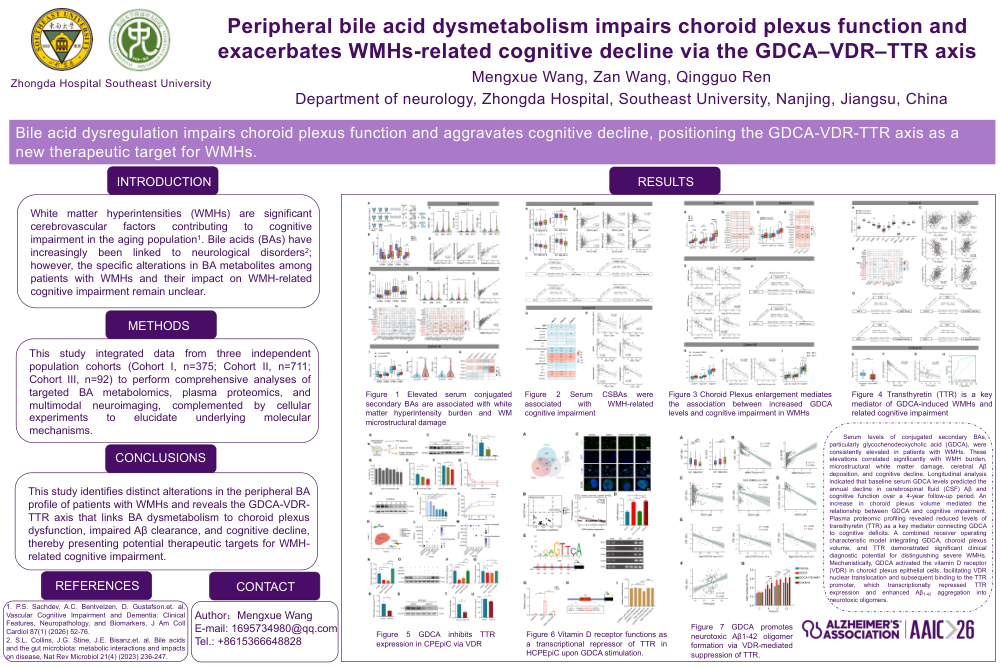
Bile acids (BAs) have increasingly been linked to neurological disorders; however, the specific alterations in BA metabolites among patients with WMHs and their impact on WMH-related cognitive impairment remain unclear. Integrating targeted BA metabolomics, plasma proteomics, and multimodal neuroimaging across three independent population cohorts (n = 1,178), this study revealed serum levels of conjugated secondary BAs, particularly glycochenodeoxycholic acid (GDCA), were consistently elevated in patients with WMHs. These elevations correlated significantly with WMH burden, microstructural white matter damage, cerebral Aβ deposition, and cognitive decline. Longitudinal analysis indicated that baseline serum GDCA levels predicted the annual decline in cerebrospinal fluid (CSF) Aβ and cognitive function over a 4-year follow-up period. An increase in choroid plexus volume mediated the relationship between GDCA and cognitive impairment. Plasma proteomic profiling revealed reduced levels of transthyretin (TTR) as a key mediator connecting GDCA to cognitive deficits. A combined receiver operating characteristic model integrating GDCA, choroid plexus volume, and TTR demonstrated significant clinical diagnostic potential for distinguishing severe WMHs. Mechanistically, GDCA activated the vitamin D receptor (VDR) in choroid plexus epithelial cells, facilitating VDR nuclear translocation and subsequent binding to the TTR promoter, which transcriptionally repressed TTR expression and enhanced Aβ1-42 aggregation into neurotoxic oligomers. This study identifies distinct alterations in the peripheral BA profile of patients with WMHs and reveals the GDCA-VDR-TTR axis that links BA dysmetabolism to choroid plexus dysfunction, impaired Aβ clearance, and cognitive decline, thereby presenting potential therapeutic targets for WMH-related cognitive impairment.
Comments
Email is required but is not shown publicly.
Loading comments...