4,068 posters, 219 videos, 101 topics, 69 sessions, 14,365 authors, 6,128 institutions
ePostersLive by SciGen Technologies S.A. All rights reserved.
Alzheimer's Association International Conference 2026
July 12-15, 2026 | London, United Kingdom, and Online

9928
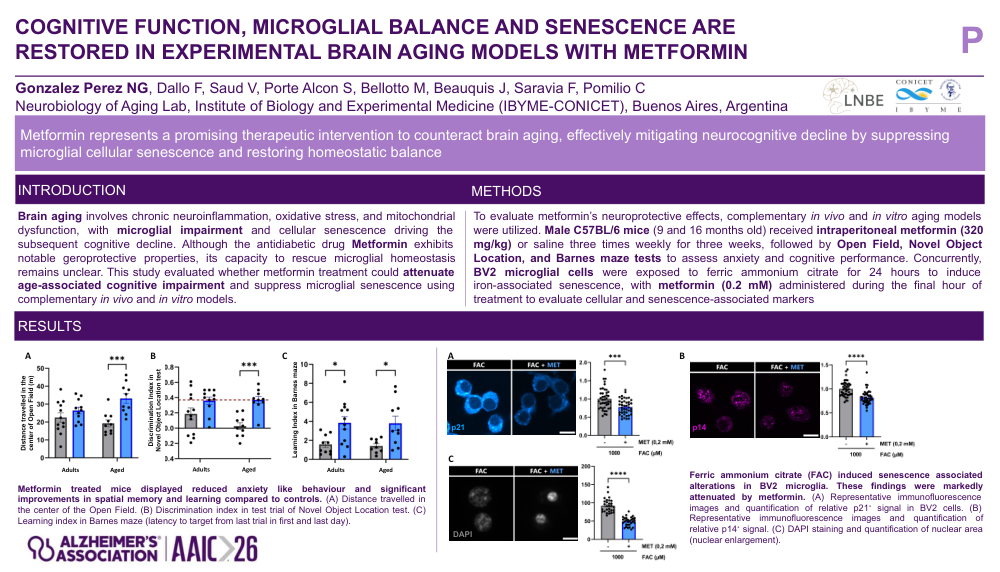
Cognitive Function, Microglial Balance, And Senescence Are Restored In Experimental Brain Aging Models With Metformin
Part of Topic
Background: Brain aging is a multifactorial process driven by neuroinflammation, oxidative stress, and mitochondrial dysfunction, leading to impaired synaptic plasticity and increased susceptibility to neurodegenerative diseases. Microglial dysfunction and cellular senescence are key contributors to age-related cognitive decline. Metformin, a widely prescribed antidiabetic drug, has been reported to exert geroprotective and neuroprotective effects, suggesting potential benefits in brain aging.
Methods: To evaluate the effects of metformin on age-associated cognitive decline and microglial dysfunction, complementary in vivo and in vitro models were used. Male C57BL/6 mice aged 9 and 16 months received intraperitoneal metformin (320 mg/kg) or saline three times per week during the final three weeks of treatment. Anxiety-like behavior and cognitive performance were assessed using the Open Field, Novel Object Location, and Barnes maze tests. In parallel, BV2 microglial cells were exposed for 24 h to increasing concentrations of ferric ammonium citrate to model iron accumulation associated with brain aging. Metformin (0.2 mM) was administered during the final hour of treatment, and senescence-associated markers were evaluated.
Results: Metformin-treated aged mice displayed reduced anxiety-like behavior and significant improvements in spatial memory compared to controls. In vitro, ferric ammonium citrate induced senescence-associated alterations in BV2 microglial cells, including increased p21 immunoreactivity and nuclear enlargement. These changes were markedly attenuated by metformin treatment, indicating a protective effect against microglial senescence and dysfunction
Conclusion: These findings demonstrate that metformin improves cognitive performance, reduces senescence-associated alterations, and restores microglial homeostasis in experimental models of brain aging. Together, the results support the potential of metformin as a therapeutic strategy to counteract neuroinflammation and age-related cognitive decline.
Comments
Email is required but is not shown publicly.
Loading comments...