4,068 posters, 219 videos, 101 topics, 69 sessions, 14,365 authors, 6,128 institutions
ePostersLive by SciGen Technologies S.A. All rights reserved.
Alzheimer's Association International Conference 2026
July 12-15, 2026 | London, United Kingdom, and Online

10794
From Mapping The Situation To Test Actions For Dementia Prevention, Recognition And Care In Brazil: The Renade2 Program
Poster Presenter
Part of Topic
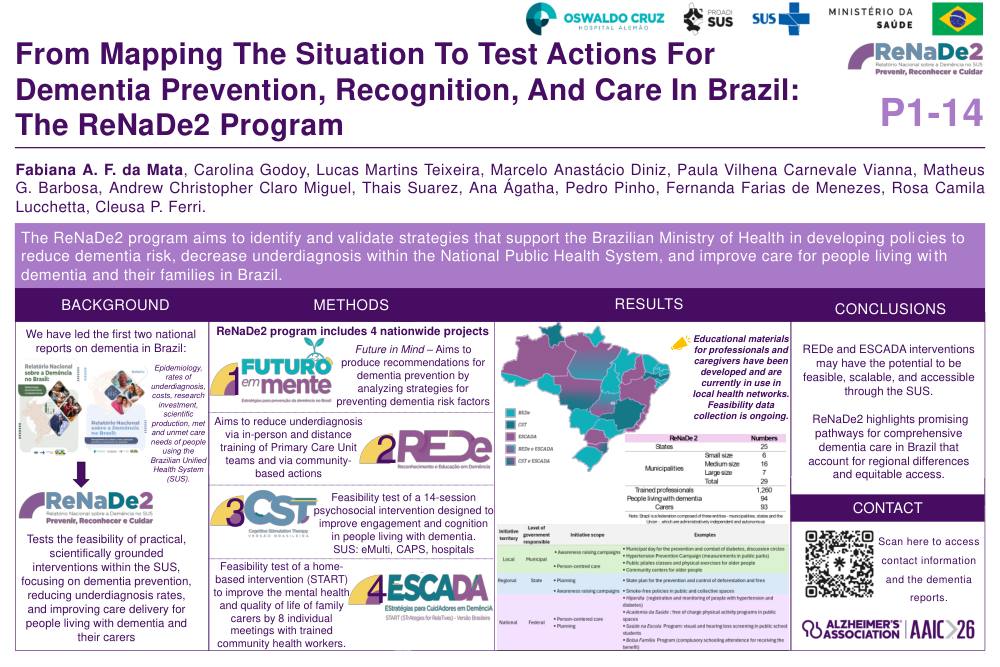
Background: We have led the first two national reports on dementia in Brazil, which described the epidemiology, rates of underdiagnoses, costs, research investment and scientific production in the country and estimated the met and unmet care needs for people using the Brazilian Unified Health System (SUS). Building on these previous works, we developed the ReNaDe2 program that goes beyond mapping the situation by testing the feasibility of practical, scientifically grounded interventions within the SUS.
Method: ReNaDe2 is an initiative designed to advance dementia care nationally by implementing evidence-based interventions and assessing their feasibility across different SUS contexts. The program is structured into four projects: (1) Futuro em Mente, analyzing public policies and the prevention of modifiable dementia risk factors; (2) REDe, aiming to reduce underdiagnosis through in-person and distance training of Primary Care Unit teams and through community-based actions; (3) CST, testing the feasibility of a 14-session psychosocial intervention designed to improve engagement and cognition in people living with dementia (PLWD); and (4) START, testing the feasibility of an intervention to improve the mental health and quality of life of family caregivers, consisting of eight individual home-based sessions delivered by trained community health workers using cognitive-behavioral strategies.
Results: The project is currently underway. All Brazilian states were invited to participate in the study, based on recommendations from the National Councils of Health (CONASS/CONASEMS), which emphasized the importance of disseminating dementia-related initiatives nationwide. To date, 29 municipalities in 25 states have participated, including small, medium-sized, and large municipalities. The Futuro em Mente project has identified policy strategies to prevent modifiable risk factors for dementia. In the REDe, CST, and START projects, altogether 1,260 professionals were trained, and 93 caregivers and 94 PLWD were involved in the research. Educational materials for professionals and caregivers have been developed and are currently in use in local health networks. Feasibility data collection is ongoing.
Conclusion: REDe and START interventions have the potential to be feasible, scalable, and accessible through the SUS. ReNaDe2 highlights promising pathways for comprehensive dementia care that account for regional differences and equitable access.
Comments
Email is required but is not shown publicly.
Loading comments...