4,068 posters, 219 videos, 101 topics, 69 sessions, 14,365 authors, 6,128 institutions
ePostersLive by SciGen Technologies S.A. All rights reserved.
Alzheimer's Association International Conference 2026
July 12-15, 2026 | London, United Kingdom, and Online

4014
Barriers To Implementing NLP For Early Dementia Detection
Poster Presenter
Authors
Affiliations
Part of Topic
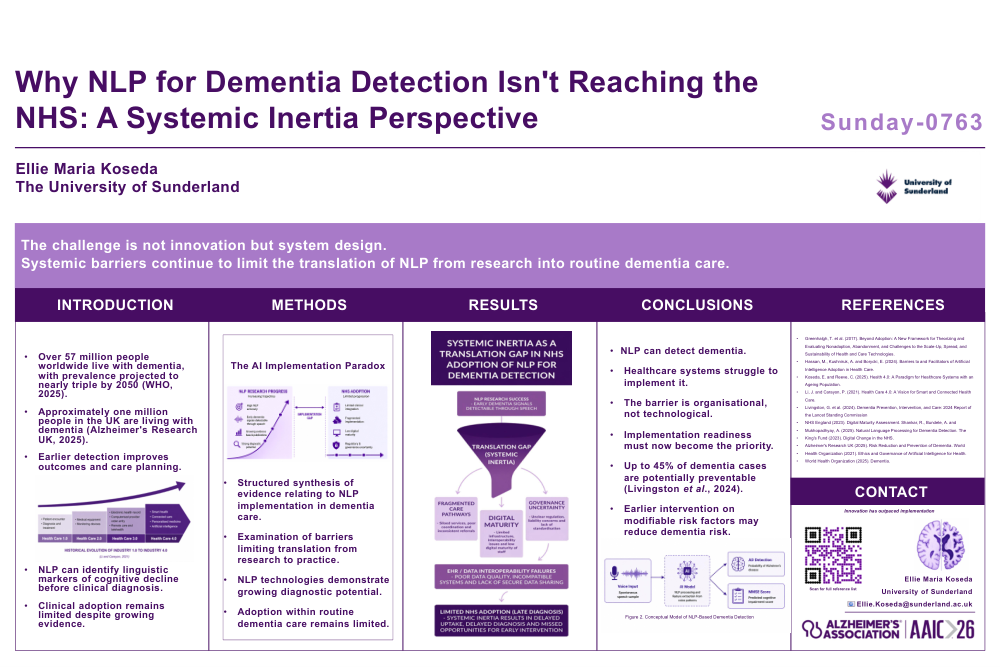
Background: Natural language processing (NLP) approaches applied to speech and language have been extensively investigated as a non-invasive method for the early detection of cognitive impairment and Alzheimer's disease. A substantial body of research over the past decade has demonstrated the feasibility and diagnostic potential of these techniques in controlled research environments. However, translation into routine clinical practice has been limited. The study undertakes a structured, evidence-informed analysis of implementation barriers affecting the integration of these technologies into dementia care pathways.
Methods: This study delineates implementation barriers to NLP-enabled dementia detection across health service architectures, data interoperability layers, and clinical workflow integration. The analysis derives from a structured, interpretive synthesis of peer-reviewed research addressing the translation of language-based digital methods from experimental contexts into routine dementia care.
Results: NLP-based methods show demonstrable potential for early detection of cognitive and linguistic change in dementia, but clinical uptake remains stagnant. Fragmented care pathways, weak electronic health record (EHR) interoperability, inconsistent data governance, variable digital capability, and unclear accountability impede adoption across healthcare systems, despite increasing investment in digital innovation.
Conclusion: The findings suggest that systemic inertia constrains the translation of NLP-based methods for early dementia detection into routine clinical practice. Strengthening governance, interoperability, digital maturity, and implementation readiness is essential to close the gap between AI research and routine dementia care.
Comments
Email is required but is not shown publicly.
Loading comments...