4,068 posters, 219 videos, 101 topics, 69 sessions, 14,365 authors, 6,128 institutions
ePostersLive by SciGen Technologies S.A. All rights reserved.
Alzheimer's Association International Conference 2026
July 12-15, 2026 | London, United Kingdom, and Online

2157
Using The COM-B Framework To Develop A Complex Change Model To Improve Dementia Diagnosis Rates In Primary Care.
Poster Presenter
Part of Topic
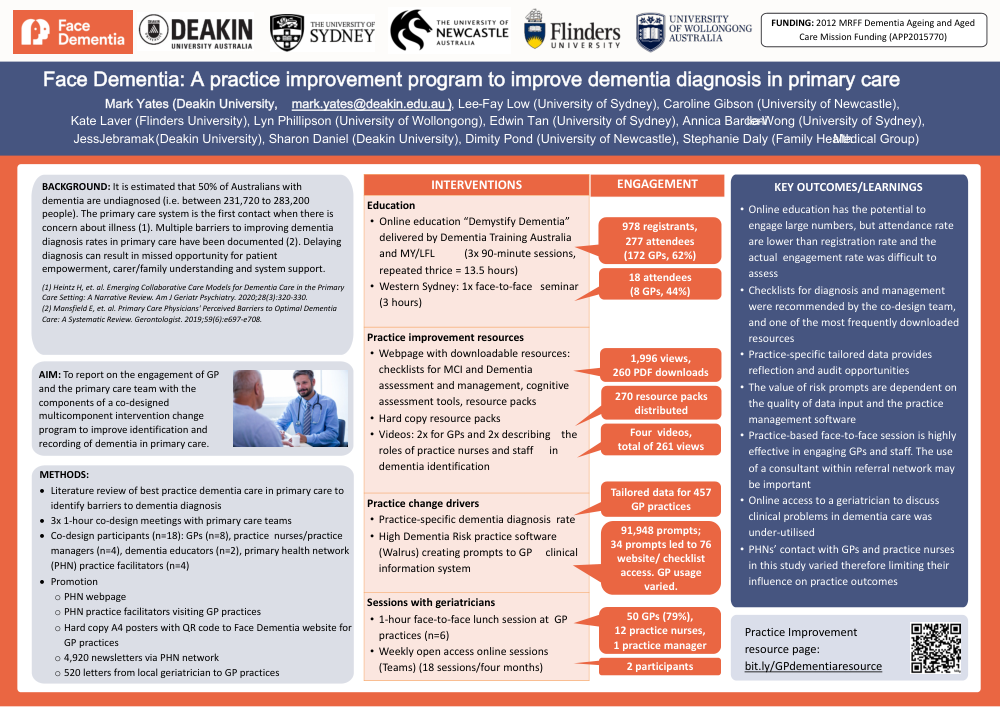
Background - It is estimated that 50% of Australians with dementia are undiagnosed. Primary Care a key step in the diagnostic pathway. Using co-design, we identified barriers and motivators regarding diagnosing dementia and instigating post diagnostic care. Using the insights gained and behavioural and implementation science approaches, we developed a practice change program. This abstract reports on the Primary Care Practice Improvement Program (PCPIP) arm of the Face Dementia project. This paper presents the strategies to support change and their take up in practices.
Method - The PCPIP ran between Sept 2023 and Sept 2024 in WestVic primary healthcare network (PHN) in regional Victoria and Western Sydney PHN. To support the sustainability of the implementation strategies, existing providers, including the PHN practice facilitators and Dementia Training Australia (DTA), were engaged. Practice improvement resources included practice specific self-audit, easy access to cognitive assessment tools, post-diagnostic checklists and open access geriatrician support. Education targeted diagnosis and management of MCI and dementia. Measurements included an activity log, post-training surveys, and post-campaign stakeholder interviews.
Results - We delivered three 3-episode DTA lead 90 min online training series engaging 173 GPs and 107 GP Nurses. The no-show rates were high at 60-80%. Six one-hour face-2-face educational lunches engaged 58 GPs, 12 General Practice Nurse’s (GPN) and 1 Practice manager. Tailored data was shared with 457 practices. A Face Dementia GP specific webpage (https://facedementia.au/en/) was developed mainly to provide access for primary care. The website included 1996 visits, including 225 downloads of cognitive tests, 292 educational materials such as videos (n = 60) and a range of other resources.
Discussion/Conclusion - Reaching the primary care sector is challenging. Preliminary insights will be presented including a comparison of PHN networks and personal networks as drivers for engagement.
Comments
Email is required but is not shown publicly.
Loading comments...