4,068 posters, 219 videos, 101 topics, 69 sessions, 14,365 authors, 6,128 institutions
ePostersLive by SciGen Technologies S.A. All rights reserved.
Alzheimer's Association International Conference 2026
July 12-15, 2026 | London, United Kingdom, and Online

6845
Positive Aspects Of Caregiving And Their Role In Shaping Care Needs Among Older Adults With Neurocognitive Disorders
Poster Presenter
Part of Topic
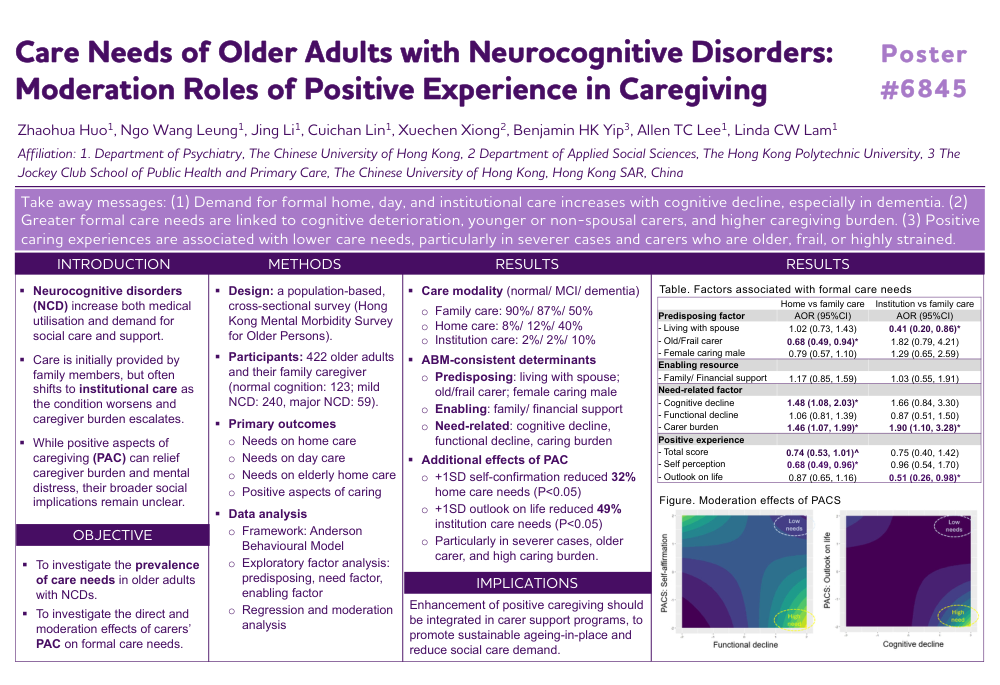
Background The global rise in the number of older adults living with dementia has placed substantial demands and burdens on social and healthcare systems. Positive caregiving experiences may help foster a healthier care journey for caregivers and support community living for care recipients. This study examined the association between positive aspects of caregiving and different types of care needs among older adults with neurocognitive disorders (NCDs).
Methods A total of 422 family caregivers of older adults aged ≥60 years were recruited from a community-based prevalence survey in Hong Kong (major NCD/dementia: 59; mild NCD: 240; normal cognition: 123). Caregivers’ positive experiences were assessed using the Positive Aspects of Caregiving Scale (PACS), comprising two domains: self-perception and outlook on life. Care needs, including home care, day care, and institutional care, were recorded. Multivariate regression analyses were conducted to examine the direct and moderating effects of PACS on different care needs, adjusting for associated factors based on the Andersen Behavioural Model.
Results Needs for family care varied across diagnostic groups (normal cognition: 90.0%; mild NCD: 86.5%; dementia: 49.4%), while needs for home-based care (normal: 8.4%; mild NCD: 11.5%; dementia: 40.2%) and institutional care (normal: 1.6%; mild NCD: 2.0%; dementia: 10.4%) increased as cognitive function declined (P<0.001). Regarding direct effects, higher caregiver self-perception (+1 SD) was associated with a 32% lower likelihood of home-based care need (P=0.027), while a higher sense of outlook on life was associated with a 49% lower likelihood of institutional care need (P=0.043). Moderation analyses indicated that the effects of PACS on reducing social care needs were more pronounced among: (1) older and more frail caregivers, (2) care-recipients with stronger family and financial support, (3) care-recipients with severer cognitive and functional impairments, and (4) caregivers experiencing high caregiving strain (all P<0.05).
Conclusions Positive caregiving experiences significantly reduce care needs, especially home‑based and institutional services, in older adults with NCDs. Strengthening caregivers’ self-perception and outlook may buffer the impact of cognitive decline and care strain. Interventions enhancing positive caregiving should be integrated into community support programmes to promote sustainable ageing‑in‑place and reduce social care demand.
Comments
Email is required but is not shown publicly.
Loading comments...