4,068 posters, 219 videos, 101 topics, 69 sessions, 14,365 authors, 6,128 institutions
ePostersLive by SciGen Technologies S.A. All rights reserved.
Alzheimer's Association International Conference 2026
July 12-15, 2026 | London, United Kingdom, and Online

1617
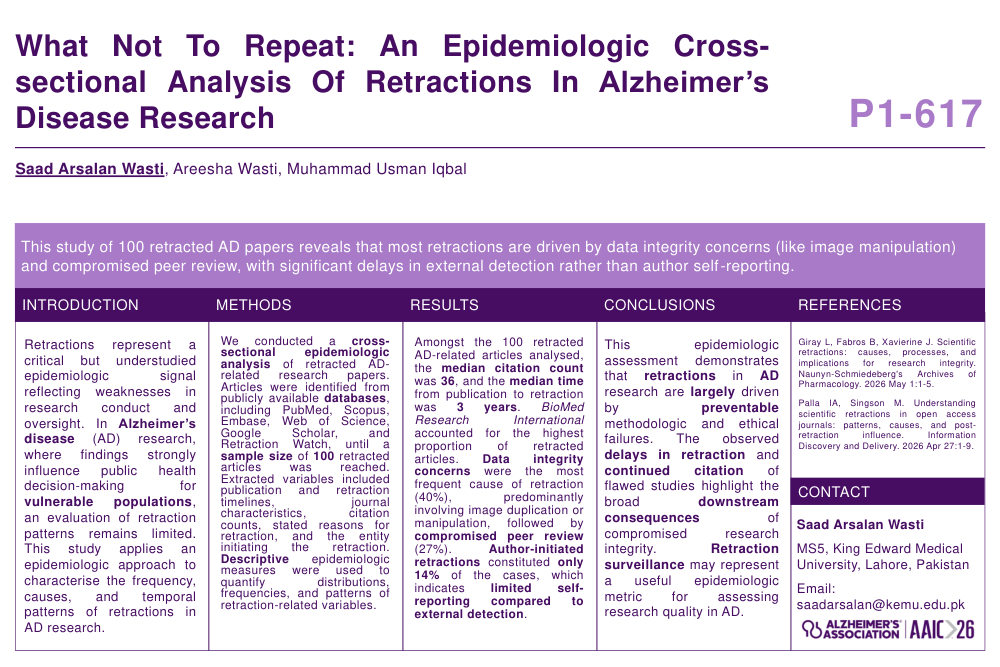
What Not To Repeat: An Epidemiologic Cross-sectional Analysis Of Retractions In Alzheimer’s Disease Research
Poster Presenter
Authors
Part of Topic
Introduction:
Retractions represent a critical but understudied epidemiologic signal reflecting weaknesses in research conduct and oversight. In Alzheimer’s disease (AD) research, where findings strongly influence public health decision-making for vulnerable populations, an evaluation of retraction patterns remains limited. This study applies an epidemiologic approach to characterise the frequency, causes, and temporal patterns of retractions in AD research.
Methods:
We conducted a cross-sectional epidemiologic analysis of retracted AD-related research papers. Articles were identified from publicly available databases, including PubMed, Scopus, Embase, Web of Science, Google Scholar, and Retraction Watch, until a sample size of 100 retracted articles was reached. Extracted variables included publication and retraction timelines, journal characteristics, citation counts, stated reasons for retraction, and the entity initiating the retraction. Descriptive epidemiologic measures were used to quantify distributions, frequencies, and patterns of retraction-related variables.
Results:
Amongst the 100 retracted AD-related articles analysed, the median citation count was 36, and the median time from publication to retraction was 3 years. BioMed Research International accounted for the highest proportion of retracted articles. Data integrity concerns were the most frequent cause of retraction (40%), predominantly involving image duplication or manipulation, followed by compromised peer review (27%). Author-initiated retractions constituted only 14% of the cases, which indicates limited self-reporting compared to external detection.
Conclusions:
This epidemiologic assessment demonstrates that retractions in AD research are largely driven by preventable methodologic and ethical failures. The observed delays in retraction and continued citation of flawed studies highlight the broad downstream consequences of compromised research integrity. Retraction surveillance may represent a useful epidemiologic metric for assessing research quality in AD.
Comments
Email is required but is not shown publicly.
Loading comments...