4,068 posters, 219 videos, 101 topics, 69 sessions, 14,365 authors, 6,128 institutions
ePostersLive by SciGen Technologies S.A. All rights reserved.
Alzheimer's Association International Conference 2026
July 12-15, 2026 | London, United Kingdom, and Online

1452
Patterns Of Place Of Death Amongst Black People With Alzheimer’s Disease: A Retrospective Analysis
Part of Topic
Patterns Of Place Of Death Amongst Black People With Alzheimer’s Disease: A Retrospective Analysis
Black individuals are two to three times more likely than white individuals to develop Alzheimer’s disease (AD) but face major healthcare, systemic, and socioeconomic barriers. Despite this growing impact, patterns surrounding their place of death remain poorly understood. To address this gap and improve care strategies, this study used data from the CDC WONDER database to examine trends in the location of death among Black AD patients from 1999 to 2020.
This study utilized the Wide-ranging Online Data for Epidemiologic Research database to analyse death certificates for AD-related deaths in Black people from 1999 2020. Demographic factors including year, sex, age, and urban-rural status were examined. The number and percentage of deaths occurring in various locations were tracked to identify patterns and trends.
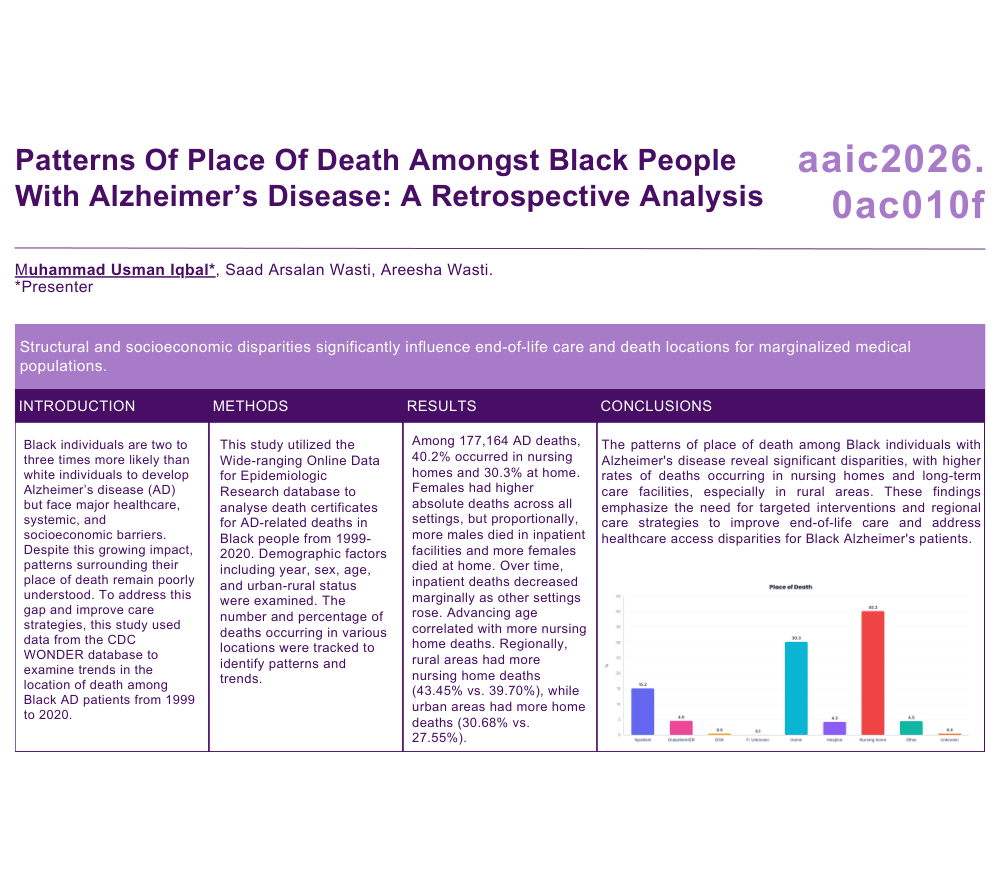
Among 177,164 AD deaths, 40.2% occurred in nursing homes and 30.3% at home. Females had higher absolute deaths across all settings, but proportionally, more males died in inpatient facilities and more females died at home. Over time, inpatient deaths decreased marginally as other settings rose. Advancing age correlated with more nursing home deaths. Regionally, rural areas had more nursing home deaths (43.45% vs. 39.70%), while urban areas had more home deaths (30.68% vs. 27.55%).
The patterns of place of death among Black individuals with Alzheimer's disease reveal significant disparities, with higher rates of deaths occurring in nursing homes and long-term care facilities, especially in rural areas. These findings emphasize the need for targeted interventions and regional care strategies to improve end-of-life care and address healthcare access disparities for Black Alzheimer's patients.
Comments
Email is required but is not shown publicly.
Loading comments...