4,068 posters, 219 videos, 101 topics, 69 sessions, 14,365 authors, 6,128 institutions
ePostersLive by SciGen Technologies S.A. All rights reserved.
Alzheimer's Association International Conference 2026
July 12-15, 2026 | London, United Kingdom, and Online

4251
Multimodal Differentiation Of Memory Impairment In Cognitively Heterogenous Older Adults
Poster Presenter
Part of Topic
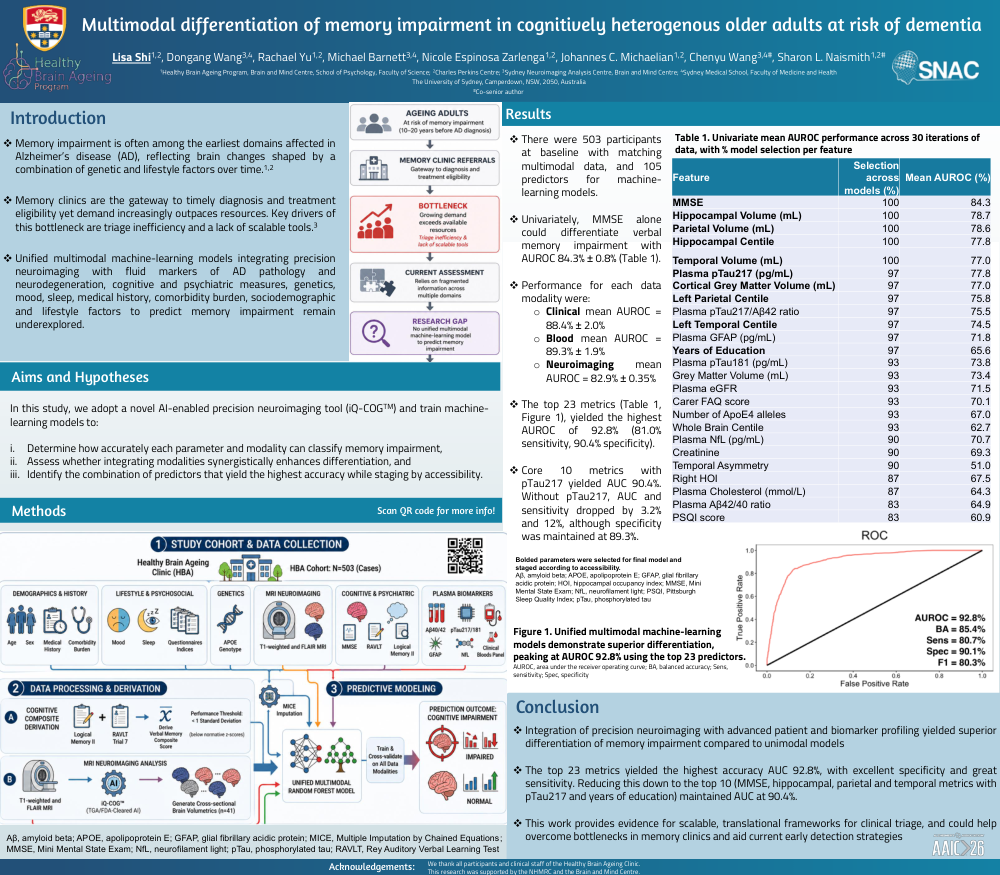
Multimodal differentiation of memory impairment in cognitively heterogenous older adults at risk of dementia
Memory impairment is often among the earliest domains affected in Alzheimer’s disease (AD), reflecting brain changes shaped by a combination of genetic and lifestyle factors over time. Memory clinics are the gateway to timely diagnosis and treatment eligibility yet demand increasingly outpaces resources. Key drivers of this bottleneck are triage inefficiency and a lack of scalable tools.
Unified multimodal machine-learning models integrating precision neuroimaging with fluid markers of AD pathology and neurodegeneration, cognitive and psychiatric measures, genetics, mood, sleep, medical history, comorbidity burden, sociodemographic and lifestyle factors to predict memory impairment remain underexplored. In this study, we adopt a novel AI-enabled precision neuroimaging tool (iQ-COGTM) and train random forest machine-learning models to:
Comments
Email is required but is not shown publicly.
Loading comments...