4,068 posters, 219 videos, 101 topics, 69 sessions, 14,365 authors, 6,128 institutions
ePostersLive by SciGen Technologies S.A. All rights reserved.
Alzheimer's Association International Conference 2026
July 12-15, 2026 | London, United Kingdom, and Online

4207
An Overlooked Presentation Of Alzheimer’s Disease: Posterior Cortical Atrophy
Poster Presenter
Authors
Affiliations
Part of Topic
An Overlooked Presentation of Alzheimer’s Disease: Posterior Cortical Atrophy
Maryam Mohamed Seddik
MPharm Student, University of Hertfordshire (GAF Campus)
INTRODUCTION
Posterior Cortical Atrophy (PCA) is a rare, progressive neurodegenerative syndrome primarily affecting the occipital and parietal lobes. Although usually underpinned by Alzheimer’s disease (AD) pathology, PCA presents with visuospatial and perceptual deficits rather than the early memory loss typically seen in AD; this atypical presentation often leads to delayed or incorrect diagnosis. This review summarizes recent literature on PCA’s clinical profile, imaging characteristics, and main symptoms.
METHODS
A literature search was conducted using PubMed, NIH, and Google Scholar for studies from 2015–2025. Keywords included “posterior cortical atrophy,” “atypical Alzheimer’s,” and “visual variant AD.” Studies were included if they involved human participants diagnosed with PCA or visual variant AD and reported clinical and/or neuroimaging findings. Case reports involving fewer than three participants, non-English publications, and animal studies were excluded in order to focus on human diagnostic presentation and to improve interpretability of findings. Extracted data included author, publication year, sample size, mean or range of participant age, symptoms, neuroimaging findings and stage of diagnosis. Data was summarized using Microsoft Excel.
RESULTS
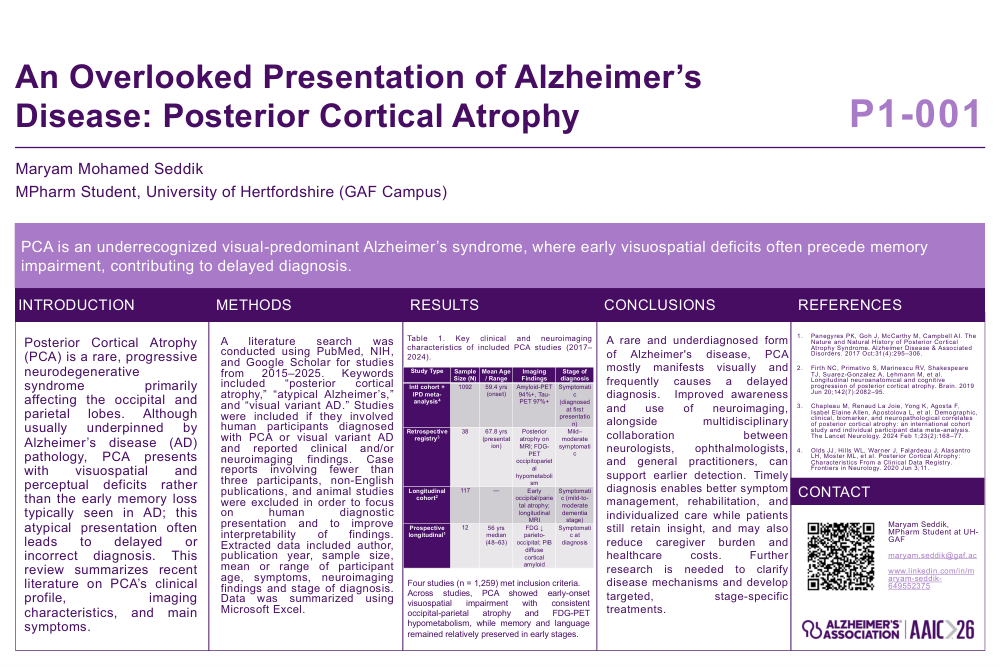
Table 1. Key clinical and neuroimaging characteristics of included PCA studies (2017–2024).
|
Study Type |
Sample Size (N) |
Mean Age / Range |
Imaging Findings |
Stage of diagnosis |
|
Intl cohort + IPD meta-analysis4 |
1092 |
59.4 yrs (onset) |
Amyloid-PET 94%+, Tau-PET 97%+ |
Symptomatic (diagnosed at first presentation) |
|
Retrospective registry3 |
38 |
67.8 yrs (presentation) |
Posterior atrophy on MRI; FDG-PET occipitoparietal hypometabolism |
Mild–moderate symptomatic |
|
Longitudinal cohort2 |
117 |
— |
Early occipital/parietal atrophy; longitudinal MRI |
Symptomatic (mild-to-moderate dementia stage) |
|
Prospective longitudinal1 |
12 |
56 yrs median (48–63) |
FDG ↓ parieto-occipital; PiB diffuse cortical amyloid |
Symptomatic at diagnosis |
Four studies (n = 1,259) met inclusion criteria. Across studies, PCA showed early-onset visuospatial impairment with consistent occipital-parietal atrophy and FDG-PET hypometabolism, while memory and language remained relatively preserved in early stages.
CONCLUSIONS
A rare and underdiagnosed form of Alzheimer's disease, PCA mostly manifests visually and frequently causes a delayed diagnosis. Improved awareness and use of neuroimaging, alongside multidisciplinary collaboration between neurologists, ophthalmologists, and general practitioners, can support earlier detection. Timely diagnosis enables better symptom management, rehabilitation, and individualized care while patients still retain insight, and may also reduce caregiver burden and healthcare costs. Further research is needed to clarify disease mechanisms and develop targeted, stage-specific treatments.
REFERENCES
Comments
Email is required but is not shown publicly.
Loading comments...