4,068 posters, 219 videos, 101 topics, 69 sessions, 14,365 authors, 6,128 institutions
ePostersLive by SciGen Technologies S.A. All rights reserved.
Alzheimer's Association International Conference 2026
July 12-15, 2026 | London, United Kingdom, and Online

1952
Identification Of Calcium Signaling Proteins Involved In The Ad By In-silico Approach And Confirmation Through Precise Animal Model.
Poster Presenter
Authors
Affiliations
Part of Topic
Poster Description
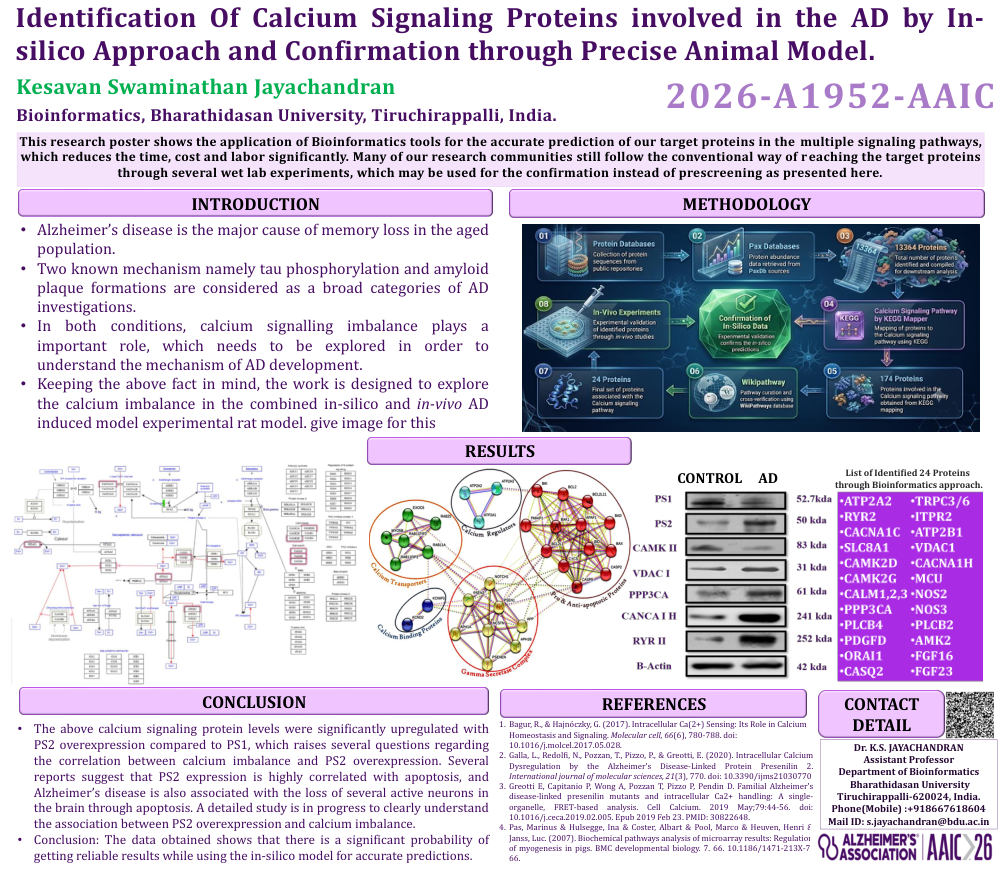
Alzheimer's disease (AD) is a progressive neurodegenerative disorder characterized by cognitive decline and memory impairment, with dysregulated calcium signaling increasingly recognized as a critical contributor to its pathogenesis. This study presents an integrated in-silico and in-vivo approach to identify calcium signaling proteins implicated in AD and validate their biological significance using a precisely established experimental animal model.
Advanced bioinformatics analyses were employed to investigate multiple signaling pathways associated with calcium homeostasis, enabling the systematic identification of 24 candidate proteins potentially involved in AD progression. This computational strategy offers a rapid, cost-effective, and reliable alternative to conventional target discovery by prioritizing promising molecular candidates before experimental validation, thereby substantially reducing the time, labor, and financial resources required for extensive wet-laboratory investigations.
Subsequent validation in an Alzheimer's disease-induced rat model demonstrated significant alterations in the expression of calcium signaling proteins, with notable upregulation associated with Presenilin-2 (PS2) overexpression compared with Presenilin-1 (PS1). These findings support the hypothesis that calcium dysregulation and PS2-mediated signaling play pivotal roles in neuronal apoptosis and AD pathogenesis.
Overall, this study highlights the effectiveness of integrating bioinformatics-based target prediction with experimental validation as a robust translational research strategy. The findings provide valuable insights into the molecular mechanisms underlying Alzheimer's disease and establish a strong foundation for the identification of novel biomarkers and therapeutic targets for future neurodegenerative disease research.
Comments
Email is required but is not shown publicly.
Loading comments...