4,068 posters, 219 videos, 101 topics, 69 sessions, 14,365 authors, 6,128 institutions
ePostersLive by SciGen Technologies S.A. All rights reserved.
Alzheimer's Association International Conference 2026
July 12-15, 2026 | London, United Kingdom, and Online

10445
Engineering A Tri-specific Lecanemab-fab Antibody Targeting Amyloid, Tau Aggregation, And Neuroinflammation
Poster Presenter
Authors
Part of Topic
INTRODUCTION
The Therapeutic Gap:
AD involves a complex interplay of amyloid-beta (Aß) plaques, Tau aggregates, and chronic neuroinflammation.
Current FDA approved therapies like lecanemab target Aß alone, leaving Tau unaddressed and posing risks for amyloid related imaging abnormalities (ARIA).
The Innovation: Tri-specific Multi- target Scaffold
Aims: To engage the Amyloid-Tau- Neuroinflammation axis simultaneously using a novel tri- specific Lecanemab-Fab scaffold.
Mechanism: Integration of anti-tau (D- TLKIVWI) and anti-inflammatory (NVDTELAHKL) peptides to provide comprehensive therapy and potentially mitigate ARIA through TREM2 engagement.
Study Objective:
The goal of this research was to design, engineer, and validate the structural robustness and multi-target binding efficacy of this tri-specific scaffold using an integrated computational chemistry workflow
RESULTS
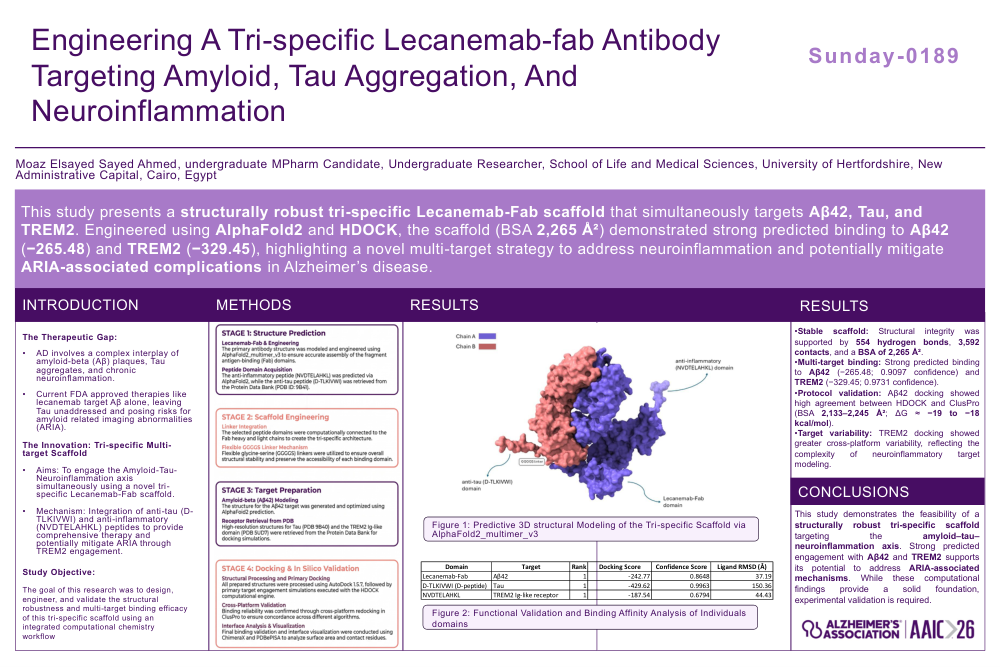
Figure 1: Predictive 3D structural Modeling of the Tri-specific Scaffold via AlphaFold2 multimer v3
Figure 2: Functional Validation and Binding Affinity Analysis of Individuals domains
•Stable scaffold: Structural integrity was supported by 554 hydrogen bonds, 3,592 contacts, and a BSA of 2,265 A2.
•Multi-target binding: Strong predicted binding to Aẞ42 (-265.48; 0.9097 confidence) and TREM2 (-329.45; 0.9731 confidence).
•Protocol validation: Aẞ42 docking showed high agreement between HDOCK and ClusPro (BSA 2,133-2,245 A²; AG ≈ -19 to -18 kcal/mol).
•Target variability: TREM2 docking showed greater cross-platform variability, reflecting the complexity of neuroinflammatory target modeling.
CONCLUSIONS
This study demonstrates the feasibility of a structurally robust tri-specific scaffold targeting the amyloid-tau- neuroinflammation axis. Strong predicted engagement with Aẞ42 and TREM2 supports its potential to address ARIA-associated mechanisms. While these computational findings provide a solid foundation, experimental validation is required.
Comments
Email is required but is not shown publicly.
Loading comments...