4,068 posters, 219 videos, 101 topics, 69 sessions, 14,365 authors, 6,128 institutions
ePostersLive by SciGen Technologies S.A. All rights reserved.
Alzheimer's Association International Conference 2026
July 12-15, 2026 | London, United Kingdom, and Online

9706
Understanding The Alzheimer's Disease And Suicide Association (ASA) Theory
Part of Topic
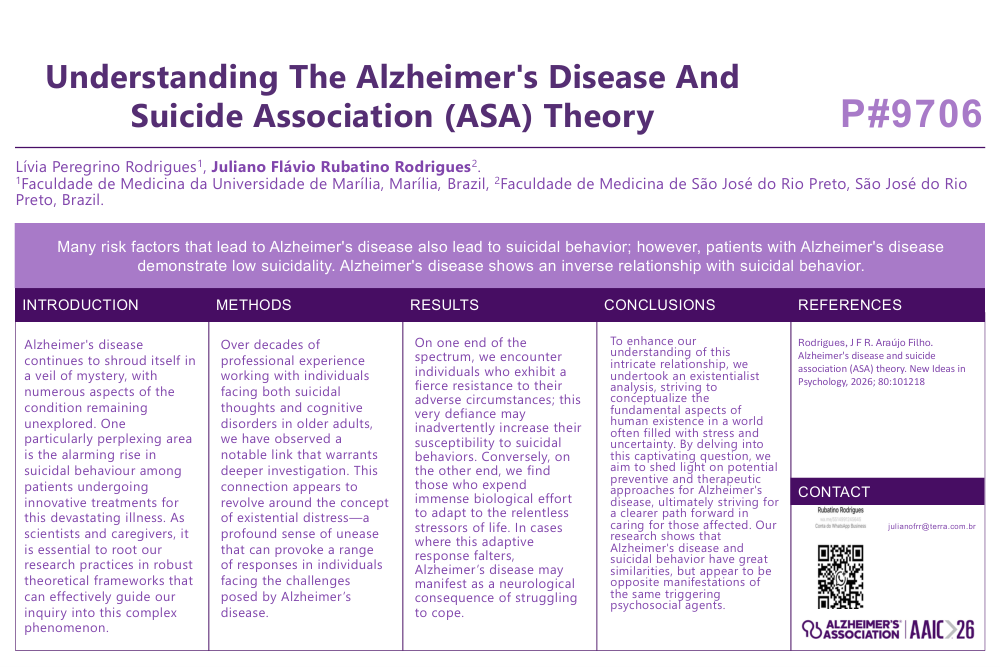
Alzheimer's disease continues to shroud itself in a veil of mystery, with numerous aspects of the condition remaining unexplored. One particularly perplexing area is the alarming rise in suicidal behaviour among patients undergoing innovative treatments for this devastating illness. As scientists and caregivers, it is essential to root our research practices in robust theoretical frameworks that can effectively guide our inquiry into this complex phenomenon.
Over decades of professional experience working with individuals facing both suicidal thoughts and cognitive disorders in older adults, we have observed a notable link that warrants deeper investigation. This connection appears to revolve around the concept of existential distress—a profound sense of unease that can provoke a range of responses in individuals facing the challenges posed by Alzheimer’s disease.
On one end of the spectrum, we encounter individuals who exhibit a fierce resistance to their adverse circumstances; this very defiance may inadvertently increase their susceptibility to suicidal behaviors. Conversely, on the other end, we find those who expend immense biological effort to adapt to the relentless stressors of life. In cases where this adaptive response falters, Alzheimer’s disease may manifest as a neurological consequence of struggling to cope.
To enhance our understanding of this intricate relationship, we undertook an existentialist analysis, striving to conceptualize the fundamental aspects of human existence in a world often filled with stress and uncertainty. By delving into this captivating question, we aim to shed light on potential preventive and therapeutic approaches for Alzheimer's disease, ultimately striving for a clearer path forward in caring for those affected. Our research shows that Alzheimer's disease and suicidal behavior have great similarities, but appear to be opposite manifestations of the same triggering psychosocial agents.
Comments
Email is required but is not shown publicly.
Loading comments...