4,068 posters, 219 videos, 101 topics, 69 sessions, 14,365 authors, 6,128 institutions
ePostersLive by SciGen Technologies S.A. All rights reserved.
Alzheimer's Association International Conference 2026
July 12-15, 2026 | London, United Kingdom, and Online

5000
Truncated Tau Compromises Cellular Clearance: Proteomic And Functional Insights Into Autophagy And Lysosomal Dysfunction
Poster Presenter
Part of Topic
Introduction:
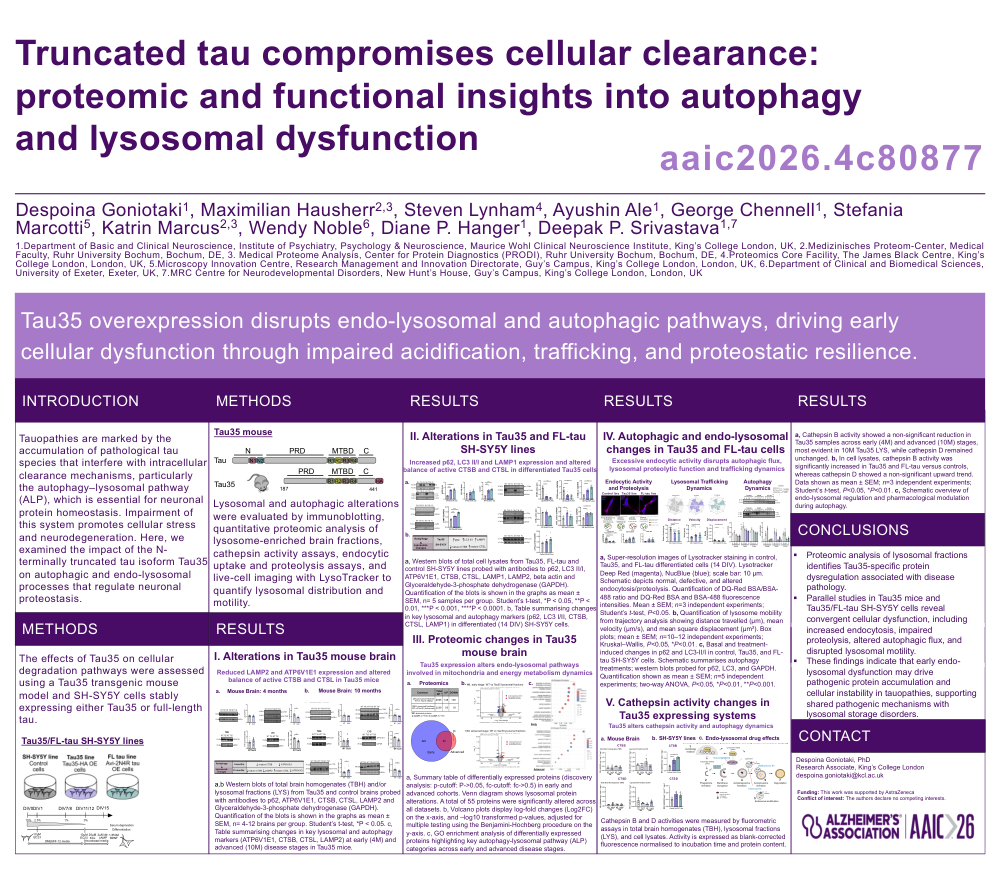
Tauopathies are marked by the accumulation of pathological tau species that interfere with intracellular clearance mechanisms, particularly the autophagy–lysosomal pathway (ALP), which is essential for neuronal protein homeostasis. Impairment of this system promotes cellular stress and neurodegeneration. Here, we examined the impact of the N-terminally truncated tau isoform Tau35 on autophagic and endo-lysosomal processes that regulate neuronal proteostasis.
Methods:
The effects of Tau35 on cellular degradation pathways were assessed using a Tau35 transgenic mouse model and SH-SY5Y cells stably expressing either Tau35 or full-length tau. Lysosomal and autophagic alterations were evaluated by immunoblotting, quantitative proteomic analysis of lysosome-enriched brain fractions, cathepsin activity assays, endocytic uptake and proteolysis assays, and live-cell imaging with LysoTracker to quantify lysosomal distribution and motility.
Results:
Combined proteomic and functional analyses demonstrated that Tau35 expression triggers early and widespread disturbances in the endo-lysosomal network. These changes included increased endocytic activity, defective autophagic flux, diminished lysosomal proteolytic capacity, and aberrant lysosomal trafficking dynamics. Collectively, these findings indicate a coordinated disruption of intracellular degradation and vesicular transport mechanisms driven by truncated tau.
Conclusions:
This study provides mechanistic insight into how truncated tau species compromise neuronal proteostasis by perturbing lysosomal function and autophagic regulation. Dysfunction across multiple components of the ALP suggests a direct link between Tau35 accumulation and neuronal susceptibility in tauopathies. Targeting lysosomal function and autophagic pathways may represent a viable therapeutic strategy to mitigate tau-associated neurodegeneration.
Comments
Email is required but is not shown publicly.
Loading comments...