4,068 posters, 219 videos, 101 topics, 69 sessions, 14,365 authors, 6,128 institutions
ePostersLive by SciGen Technologies S.A. All rights reserved.
Alzheimer's Association International Conference 2026
July 12-15, 2026 | London, United Kingdom, and Online

5689
Gut Resistome Signatures Distinguish Cognitively Impaired Individuals From Controls
Poster Presenter
Authors
Part of Topic
Background
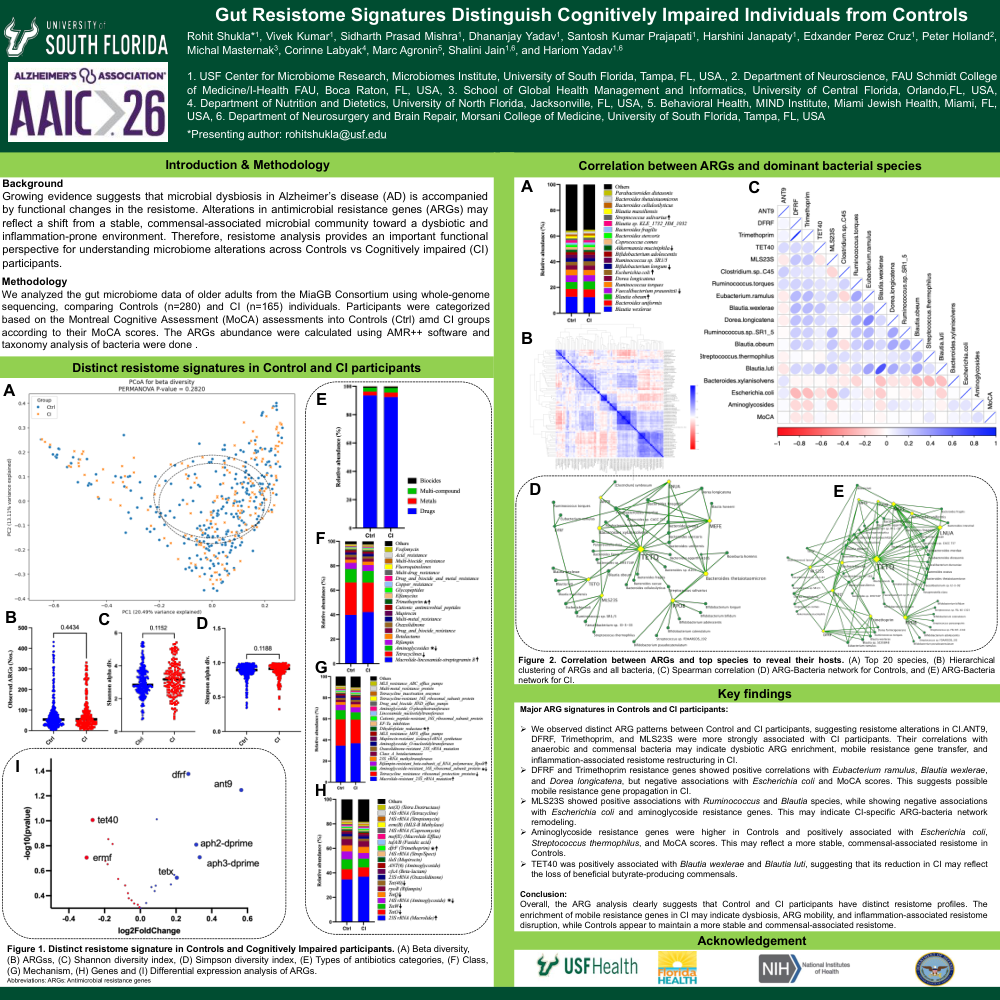
Growing evidence suggests that microbial dysbiosis in Alzheimer’s disease (AD) is accompanied by functional changes in the resistome. Alterations in antimicrobial resistance genes (ARGs) may reflect a shift from a stable, commensal-associated microbial community toward a dysbiotic and inflammation-prone environment. Therefore, resistome analysis provides an important functional perspective for understanding microbiome alterations across Controls vs Cognitively impaired (CI) participants.
Methodology
We analyzed the gut microbiome data of older adults from the MiaGB Consortium using whole-genome sequencing, comparing Controls (n=280) and CI (n=165) individuals. Participants were categorized based on the Montreal Cognitive Assessment (MoCA) assessments into Controls (Ctrl) and CI groups according to their MoCA scores. The abundance of ARGs was calculated using AMR++ software, and taxonomy analysis of bacteria was done.
Major ARG signatures in Controls and CI participants:
Conclusion:
Overall, the ARG analysis clearly suggests that Control and CI participants have distinct resistome profiles. The enrichment of mobile resistance genes in CI may indicate dysbiosis, ARG mobility, and inflammation-associated resistome disruption, while Controls appear to maintain a more stable and commensal-associated resistome.
Comments
Email is required but is not shown publicly.
Loading comments...