4,068 posters, 219 videos, 101 topics, 69 sessions, 14,365 authors, 6,128 institutions
ePostersLive by SciGen Technologies S.A. All rights reserved.
Alzheimer's Association International Conference 2026
July 12-15, 2026 | London, United Kingdom, and Online

10097
Pathway-specific Polygenic Risk Scores For Alzheimer’s Disease Identify Age-dependent Plasma Proteomic Signatures
Poster Presenter
Authors
Affiliations
University of Pennsylvania, Medical University of South Carolina
Part of Topic
Background:
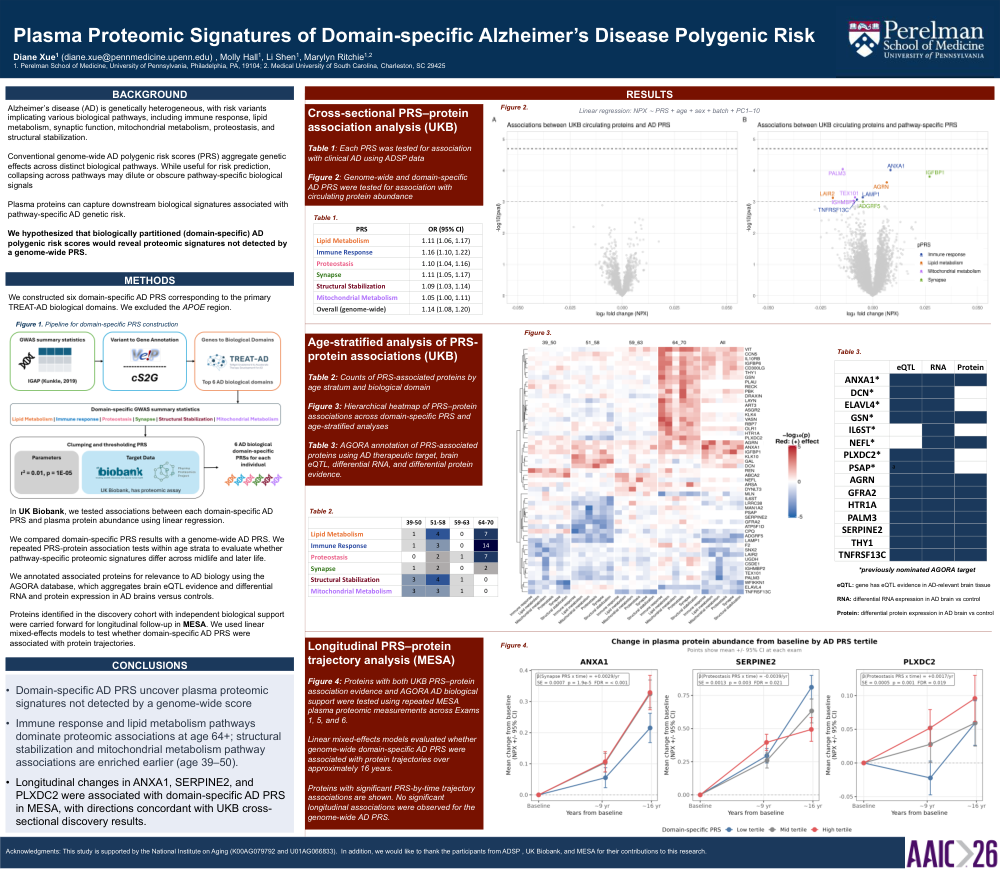
Alzheimer’s disease (AD) is genetically heterogeneous, with risk variants implicating various biological pathways, including immune response, lipid metabolism, synaptic function, mitochondrial metabolism, proteostasis, and structural stabilization. Conventional genome-wide AD polygenic risk scores (PRS) aggregate genetic effects across distinct biological pathways. While useful for risk prediction, collapsing across pathways may dilute or obscure pathway-specific biological signals. Plasma proteins can capture downstream biological signatures associated with pathway-specific AD genetic risk. We hypothesized that biologically partitioned (domain-specific) AD polygenic risk scores would reveal proteomic signatures not detected by a genome-wide PRS.
Methods:
We constructed six domain-specific AD PRS corresponding to the primary TREAT-AD biological domains. We excluded the APOE region. In UK Biobank, we tested associations between each domain-specific AD PRS and plasma protein abundance using linear regression. We compared domain-specific PRS results with a genome-wide AD PRS. We repeated PRS-protein association tests within age strata to evaluate whether pathway-specific proteomic signatures differ across midlife and later life. We annotated associated proteins for relevance to AD biology using the AGORA database, which aggregates brain eQTL evidence and differential RNA and protein expression in AD brains versus controls. Proteins identified in the discovery cohort with independent biological support were carried forward for longitudinal follow-up in MESA. We used linear mixed-effects models to test whether domain-specific AD PRS were associated with protein trajectories.
Conclusions:
Comments
Email is required but is not shown publicly.
Loading comments...