4,068 posters, 219 videos, 101 topics, 69 sessions, 14,365 authors, 6,128 institutions
ePostersLive by SciGen Technologies S.A. All rights reserved.
Alzheimer's Association International Conference 2026
July 12-15, 2026 | London, United Kingdom, and Online

4961
Psychological Care For Individuals Bereaved By Dementia: An Experience Report
Poster Presenter
Part of Topic
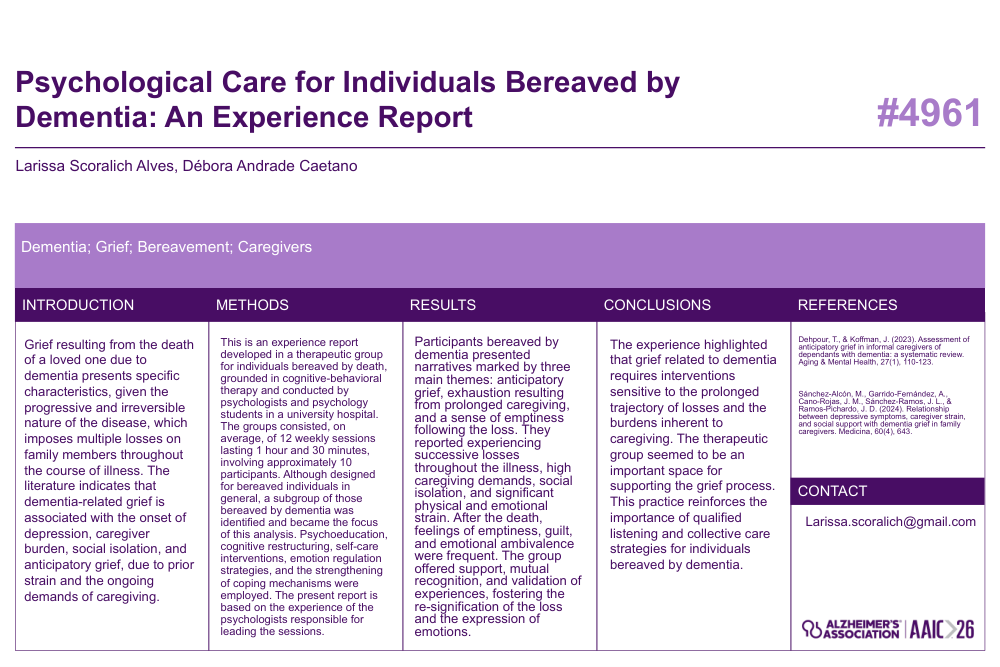
Introduction: Grief resulting from the death of a loved one due to dementia presents specific characteristics, given the progressive and irreversible nature of the disease, which imposes multiple losses on family members throughout the course of illness. The literature indicates that dementia-related grief is associated with the onset of depression, caregiver burden, social isolation, and anticipatory grief, due to prior strain and the ongoing demands of caregiving. Method: This is an experience report developed in a therapeutic group for individuals bereaved by death, grounded in cognitive-behavioral therapy and conducted by psychologists and psychology students in a university hospital. The groups consisted, on average, of 12 weekly sessions lasting 1 hour and 30 minutes, involving approximately 10 participants. Although designed for bereaved individuals in general, a subgroup of those bereaved by dementia was identified and became the focus of this analysis. Psychoeducation, cognitive restructuring, self-care interventions, emotion regulation strategies, and the strengthening of coping mechanisms were employed. The present report is based on the experience of the psychologists responsible for leading the sessions. Results: Participants bereaved by dementia presented narratives marked by three main themes: anticipatory grief, exhaustion resulting from prolonged caregiving, and a sense of emptiness following the loss. They reported experiencing successive losses throughout the illness, high caregiving demands, social isolation, and significant physical and emotional strain. After the death, feelings of emptiness, guilt, and emotional ambivalence were frequent. The group offered support, mutual recognition, and validation of experiences, fostering the re-signification of the loss and the expression of emotions. Discussion: The experience demonstrates that grief related to dementia requires interventions sensitive to the prolonged trajectory of losses and the burdens inherent to caregiving. The therapeutic group seemed to be an important space for supporting the grief process. This practice reinforces the importance of qualified listening and collective care strategies for individuals bereaved by dementia.
Comments
Email is required but is not shown publicly.
Loading comments...