4,068 posters, 219 videos, 101 topics, 69 sessions, 14,365 authors, 6,128 institutions
ePostersLive by SciGen Technologies S.A. All rights reserved.
Alzheimer's Association International Conference 2026
July 12-15, 2026 | London, United Kingdom, and Online

7272
Do The Relationships Between Anxiety And Cognition Differ By Cognitive Status Among Hispanic/Latino Adults?
Poster Presenter
Part of Topic
Introduction
oAnxiety is associated with higher risk of dementia and declines in cognition.1,2,3
oCognitive status (healthy vs. impaired) may impact these relationships.
oFew studies have examined these associations among Hispanic/Latino middle-aged and older adults.
Study Aim
oTo investigate the associations between history of anxiety and cognitive functioning among Hispanic/Latino adults
oTo evaluate if cognitive status moderates these associations
Methods
oData: National Alzheimer’s Coordinating Center (NACC; 35 sites)
o420 participants (history of anxiety = 133)
oSelf-reported history of anxiety was collected from 2005-2024; all other variables were derived from 2024.
oCognitive outcome: semantic fluency (Animals), confrontation naming (Multilingual Naming Test, MINT), verbal memory (Craft Story 21 immediate and delayed recall), attention/working memory (number span forward and backward), processing speed (Trail A) and executive functioning (Trail B)
oCognitive status: healthy vs. impaired
oLinear regression models
oUnadjusted
oAdjusted: controlling for age, sex, marital status, education, language, diabetes, hypertension, hypercholesterolemia, smoking, and alcohol use
oInteraction: all covariates in addition to the anxiety*cognitive status interaction
Conclusion
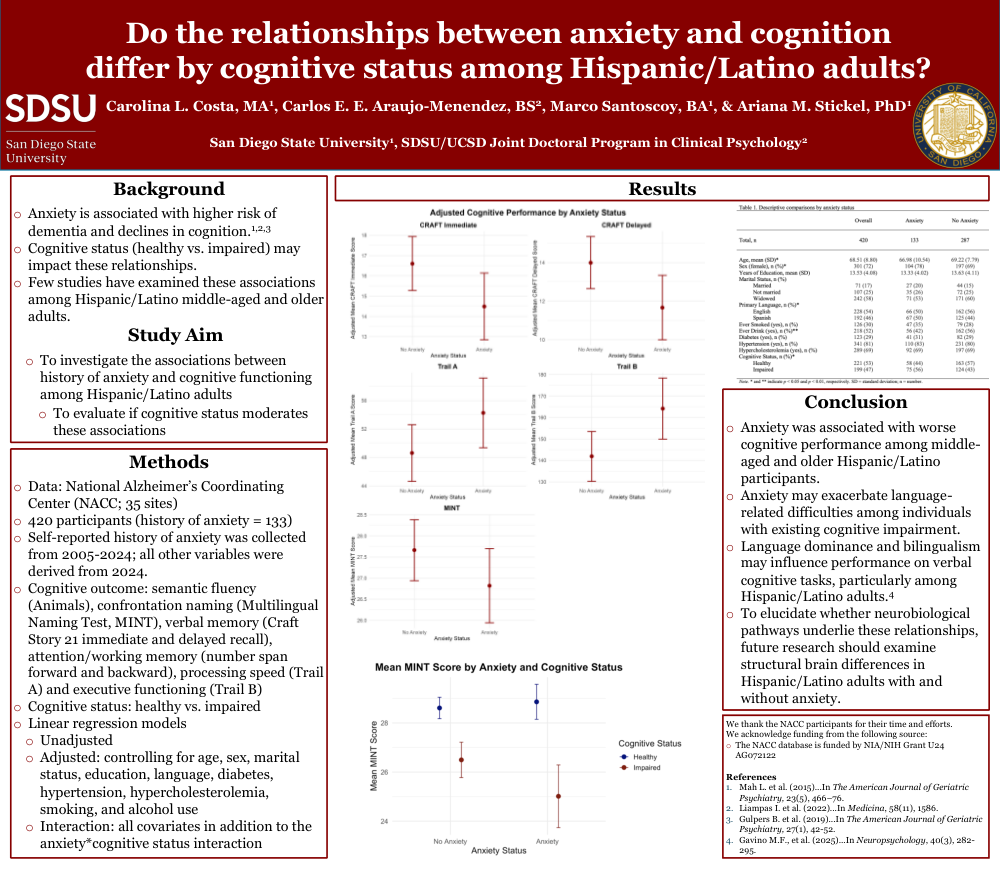
oAnxiety was associated with worse cognitive performance among middle-aged and older Hispanic/Latino participants.
oAnxiety may exacerbate language-related difficulties among individuals with existing cognitive impairment.
oLanguage dominance and bilingualism may influence performance on verbal cognitive tasks, particularly among Hispanic/Latino adults.4
oTo elucidate whether neurobiological pathways underlie these relationships, future research should examine structural brain differences in Hispanic/Latino adults with and without anxiety.
Comments
Email is required but is not shown publicly.
Loading comments...