4,068 posters, 219 videos, 101 topics, 69 sessions, 14,365 authors, 6,128 institutions
ePostersLive by SciGen Technologies S.A. All rights reserved.
Alzheimer's Association International Conference 2026
July 12-15, 2026 | London, United Kingdom, and Online

6148
Stress-sensitive Neuroendocrine Pathways Link Environmental Toxicants To Subjective Cognitive Decline In Aging
Part of Topic
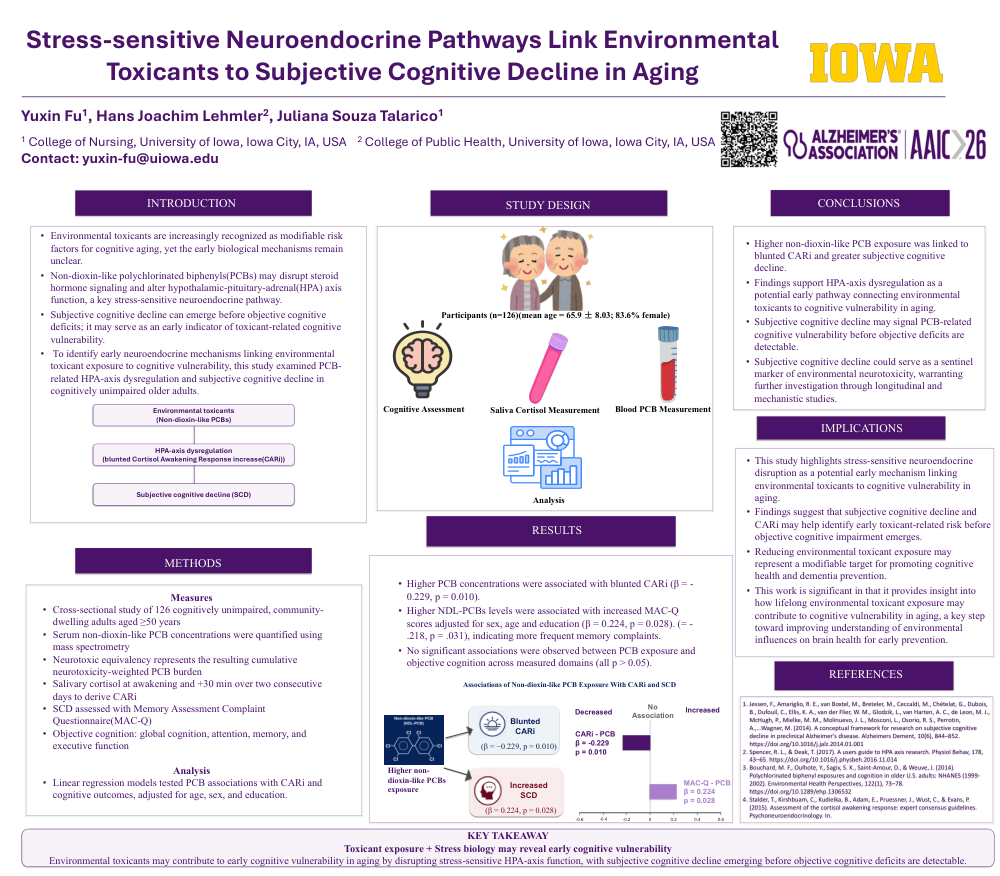
Stress-sensitive Neuroendocrine Pathways Link Environmental Toxicants to Subjective Cognitive Decline in Aging
This study investigates early biological mechanisms underlying the relationship between environmental toxicant exposure and cognitive vulnerability in aging. Using a cross-sectional sample of 126 cognitively unimpaired older adults, we examined associations among non-dioxin-like polychlorinated biphenyls (PCBs), hypothalamic–pituitary–adrenal (HPA) axis function, and subjective cognitive decline (SCD). Higher PCB exposure was associated with a blunted cortisol awakening response increase (CARi) and greater subjective memory complaints, while no significant associations were observed with objective cognitive performance. These findings suggest that stress-sensitive neuroendocrine dysregulation may represent an early pathway linking environmental toxicants to cognitive vulnerability, with SCD potentially serving as an early indicator prior to detectable cognitive impairment.
Comments
Email is required but is not shown publicly.
Loading comments...