4,068 posters, 219 videos, 101 topics, 69 sessions, 14,365 authors, 6,128 institutions
ePostersLive by SciGen Technologies S.A. All rights reserved.
Alzheimer's Association International Conference 2026
July 12-15, 2026 | London, United Kingdom, and Online

9330
AI-driven Dementia Detection Using Routine Healthcare Data: A Qualitative Exploration Of Stakeholder Perspectives
Part of Topic
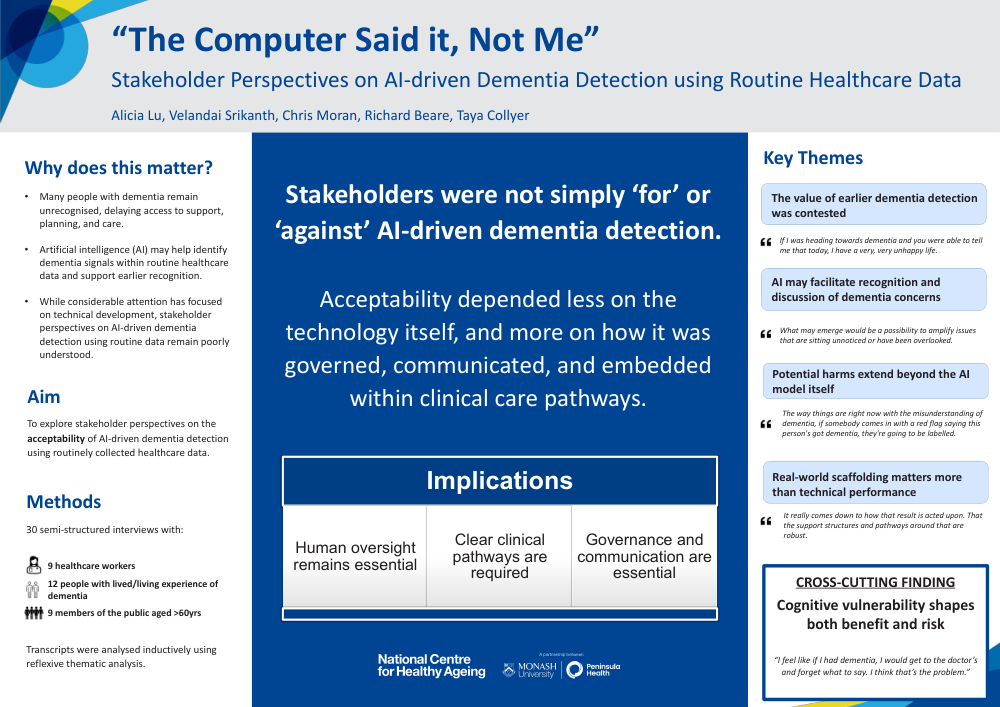
Background: Artificial intelligence (AI) models using routine healthcare data are increasingly being developed to support identification of people with or at risk of dementia. However, little is known about how they are perceived by those who would use or be affected by them. Given the complexities of dementia diagnosis and risk disclosure, this may have downstream implications for the acceptability or implementation of such models in real-world settings. This study aimed to explore stakeholder perspectives on AI-driven dementia detection using healthcare data.
Methods: We conducted semi-structured interviews with 30 participants from three stakeholder groups across Australia: healthcare workers (geriatricians, cognition nurses, ED and palliative care physicians; n=10), people with lived experience (5 living with dementia, 5 carers; n=10), and members of the public (n=10). Transcripts were thematically analysed in Nvivo15.
Results: Dementia diagnosis was described as emotionally and ethically complex, shaped by stigma, uncertainty, and unclear pathways to assessment and follow-up. Clinicians and people with lived dementia experience saw value in earlier detection, while those without direct experience had divided views. Some valued the chance to plan and maintain control, while others saw early knowledge as distressing or futile. These tensions extended to attitudes toward AI-driven dementia detection. Most participants were cautiously optimistic about AI use, accepting a “powerful black box” if accurate, clinician-reviewed, and not used in isolation, reflecting concerns about misdiagnosis. AI’s perceived objectivity was seen as helpful in navigating sensitive conversations around dementia risk. Participants expressed divergent understandings of routine healthcare data and consent, with some viewing data as personal property requiring explicit consent for each use, and others supporting secondary data use to improve clinical care. Across all groups, participants emphasised the need for clear purpose, defined responsibility, and appropriate follow-up pathways for AI-generated risk estimates.
Conclusion: These findings suggest that the acceptability of AI-driven dementia detection using healthcare data may depend less on technical sophistication, and more on how such models are governed and integrated into clinical care. These may have greatest value when positioned as a clinical decision support tool within clearly defined pathways that recognise the ethical and emotional realities of dementia diagnosis.
Comments
Email is required but is not shown publicly.
Loading comments...