4,068 posters, 219 videos, 101 topics, 69 sessions, 14,365 authors, 6,128 institutions
ePostersLive by SciGen Technologies S.A. All rights reserved.
Alzheimer's Association International Conference 2026
July 12-15, 2026 | London, United Kingdom, and Online

1447
Associations Between Sleep Duration, Daytime Sleepiness, And Depressive Symptoms In Older Adults
Poster Presenter
Authors
Maria del Rosario Quian, Natalia Irrazabal, Carolina Feldberg
Affiliations
null,
Part of Topic
Background: Sleep disturbances and excessive daytime sleepiness are highly
prevalent among older adults and are frequently associated with poorer mental
health outcomes. Reduced sleep duration and impaired sleep quality have been
linked to depressive symptoms, negatively impacting quality of life and functional
independence. This study aimed to examine the relationships between sleep
duration, daytime sleepiness, and depressive symptoms in a sample of community-
dwelling older adults.
Methods: A cross-sectional study was conducted with 144 adults aged 60 to 89
years (mean age = 69.07 years, SD = 6.98), of whom 80.5% were women.
Participants completed a sociodemographic questionnaire and self-report
measures, including the Epworth Sleepiness Scale (ESS) to assess daytime
sleepiness and the Geriatric Depression Scale (GDS) to evaluate depressive
symptoms. Average nightly sleep duration over the previous month and perceived
sleep quality were also recorded.
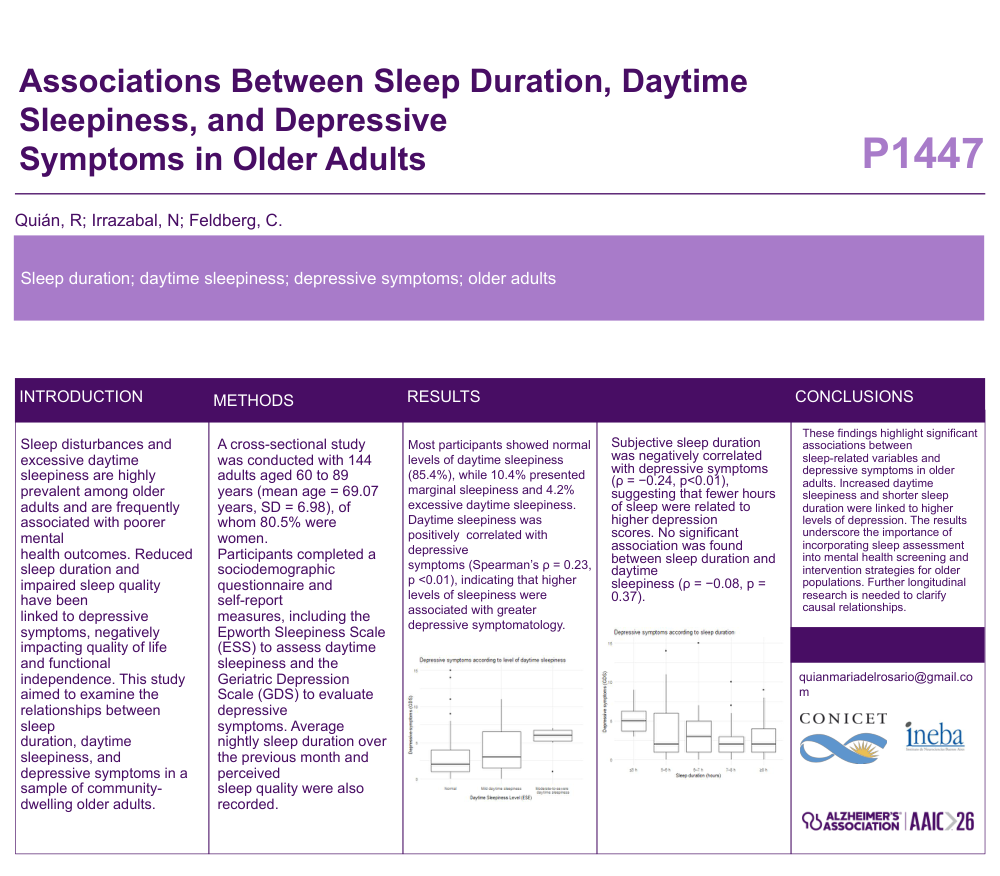
Results: Most participants showed normal levels of daytime sleepiness (85.4%),
while 10.4% presented marginal sleepiness and 4.2% excessive daytime
sleepiness. Daytime sleepiness was positively correlated with depressive
symptoms (Spearman’s ρ = 0.23, p < 0.01), indicating that higher levels of
sleepiness were associated with greater depressive symptomatology. Subjective
sleep duration was negatively correlated with depressive symptoms (ρ = −0.24, p <
0.01), suggesting that fewer hours of sleep were related to higher depression
scores. No significant association was found between sleep duration and daytime
sleepiness (ρ = −0.08, p = 0.37).
Conclusion: These findings highlight significant associations between sleep-related
variables and depressive symptoms in older adults. Increased daytime sleepiness
and shorter sleep duration were linked to higher levels of depression. The results
underscore the importance of incorporating sleep assessment into mental health
screening and intervention strategies for older populations. Further longitudinal
research is needed to clarify causal relationships and inform targeted sleep-
focused interventions aimed at improving emotional well-being in aging adults.
Comments
Email is required but is not shown publicly.
Loading comments...