141 posters, 8 videos, 8 audios, 5 topics, 442 authors, 228 institutions
ePostersLive by SciGen Technologies S.A. All rights reserved.
6th World Congress on Vascular Access 2021
April 29 - 30, 2021 | Virtual

P078
A Passion for Knowledge: The Canadian Vascular Access Association (CVAA) Guidelines on Vascular Access and Infusion Therapy
Poster Presenter
Authors
Affiliations
Part of Topic
Guidelines & Consensus
The Canadian Vascular Access Association (CVAA) Vascular Access and Infusion Therapy Guidelines
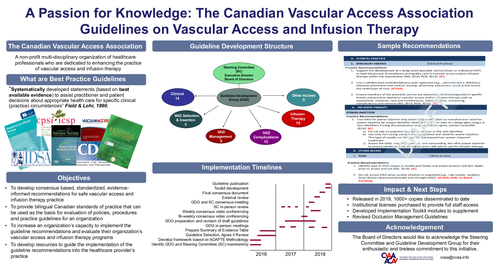
Background: In 2014, CVAA membership survey results indicated that national practice guidelines were a priority. The Board of Directors pledged to support the initiative through the development of a steering committee, commitment of financial resources, and engagement of membership to participate in the Guideline Development Group (GDG).
Design: These guidelines were developed by a diverse working group comprised of CVAA members experienced in vascular access and infusion therapy across tertiary, complex continuing, and community care. The ADAPTE process, a methodology designed to take advantage of existing guidelines, was chosen for guideline development. Once selected, the GDG applied the Appraisal of Guidelines for Research and Evaluation (AGREE II) tool to assess the guidelines. A consensus-based approach was used for topic selection, template design, and content development. A project charter that outlined scope, timelines, deliverables, outcome indicators, and financial commitments was developed. Draft guidelines were reviewed externally by patients/caregivers and clinicians.
Results: Practice guideline recommendations were developed, reviewed, and accepted by the GDG. Major areas of emphasis included clinical practice, including core competencies, vascular access device selection, insertion, management of complications, infusion therapy, and other access. Topics were identified for subsequent toolkit development and a designated team was identified to develop these guideline supports.
Implications for Practice: These recommendations can be broadly applied to support healthcare professionals where vascular access and/or infusion therapy is a core function of their role.