516 posters, 59 topics, 63 sessions, 1,127 authors, 352 institutions
ePostersLive by SciGen Technologies S.A. All rights reserved.
2026 SOAP Annual Meeting
April 29 - May 3, 2026 | Montreal, Quebec Canada

2336783
Cesarean Deliveries under Unplanned General Anesthesia: A Qualitative Thematic Analysis of Patient Perspectives
Poster Presenter
Authors
Affiliations
Part of Topic
Patient Voices
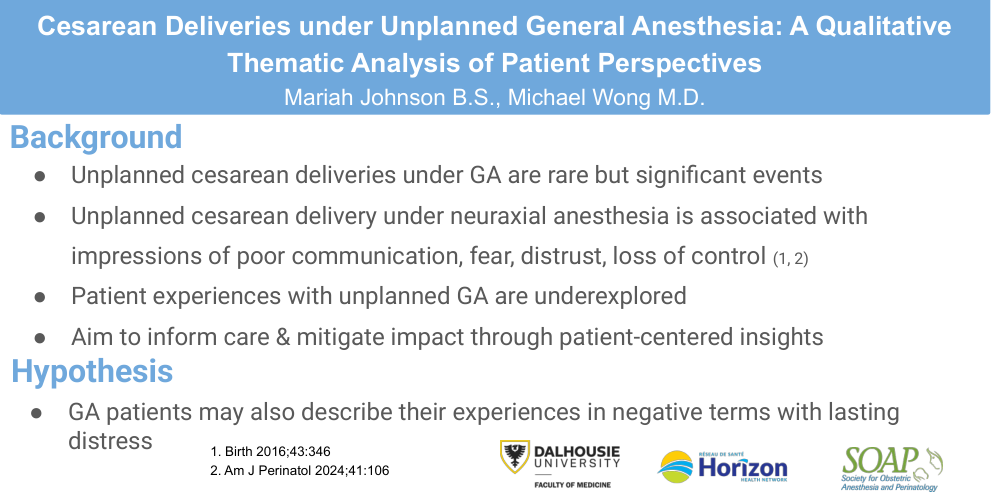
Cesarean deliveries under unplanned or emergency general anesthesia are rare but clinically significant and stressful events. They typically occur in the context of maternal or fetal emergencies where there is insufficient time for neuraxial anesthesia, or it is ineffective. It is known that patients who undergo unplanned cesarean deliveries under neuraxial anesthesia have described their perceptions of poor communication, fear, distrust, and loss of control (1, 2). In the context of unplanned GA, the emotional and psychological impacts are not well understood. This study aims to explore patient experiences and identify factors that shape those experiences to improve care. Based on the unexpected and distressing nature of the event, it is expected that patients will describe their experiences predominantly in negative terms, often with lasting effects.
Patients in the province of New Brunswick, Canada, who had a cesarean delivery under GA during 2024 who were over the age of 19 were identified through Perinatal New Brunswick, the province-wide birth registry. Invitations to participate in a semi-structured interview were mailed with the option to opt out. 22 participants were interviewed, with 3 being excluded due to ineligibility, leaving 19 for the total analysis. Interviews were recorded and transcribed. Initial coding grouped together common experiences. Main themes were identified and refined through member-checking.
The mean age of participants was 32, and the mean gravidity and parity were 2 and 2, respectively. 21% of participants had a previous cesarean section, and one participant had a previous emergency cesarean section under general anesthesia. The main themes identified were communication gaps, mistrust, loss of agency, self-blame, unmet expectations, support person exclusion, impaired bonding, and lasting postpartum challenges. Key takeaways are the evidence of the emotional impact and lasting challenges that unplanned general anesthesia can have on a birth experience. This type of experience is often distressing and can shape patient perception. However, these findings suggest that with patient-centered care and proper support, these negative experiences can be mitigated. Participants emphasized their need for thorough perioperative counselling, clear anesthetic communication, and provider reassurance before and after delivery. Feeling heard, involved, and given as much choice as possible is strongly associated with more positive experiences.
1. Birth 2016;43:346
2. Am J Perinatol 2024;41:106