516 posters, 59 topics, 63 sessions, 1,127 authors, 352 institutions
ePostersLive by SciGen Technologies S.A. All rights reserved.
2026 SOAP Annual Meeting
April 29 - May 3, 2026 | Montreal, Quebec Canada

2327770
Obesity and ECMO Challenges in Postpartum Code Blue
Poster Presenter
Authors
Affiliations
null,
Part of Topic
Call for ECMO!
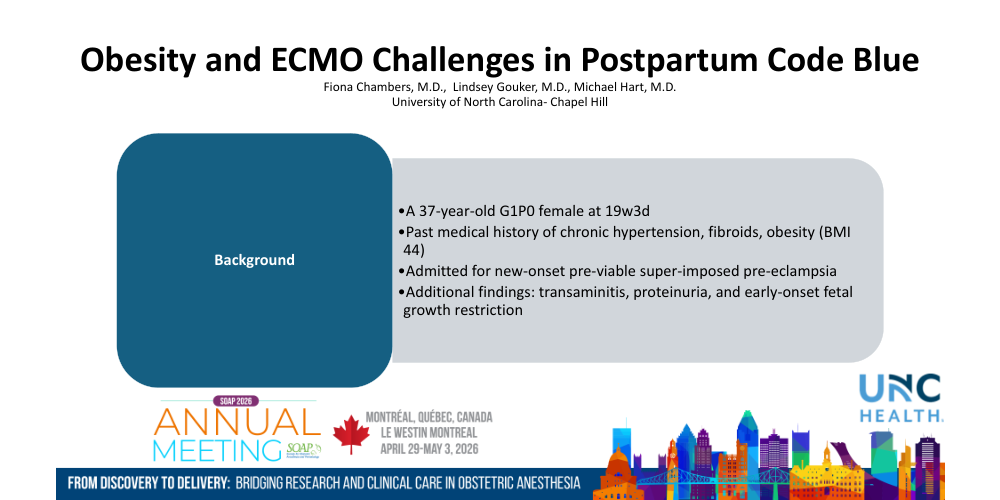
Background
On HD4 the fetus was delivered uneventfully, but her fibroid burden impeded the delivery of the placenta and initial plans were to continue medical management until spontaneous delivery of the placenta. However, she ultimately required delivery of the placenta via classical hysterotomy secondary to superimposed preeclampsia with severe features in the OR on HD5. On HD6, she developed seizures and hemodynamic instability progressing to cardiac arrest. Bedside ultrasound showed no hemoperitoneum, and she was taken emergently to the OR for extracorporeal membrane oxygenation (ECMO) cannulation and exploratory laparotomy. Peripheral VA ECMO cannulation was unsuccessful due to body habitus, active CPR, a gravid uterus, and concurrent abdominal exploration, necessitating sternotomy for central cannulation. Approximately 50 minutes of ACLS elapsed before ROSC. She was transferred to the ICU, required re-exploration for bleeding later that day, and on HD7 was transitioned to comfort care and subsequently died.