816 posters, 24 topics, 3,314 authors, 1,012 institutions
ePostersLive by SciGen Technologies S.A. All rights reserved.
SAGES 2026 Annual Meeting Emerging Technology Session
March 25-28, 2026 | Tampa, FL, USA

P768
A Foggy Forecast: Delirium as a Predictor of Post-Op Decline in Older Veterans
Poster Presenter
Authors
Jacob Larsen, Joshua Bilello, Daniel Fu, Edward Jones, Thomas Robinson, Amy Galvan, Hannah Schara, Teresa Jones
Affiliations
Part of Topic
Quality Improvement / Health System Outcomes
Background:
•Postoperative delirium is a common complication among older surgical patients and is particularly prevalent in veterans with complex comorbidities.
•Delirium has been associated with increased morbidity, prolonged hospital stays, functional decline, and greater healthcare utilization.
•Older veterans represent a high-risk population in whom the impact of delirium on postoperative outcomes remains incompletely characterized.
•This study evaluates whether postoperative delirium predicts adverse outcomes following surgery in veterans aged ≥75 years.
Methods:
•Retrospective cohort study of 785 veterans ≥75 years undergoing surgery at a single VA Medical Center (2018–2024).
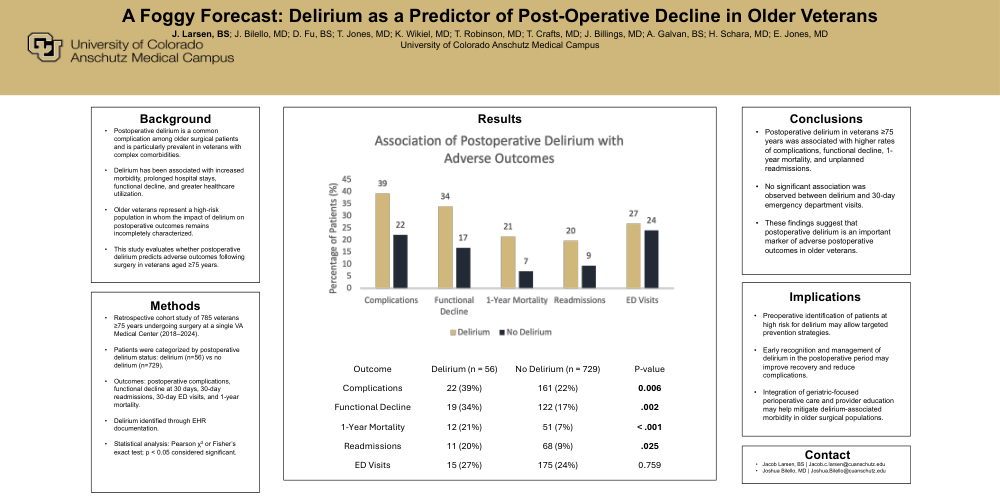
•Patients were categorized by postoperative delirium status: delirium (n=56) vs no delirium (n=729).
•Outcomes: postoperative complications, functional decline at 30 days, 30-day readmissions, 30-day ED visits, and 1-year mortality.
•Delirium identified through EHR documentation.
•Statistical analysis: Pearson χ² or Fisher’s exact test; p < 0.05 considered significant.
Conclusions:
•Postoperative delirium in veterans ≥75 years was associated with higher rates of complications, functional decline, 1-year mortality, and unplanned readmissions.
•No significant association was observed between delirium and 30-day emergency department visits.
•These findings suggest that postoperative delirium is an important marker of adverse postoperative outcomes in older veterans.
Implications
•Preoperative identification of patients at high risk for delirium may allow targeted prevention strategies.
•Early recognition and management of delirium in the postoperative period may improve recovery and reduce complications.
•Integration of geriatric-focused perioperative care and provider education may help mitigate delirium-associated morbidity in older surgical populations.