816 posters, 24 topics, 3,314 authors, 1,012 institutions
ePostersLive by SciGen Technologies S.A. All rights reserved.
SAGES 2026 Annual Meeting Emerging Technology Session
March 25-28, 2026 | Tampa, FL, USA

P500
Utility, Perceptions, and Usage Patterns of GPT-Based Tools Among Medical Students at a Tertiary Academic Institution
Poster Presenter
Part of Topic
Education / Simulation
Use of GPT-Based Tools in Medical School: Utility, Perceptions, and Practice Patterns at a Tertiary Academic Center
Background:
Generative AI tools such as ChatGPT are rapidly entering medical education, yet real-world adoption patterns and trainee perceptions remain incompletely characterized. Understanding how students use these tools is essential to inform institutional policy and structured AI literacy initiatives.
Methods:
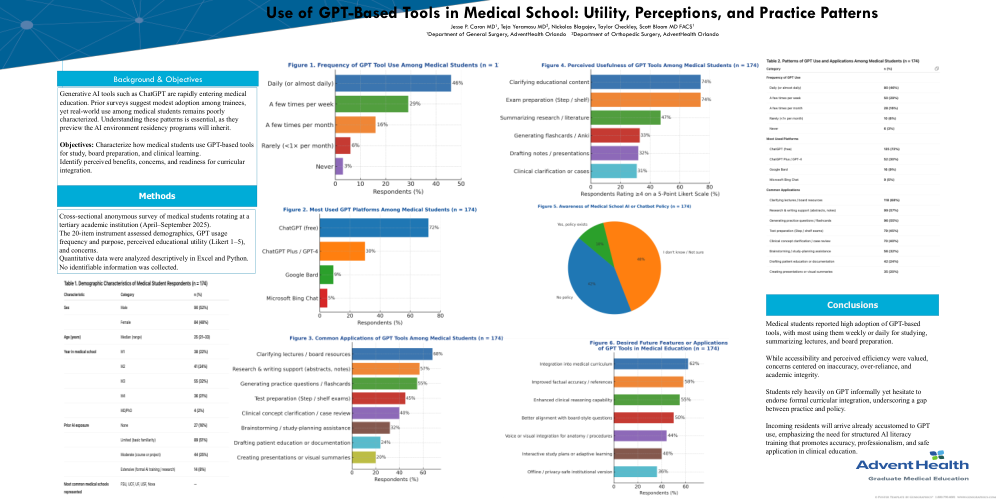
We conducted a cross-sectional anonymous survey of medical students rotating at a tertiary academic center (April–September 2025). The 20-item instrument assessed demographics, frequency and purpose of GPT tool use, perceived utility (5-point Likert scale), and concerns. Quantitative data were analyzed descriptively with subgroup comparisons; open-text responses underwent thematic review.
Results:
A total of 174 students responded. Most reported weekly or daily GPT use (75%), with 46% using tools daily or almost daily. Common applications included clarifying lectures (68%), research and writing support (57%), generating practice questions (55%), and exam preparation (45%). Perceived usefulness was highest for clarifying educational content and exam preparation (74% each rating 4–5/5). However, 58% desired improved factual accuracy, and concerns centered on inaccuracy, over-reliance, and academic integrity. Notably, 48% of students were unsure whether an institutional AI policy existed.
Conclusions:
Medical students demonstrate high informal adoption of GPT-based tools for learning and exam preparation, yet uncertainty regarding policy and concerns about reliability persist. These findings highlight a gap between practice and institutional guidance and underscore the need for structured AI literacy training that promotes safe, ethical, and effective integration into medical education.