2,281 posters, 63 videos, 56 audios, 43 topics, 18 sessions, 6,174 authors, 2,323 institutions
ePostersLive by SciGen Technologies S.A. All rights reserved.
RCOG World Congress 2025
June 23 - 25, 2025 | ExCeL London, UK
EP.0071
E-media Hormone Health: Insights to Women's Perspectives, Challenges, Care-Gaps & Educational Needs
Poster Presenter
Part of Topic
AI & digital health
Video
Title:
E-media Hormone Health: Insights to Women's Perspectives, Challenges, Care-Gaps & Educational Needs
Authors:
Dr Sylvia Kama-Kieghe Dr Tolu O. Adedipe
Objective:
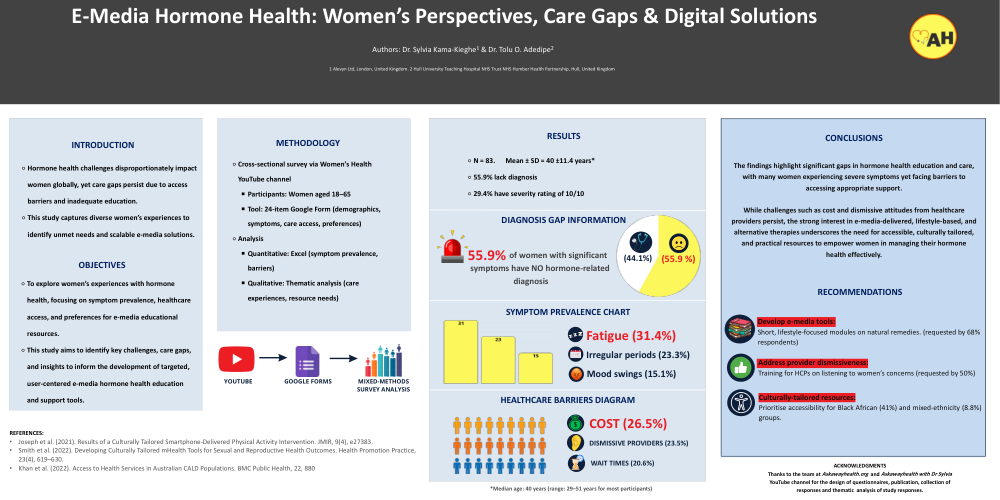
To explore women’s experiences with hormone health, focusing on symptom prevalence, healthcare access, and preferences for e-media educational resources. This study aims to identify key challenges, care gaps, and insights to inform the development of targeted, user-centered e-media hormone health education and support tools.
Design:
A cross-sectional survey was conducted through a women’s health-focused YouTube platform, targeting women aged 18–65 years.
Method:
The survey was delivered via a Google Forms link and included 24 questions covering demographics, symptom frequency, healthcare experiences, and resource preferences. Quantitative data (e.g., symptom prevalence, diagnosis rates, healthcare barriers) were analysed using Microsoft Excel, while qualitative responses (e.g., feedback on challenges and resource preferences) underwent thematic analysis to identify common themes.
Results:
The survey attracted responses from multiple ethnic and geographic backgrounds, including African, North American, and European populations.
The age range was 18–65 years, with a median age group of 40 years (SD 11.4). Ethnic distribution included Black African (41%), African American (11.8%), mixed ethnic backgrounds (8.8%), and White North American and European women (8.8%). Most respondents (37.2%) experienced significant symptoms on a monthly basis, compared to daily, weekly, or rarely. The most frequently reported hormone-related symptoms were fatigue (31.4%), irregular periods (23.3%), and mood swings (15.1%), with 29.4% rating their symptom severity as 10/10. Despite this, 55.9% reported no hormone-related diagnosis, while 17.6% had been managing a hormone-related condition for 1–2 years.
Challenges in accessing general healthcare were notable, with cost of care (26.5%), difficulty finding providers who take symptoms seriously (23.5%), and long wait times (20.6%) as major barriers. While 35.3% had not discussed symptoms with a doctor, 50% of those who had felt their concerns were sometimes minimized. Quality-of-life impacts included negative effects on personal relationships (35%) and work or study performance (25%).
Respondents expressed strong interest in alternative treatments favoring natural remedies for managing hormone health. Given barriers in accessing formal health programs, there was preference for e-media, lifestyle-focused educational content, with a majority favoring short learning modules.
Conclusions:
The findings highlight significant gaps in hormone health education and care, with many women experiencing severe symptoms yet facing barriers to accessing appropriate support. While challenges such as cost and dismissive attitudes from healthcare providers persist, the strong interest in e-media-delivered, lifestyle-based, and alternative therapies underscores the need for accessible, culturally tailored, and practical resources to empower women in managing their hormone health effectively.